


Mean Stack vs Mern Stack: A Comprehensive Guide
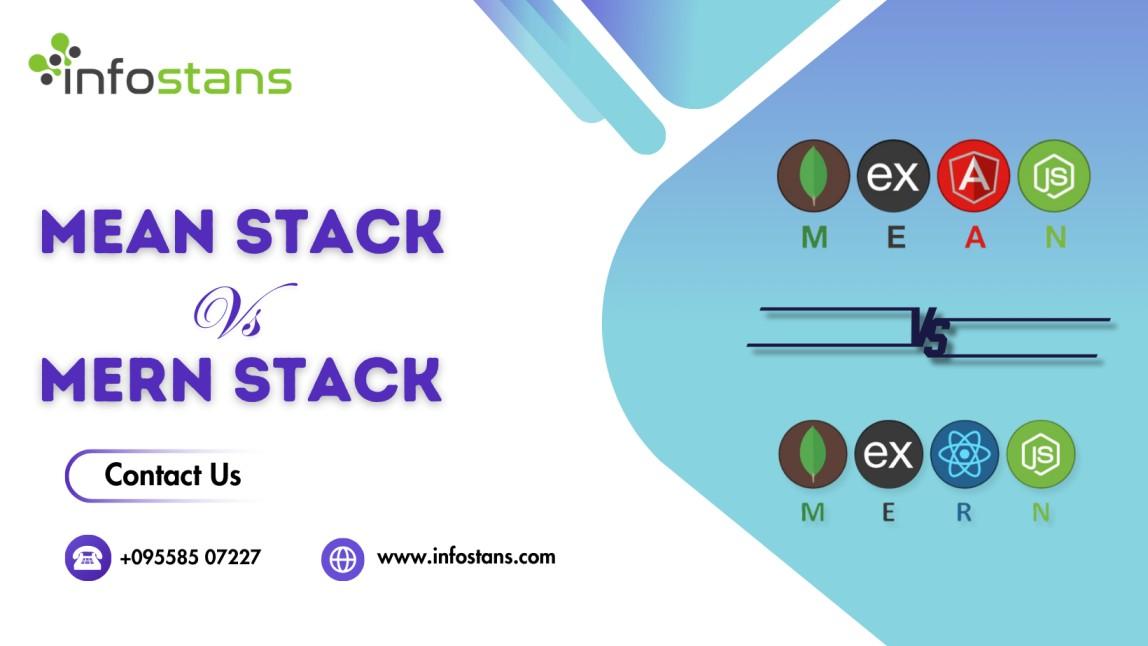
The MEAN stack is an open-source JavaScript-based technology stack comprising the following components:
M: MongoDB – A NoSQL database for storing application data in a flexible, document-oriented format. E: Express.js – A lightweight and flexible Node.js framework for backend development. A: Angular – A TypeScript-based frontend framework developed by Google, providing two-way data binding and dynamic UI capabilities. N: Node.js – A runtime environment for executing JavaScript code on the server.
Key Features of MEAN Stack:
Full-stack JavaScript usage, allowing seamless communication between client and server. Angular's two-way data binding ensures efficient synchronization of data between the frontend and backend. Ideal for creating single-page applications (SPAs) and enterprise-level applications.
The MERN stack shares three components with MEAN: MongoDB, Express.js, and Node.js. However, instead of Angular, it uses React:
R: React – A JavaScript library developed by Facebook for building user interfaces, especially single-page applications. Key Features of MERN Stack: React’s virtual DOM offers superior performance for high-traffic applications. Component-based architecture facilitates reusable UI components.
Widely used for creating dynamic web applications with interactive user interfaces.
Technology stacks are combinations of tools, programming languages, libraries and frameworks used for app development lifecycle from conception through deployment. Popular technology stacks include MEAN and MERN Stack which offer numerous advantages to development teams.
MEAN (Model-View-Controller) and MERN are two full-stack frameworks designed to enable developers to build web applications. Both frameworks employ front-end and back-end technologies like Angular/React, as well as MongoDB as databases; both also support third-party extensions.
Although these frameworks share similar architecture, their differences lie in how they handle data flows. While MEAN adopts a bidirectional approach allowing data to pass from view to server and back again, MERN supports unidirectional flow of data between views and servers. Both approaches come with their own advantages and disadvantages so selecting which approach best meets your project will depend on your unique requirements.
Both MEAN and MERN offer robust features for building dynamic business solutions. Both are scalable, meaning they can support significant traffic loads while accommodating rapid expansion without losing performance, while their modular designs make switching components or adding functionality easier as your needs change.
MEAN and MERN both boast an active community of developers who offer ample support and resources, plus the fact that MEAN is open source means lower licensing costs.

 English
 Arabic
 Français
 Español
 Português
 Deutsch
 Türkçe
 Dutch
Dutch
 Russian
 Romaian