


How Foxtech Robotics’ Robot Joints Support Reinforcement Learning and Humanoid Control
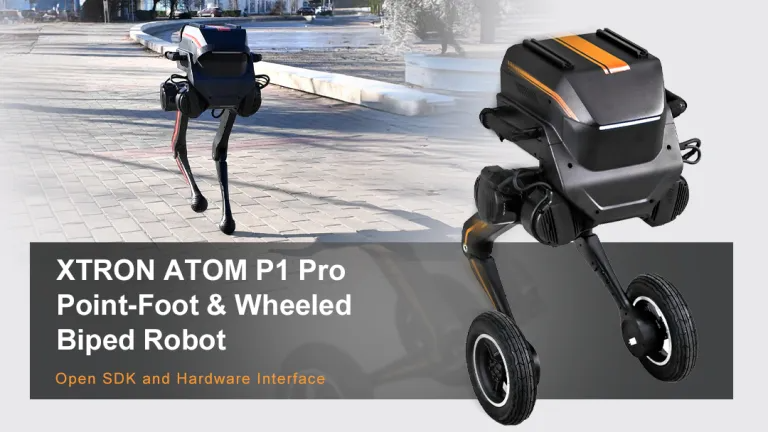
In recent years, the intersection of robotics and artificial intelligence has opened new horizons for creating highly adaptable, intelligent machines capable of learning and autonomously improving their performance. Foxtech Robotics has positioned itself at the forefront of this technological revolution with its innovative robot joints that support reinforcement learning and humanoid control. These joints are not just mechanical components; they are intelligent interfaces that enable robots to perceive, adapt, and refine their actions through experience. By integrating advanced sensors, smooth actuation, and real-time data transmission, Foxtech’s robot joints facilitate complex learning algorithms, allowing robots to mimic human-like dexterity and decision-making processes. This synergy between hardware and AI is setting the stage for robots that can learn from their environment, improve their skills over time, and operate seamlessly in social, industrial, and research settings.
The Role of Robotic Joints in Reinforcement Learning
Reinforcement learning—a subset of machine learning—revolves around developing algorithms that allow machines to learn optimal behaviors through trial and error, guided by rewards and penalties. For this learning process to be effective, robots need highly responsive and precise joints that can execute a wide range of motions and record detailed feedback about their actions. Foxtech’s robot joints are designed with this purpose in mind. Their high-resolution encoders and sensor arrays provide a continuous stream of data about joint angles, force, and torque. This data forms the backbone of reinforcement learning models, enabling the algorithms to adjust movements dynamically based on success or failure. The precision and responsiveness of Foxtech’s joints ensure that the robot can learn complex tasks—such as dynamic balancing, grasping objects with varying weights, or navigating uneven terrain—with increasing efficiency over time.
Unlocking Human-Like Dexterity in Humanoid Robotics
Creating humanoid robots capable of human-like movement has always been a significant challenge, mainly due to the intricacies involved in controlling multiple joints with nuance and coordination. Foxtech’s joints support this goal by offering smooth, graduated motion control that can replicate the subtleties of human gestures. Their design incorporates multi-degree-of-freedom joints, which can rotate, bend, and extend with natural fluidity. This level of control is crucial for humanoid robots to perform tasks like manipulating objects, waving, or walking with stability and grace. When integrated with reinforcement learning algorithms, these joints allow robots to refine their movements through repeated practice—learning to pick up objects delicately or walk without wobbling. The successful marriage of advanced hardware with AI-driven control paves the way for robots that can engage in tasks requiring adaptability, finesse, and social interaction, making them suitable for service, healthcare, and entertainment roles.
Enhancing Adaptability through Sensor Integration
Foxtech’s robot joints excel not only because of their mechanical design but also due to their integrated sensor systems that provide real-time data crucial for reinforcement learning. These sensors monitor joint position, velocity, torque, and force, feeding this information back into the robot’s control systems with minimal latency. This continuous feedback loop allows the robot to adjust its movements instantaneously, promoting more stable and precise actions. In reinforcement learning, such sensors serve as the fundamental link between perceived environment and learned behavior, enabling the robot to evaluate the outcomes of each movement and adapt accordingly. Over time, this feedback mechanism helps the robot develop skills that are robust enough to handle uncertainties and imperfections—such as uneven surfaces or unpredictable disturbances—setting a firm foundation for autonomous decision-making in complex tasks.

Supporting Human-Robot Collaboration in Dynamic Environments
One of the most exciting applications of Foxtech’s joints lies in their ability to facilitate safe, effective collaboration with humans. As robots become more integrated into workplaces, homes, and social environments, their joints need to support not only strength and precision but also the ability to interact smoothly and safely with people. Through reinforcement learning, robots can learn appropriate responses to human gestures and behaviors, adjusting their actions on the fly to ensure safety and comfort. For example, a humanoid robot could learn to maintain a safe distance, support delicate object passing, or respond adaptively to unforeseen interactions, thanks to the real-time control afforded by Foxtech’s joints. This capability greatly accelerates the development of robots that can cohabitate and cooperate seamlessly with humans, especially in service roles or assisted living.
Future Directions: Evolving Humanoid and Autonomous Systems
Looking ahead, Foxtech Robotics is committed to further enhancing the integration of reinforcement learning and humanoid control in their joint designs. Future developments are likely to focus on miniaturization, increased degrees of freedom, and more sophisticated sensory feedback systems. Combining these hardware improvements with powerful AI algorithms will push robots toward higher levels of autonomy, allowing them to learn complex tasks in diverse conditions without explicit programming. The ongoing evolution of joint technology will also support the development of social robots capable of conversation, emotional recognition.

 English
 Arabic
 Français
 Español
 Deutsch
 Türkçe
 Dutch
Dutch
 Italiano
 Russian
 Romaian