


How to Read Crochet Charts
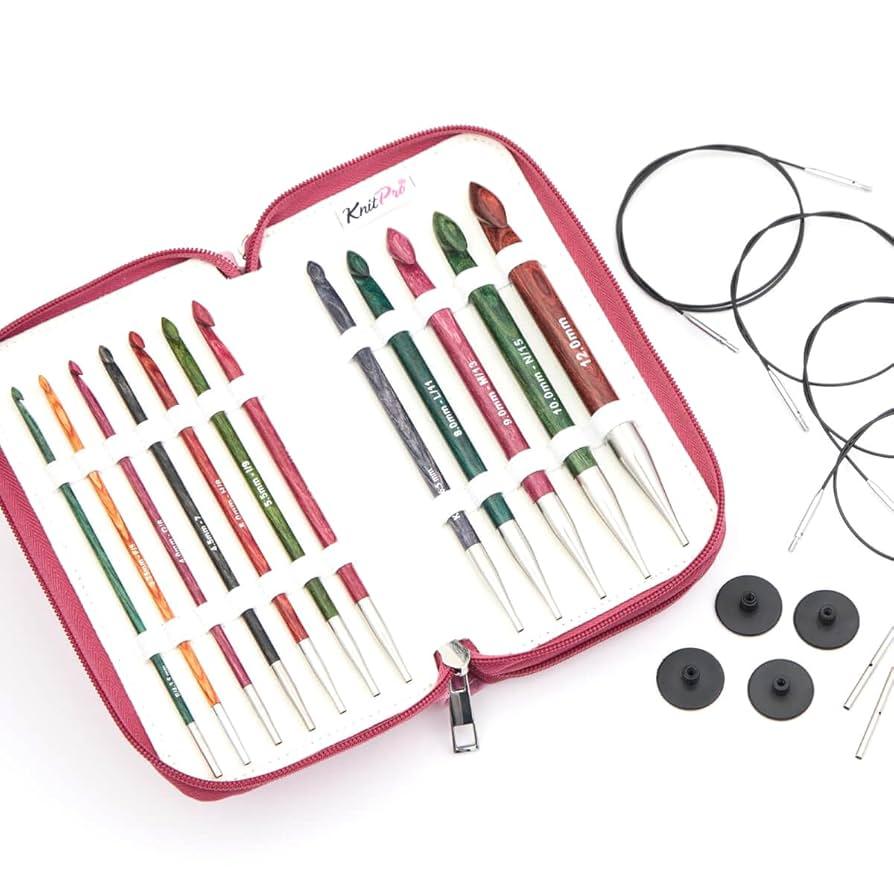
Ready to start your first crochet project? But wait, confused with the collection of symbols mentioned on the crochet chart? Learning these symbols is a skill that anybody can develop. These patterns are written using many abbreviations and terms; once you get the idea, it will open up many options to work with different crochet stitches with your favorite crochet hook. In this blog, let's explore everything you need to know so you can confidently handle any chart-based pattern.
Why Learn to Read a Crochet Chart?
The majority of beginner crocheters start with written patterns because these are helpful for various reasons. Let's check out why it's essential to learn it:
-
Charts make it simpler to follow patterns using symbols rather than words.
-
Understanding stitch placement and pattern repeats is made easier when you view the entire pattern at once.
-
Once you learn to read them, crochet charts can be easier to follow than written instructions.
-
It is easier to fix mistakes by reading the chart.
-
Chart form makes it much simpler to follow some complex lace and motif patterns.
Understanding the Basics of Crochet Charts
Let's cover in detail the crochet terms, symbols, and abbreviations:
Crochet Chart - Unlock the Mystery of Symbols
It is a diagram that uses symbols to depict a crochet pattern. The symbols are arranged as you would crochet them, and each one represents a particular stitch. Crochet charts give you a comprehensive visual representation of the pattern at a glance.
Common Crochet Chart Symbol
In this blog, we will be using US terms for reading the chart. The technique used in crochet is the same worldwide, but the terms are different. For example, in the US, single crochet (SC) is known as double crochet (DC) in the UK. Read our blog on UK vs US crochet terminology for more information.
Crochet Symbols at a Glance
|
Symbol |
Stitch Name |
|
0 |
Chain stitch (CH) or foundation chain |
|
X or + |
Single Crochet (SC) |
|
T |
Half Double Crochet (HDC) |
|
T with line |
Double Crochet (DC) |
|
T with two lines |
Treble Crochet (TR) |
|
. |
Slip Stitch (sl st) |
|
T with three lines |
Double Treble Crochet (DTR) |
|
A decrease stitch in single crochet |
Single Crochet 2 together (SC2tog) |
|
A decrease stitch in double crochet. |
Double Crochet 2 together (DC2tog) |
|
V with two lines |
Single Crochet increase |
|
V with four lines |
Double Crochet increase |
How to Read a Crochet Chart?
Let's explore how to read a crochet chart easily:
1. Identify the Starting Point
You might have noticed that while reading the crochet charts, it begins at the bottom and progresses upward. Follow the chart from left to right on even-numbered rows and from right to left on odd-numbered rows if you are working in rows. When working with round patterns with a double ended crochet hook, begin in the middle and spiral counterclockwise.
2. Follow the Symbol
Every stitch type has a corresponding stitch symbol. Use wooden crochet hooks to make stitches from the chart. Always consult the legend to make sure you're using the right stitches.
3. Check for Pattern Repeats
In a crochet chart, you will see pattern repeats, and asterisks or brackets are used to indicate them. For instance, you repeat a sequence five times if a pattern displays [sc, dc] x 5.
4. Reading in the correct direction
-
For rows: Start from right to left, then alternate directions.
-
For Rounds: Start at the center and move outward in a circular motion.
Tips for Mastering Reading the Crochet Chart
Here are some factors that will help you learn the chart quickly:
-
Start with simple patterns that are easy to understand, and then handle an intricate pattern.
-
Make sure the hook you use, whether Tunisian or single-ended crochet hook, matches the yarn weight.
-
Make a small sample piece to test a pattern before you begin the large project.
-
Make sure you keep the markers handy so that you can mark them in the chart and follow them.
-
To get the hang of the stitches, start with the simple pattern before moving to more complex ones, so that you can easily understand the stitches.
It takes time to understand the crochet charts, which is a challenging task for many knitters. But with continuous practice, it can completely change how you approach and work on crochet projects. So, start making interesting patterns and discover the mysterious crochet chart symbols.

 Arabic
 Français
 Español
 Português
 Deutsch
 Türkçe
 Dutch
Dutch
 Italiano
 Russian
 Romaian