


Scaling Mobile Health: Lessons from a Pilot to Program Roll-Out
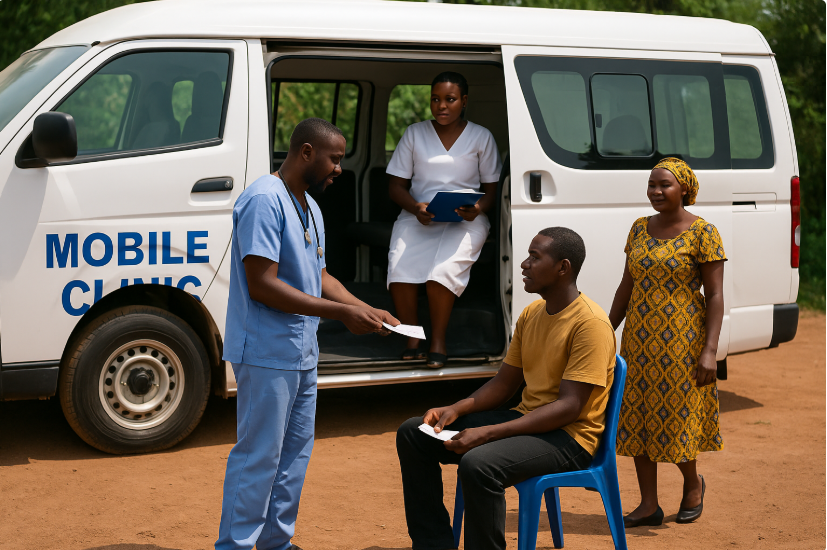
When mobile health vans first started appearing in remote parts of Kenya, they were met with curiosity, hope, and a heavy dose of skepticism. Could a van really replace—or even supplement—a health centre? Would patients trust it? Could it be sustained?
Today, those early questions are being answered with growing evidence. What began as targeted pilot initiatives in underserved counties has now transitioned into a structured mobile outreach program with strategic coverage across five counties—and more in the pipeline. At the center of this transition is a network of hospital groups led by Jayesh Saini, whose vision has consistently pushed healthcare beyond traditional models.
This case study examines what enabled the scale-up, how key barriers were addressed, and what lessons Kenya’s mobile health journey offers to other African nations grappling with rural healthcare disparities.
From Pilot to Blueprint: The Early Days
The mobile healthcare concept was first explored by Saini-backed institutions like Lifecare Hospitals and Bliss Healthcare in regions such as Bungoma and Meru, where health access metrics were significantly below the national average.
Each mobile unit was designed to operate as a self-sufficient clinical node: capable of offering registration, basic diagnostics, medication dispensing, and specialist teleconsultation through digital links to a base hospital.
The earliest success indicators were not dramatic but telling:
● Reduced missed appointments due to on-site convenience.
● Re-engagement of patients lost to follow-up.
● Improved early detection of chronic illnesses in men, who typically underutilize static facilities.
These results set the stage for institutional leaders to consider long-term operationalization.
Key Enablers of Scale-Up
1. Purpose-Driven Leadership
The consistent factor across all counties was clear leadership. Jayesh Saini’s strategic prioritization of mobile health made it a sustained line of investment—not just a one-off pilot. Executive buy-in enabled:
● Budgeting for van acquisition and maintenance
● Cross-functional deployment teams (clinicians, IT, logistics)
● Integration with existing EMRs and pharmacy systems
2. Flexible Funding Models
While initial funding came from internal healthcare group allocations, later expansions relied on blended financing models:
● County-level partnerships provided infrastructure or fuel.
● NGOs supported vaccine stock and maternal kits.
● Insurance providers began to pilot portable coverage tied to mobile visits.
This diversification was crucial in protecting the program from financial bottlenecks as it grew.
3. Community Engagement
Each new county activation started with stakeholder alignment—including county health officials, local chiefs, CHVs, and religious leaders. This ensured:
● Community trust and awareness campaigns
● Identification of high-need catchment zones
● Security and protection of mobile assets in high-risk areas
Overcoming Operational Hurdles
Scaling a mobile system across multiple counties came with unique challenges.
● Supply Chain Integration: Coordinating stock replenishment for 6+ rotating vans required real-time inventory systems and smart route planning.
● Staff Retention: Mobile units rely on flexible, skilled personnel who can operate in non-clinic environments. To reduce turnover, field roles were formalized with career pathways.
● Connectivity Gaps: Not all rural areas had stable mobile data. To address this, vans were fitted with offline-compatible software that syncs with hospital servers when signal returns.
By solving these issues early, the system avoided common pitfalls that stall health program scale-ups.
The Metrics That Justify Expansion
While full external audits are pending, internal performance tracking within the hospital network points to key indicators of success:
● Patient Volume: Steady monthly increases in return visits and unique patient count.
● Geographic Penetration: Coverage expanded to include deep-rural wards beyond Level 2 facility reach.
● Clinical Output: Increases in hypertension screenings, childhood immunizations, and first-trimester ANC registrations.
In counties like Eldoret and Migori, where static clinics face overcrowding, mobile units have absorbed overflow cases, easing pressure on hospital infrastructure.
Building for the Long Haul
Recognizing that mobile clinics are not temporary stopgaps but essential components of health equity, the leadership teams behind these programs—guided by long-term thinkers like Jayesh Saini—have begun designing for institutional sustainability.
Initiatives now underway include:
● EMR Harmonization: Patient records from mobile visits automatically populate central databases, reducing duplication and enabling continuity of care.
● Integrated Payment Systems: Ongoing pilots are exploring mobile wallet–based outpatient copayments and micro-insurance tied to mobile service usage.
● Capacity Expansion: A next-gen fleet of solar-powered, multi-bed mobile clinics is under planning for deployment in arid regions like Turkana.
Conclusion: A Scalable, Exportable Model
Kenya’s mobile health journey demonstrates that with visionary leadership, patient-centered design, and decentralized coordination, even highly mobile systems can become stable pillars of national healthcare delivery.
As mobile care shifts from innovation to infrastructure, the role of private-sector pioneers cannot be overstated. By embedding mobile health within broader hospital networks, Jayesh Saini and his institutions have ensured that these clinics are not isolated services but fully integrated with Kenya’s care ecosystem.
The model now serves as a template for scale, both within Kenya’s remaining underserved zones and potentially across similar geographies in Africa.

 Arabic
 Français
 Español
 Português
 Deutsch
 Türkçe
 Dutch
Dutch
 Italiano
 Russian
 Romaian