


Fuel Filter Water Separator: An Essential Engine Protector
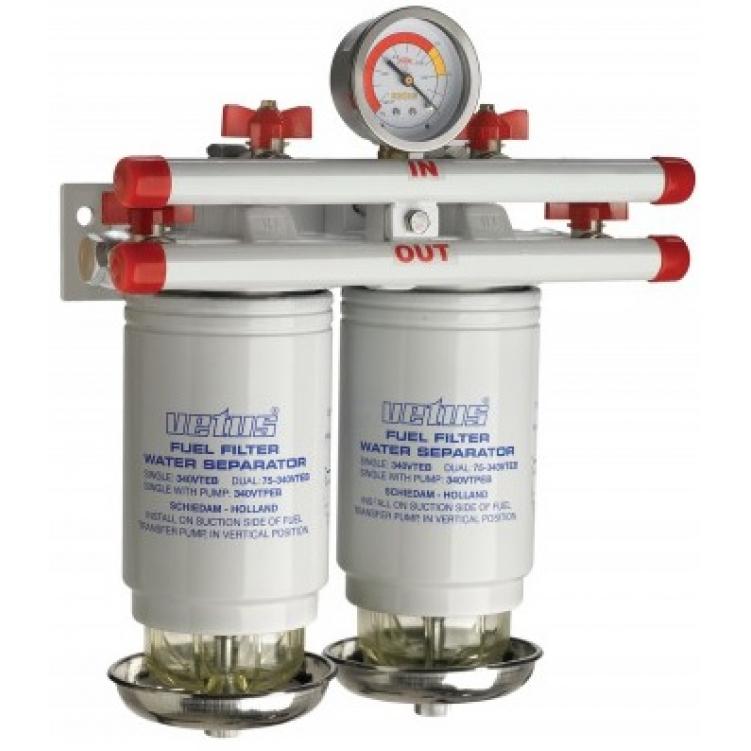
A fuel filter water separator is a device that protects an engine's fuel system by removing water and solid contaminants from the fuel before it reaches the engine. It acts as an essential first line of defense, particularly for diesel engines, which are highly susceptible to damage from water contamination.
How It Works
A Fuel Filter Water Separator operates on a simple principle of physics: water is denser than fuel. When fuel enters the separator, it goes through a multi-stage process to separate the two liquids.
-
Filtration: The fuel first passes through a filter element designed to trap solid particles like dirt, rust, and debris. This element has a hydrophobic (water-repelling) characteristic, which prevents small water droplets from passing through.
-
Separation: As the fuel flows, it is often subjected to centrifugal force in a "spin-on" design. This spinning action causes the heavier water droplets to move to the outer wall of the canister and then fall to the bottom. In a coalescing filter, small water droplets are combined into larger ones, which then also sink.
-
Collection: The separated water accumulates in a clear bowl or a sump at the bottom of the unit. Many modern separators have a drain valve or petcock at the bottom, allowing the collected water to be manually or automatically drained.
This process ensures that only clean, water-free fuel continues its journey to the engine, preventing costly damage.
Types of Fuel Filter Water Separators
There are several types of fuel filter water separators, each designed for specific applications and engine types.
-
Spin-On Separators: These are the most common type, featuring a replaceable filter element housed within a permanent, screw-on canister. They are easy to install and maintain, making them ideal for a wide range of vehicles and smaller industrial engines.
-
Cartridge Separators: These consist of a permanent casing with a replaceable filter element inside. They are often used in larger engines and industrial applications due to their higher capacity and efficiency.
-
Turbine Separators: These use centrifugal force (similar to the initial stage of a spin-on filter) to separate water and contaminants. They are highly efficient and commonly found in marine and heavy-duty industrial applications.
-
Coalescing Separators: These are highly effective for removing fine water emulsions. They use a multi-stage process where tiny water droplets are coalesced into larger ones that can then be easily separated by gravity. They are frequently used in applications where a high degree of water removal is critical.
-
Absorptive Separators: These contain a special material that absorbs water while allowing fuel to pass through. They are less common but can be useful in certain niche applications.
Benefits and Importance
Using a fuel filter water separator is crucial for maintaining engine health and ensuring optimal performance. The primary benefits include:
-
Engine Protection: Water in the fuel can cause rust, corrosion, and wear on critical, high-precision components like fuel injectors and pumps. A separator prevents this by removing the water, extending the life of these expensive parts.
-
Improved Fuel Efficiency: Water does not burn, and its presence in the fuel can lead to incomplete combustion, which decreases fuel efficiency. By providing clean, dry fuel, the separator helps the engine run more efficiently.
-
Prevention of Microbial Growth: Water and fuel create an ideal environment for microbial growth, often referred to as "diesel bug." This can lead to clogged filters, fuel lines, and serious engine damage. The separator eliminates the water, preventing this issue.
-
Reduced Maintenance Costs: By preventing damage and ensuring efficient operation, a fuel filter water separator can significantly reduce overall maintenance and repair costs.
Maintenance and Common Problems
Regular maintenance of a fuel filter water separator is essential for its continued effectiveness. The two primary maintenance tasks are:
-
Draining the Water: The most important step is to regularly drain the collected water from the sump. This prevents the bowl from filling up and allows the separator to continue its job. The frequency of draining depends on the operating environment and fuel quality.
-
Replacing the Filter Element: Over time, the filter element will become clogged with contaminants, reducing its effectiveness. It's crucial to replace the filter element according to the manufacturer's recommended schedule, which is typically based on mileage or hours of operation.
Common problems can arise if maintenance is neglected:
-
Clogged Filter Element: A clogged filter can restrict fuel flow, leading to a loss of engine power, rough idling, and difficulty starting.
-
Incomplete Water Separation: If the filter element is old or damaged, it may not effectively separate water, allowing it to pass through to the engine. This can cause engine sputtering, white smoke from the exhaust, and, in severe cases, catastrophic engine failure.
-
Leaks: Damaged or improperly installed seals can lead to fuel leaks, creating a safety hazard and causing a loss of fuel pressure.
By understanding the function, benefits, and maintenance requirements of a fuel filter water separator, you can ensure your engine remains protected and runs smoothly.

 Arabic
 Français
 Español
 Português
 Deutsch
 Türkçe
 Dutch
Dutch
 Italiano
 Russian
 Romaian