


Turbo Repair: Restoring Efficiency in High-Performance Engines
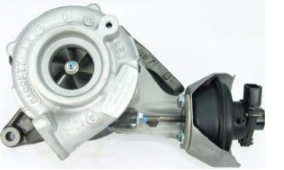
Turbochargers are central to the modern automotive landscape, enabling smaller engines to achieve higher outputs with improved fuel economy. Yet, like any precision-engineered component, they are vulnerable to wear, contamination, and thermal stress. When faults arise, turbo repair becomes critical in restoring not only engine performance but also emissions compliance and efficiency.
The Growing Role of Turbochargers
Over the last two decades, turbochargers have transitioned from being performance add-ons to standard equipment in passenger vehicles, commercial trucks, and even marine engines. According to industry data, more than 50% of all new vehicles globally are now turbocharged. This widespread adoption has been driven by:
-
Emission regulations demanding lower CO₂ output.
-
Downsizing strategies that reduce engine displacement while retaining power.
-
Fuel efficiency goals that balance performance with reduced consumption.
With this reliance comes the inevitable need for specialized turbo repair services when issues emerge.
Why Turbochargers Fail
Turbos operate in some of the harshest conditions inside an engine. The combination of heat, high rotational speed, and oil dependence makes them sensitive to even small irregularities. Common failure mechanisms include:
-
Oil starvation or contamination – Lack of lubrication or dirty oil causes bearing scoring and shaft wear.
-
Foreign object ingestion – Debris entering through the intake or exhaust can shatter blades.
-
Excessive thermal cycling – Repeated exposure to high exhaust gas temperatures leads to cracks in housings or sticking of variable vanes.
-
Overboost and overspeed – Caused by actuator malfunctions or tuning, leading to catastrophic compressor or turbine failure.
-
Seal failure – Resulting in oil leaks, blue smoke, and fouled catalytic converters.
Symptoms Indicating the Need for Turbo Repair
Drivers and fleet managers should be alert to early warning signs. Typical indicators include:
-
Whining or siren noises as bearings wear.
-
Loss of boost pressure, logged by onboard diagnostics.
-
Excessive exhaust smoke, signaling oil leakage.
-
Reduced power and acceleration, even under heavy throttle.
-
Check engine light with turbo-related fault codes such as P0299 (underboost) or P0234 (overboost).
Ignoring these symptoms accelerates engine wear and increases the likelihood of complete turbocharger failure.
What Turbo Repair Entails
Turbo repair is not simply a matter of swapping components. It is an engineering-driven process that ensures the unit is restored to original manufacturer specifications. The workflow typically involves:
1. Inspection and Analysis
Each component—compressor, turbine, shaft, bearings, and actuator—is checked for cracks, wear, or distortion. Engineers look for root causes rather than only visible damage.
2. Cleaning and Preparation
Housings and internal passages are cleaned using ultrasonic methods or bead blasting. Oilways are cleared to remove any coking or sludge buildup.
3. Precision Machining
If needed, minor surface refinishing ensures that housings meet dimensional tolerances. Any warping or erosion is corrected.
4. Component Replacement
Critical wear parts such as bearings, thrust washers, and seals are replaced with new, OEM-quality components.
5. High-Speed Balancing
This step is at the core of turbo repair. Since the shaft and wheels rotate at up to 200,000 RPM, even a tiny imbalance can cause catastrophic vibration. Specialized balancing equipment corrects imbalance to within microscopic tolerances.
6. Actuator and VGT Calibration
Modern turbos often feature electronic actuators and variable geometry systems. Post-repair calibration ensures proper vane movement or wastegate control, restoring boost delivery as designed.
7. Flow Testing and Quality Control
The repaired turbo undergoes airflow and pressure ratio testing to ensure efficiency matches factory performance data. Leak-down and vibration tests confirm reliability.
Engineering Precision in Turbo Repair
Turbochargers operate with engineering tolerances that rival aerospace components. For context:
-
Bearing clearances are typically 3–12 microns.
-
Shaft end float is limited to under 0.1 mm.
-
Balance tolerances can be as tight as 0.5 milligrams.
Such specifications highlight why professional turbo repair facilities rely on advanced equipment and why uncalibrated or improvised repairs often lead to recurring failures.
Preventing Repeat Failures
A repaired turbo is only as reliable as the environment it operates in. Preventive measures are key:
-
Regular oil and filter changes – Contaminated oil is the number one cause of premature failure.
-
Air filtration maintenance – Prevents foreign object damage to the compressor.
-
Proper warm-up and cool-down routines – Allowing oil to circulate before hard driving and after high-load operation.
-
Exhaust and intake checks – Ensuring no leaks or blockages that can cause abnormal turbo stress.
-
Monitoring boost levels – Catching irregularities before they damage the turbo or engine.
Advantages of Turbo Repair Over Replacement
While replacing a failed turbo with a brand-new unit is possible, repair offers unique benefits:
-
Cost-effectiveness – Significant savings compared to new OEM units.
-
Sustainability – Restoring existing parts reduces environmental waste.
-
Performance restoration – A properly repaired turbo matches original performance levels.
-
Quicker turnaround – Repairs can often be completed faster than sourcing new components.
That said, successful repair relies on skilled technicians, access to precise tools, and adherence to strict quality standards. For this reason, it is always best to find a specialist near you when turbo issues arise.
The Future of Turbo Repair
With the shift toward hybrid and cleaner combustion technologies, turbochargers are becoming even more complex. Features such as:
-
Electric-assist turbos for instant spool-up.
-
Advanced VGT designs with intricate vane control.
-
Integrated exhaust gas aftertreatment systems.
These advances mean future turbo repair will require even more sophisticated diagnostic tools, electronic calibration, and material science expertise.
Conclusion
Turbochargers sit at the crossroads of performance and efficiency in today’s engines. When failure occurs, turbo repair is more than mechanical restoration—it is the reapplication of precision engineering. By addressing root causes, adhering to microscopic tolerances, and recalibrating advanced control systems, a repaired turbo can deliver years of renewed service.
The importance of professional expertise cannot be overstated. Whether for a passenger car, heavy-duty truck, or marine engine, a high-quality turbo repair restores balance, power, and efficiency—keeping engines running at their designed potential.

 English
 Arabic
 Français
 Español
 Português
 Deutsch
 Türkçe
 Dutch
Dutch
 Italiano
 Romaian