


How Exchange Rates Affect Multi Currency Accounts
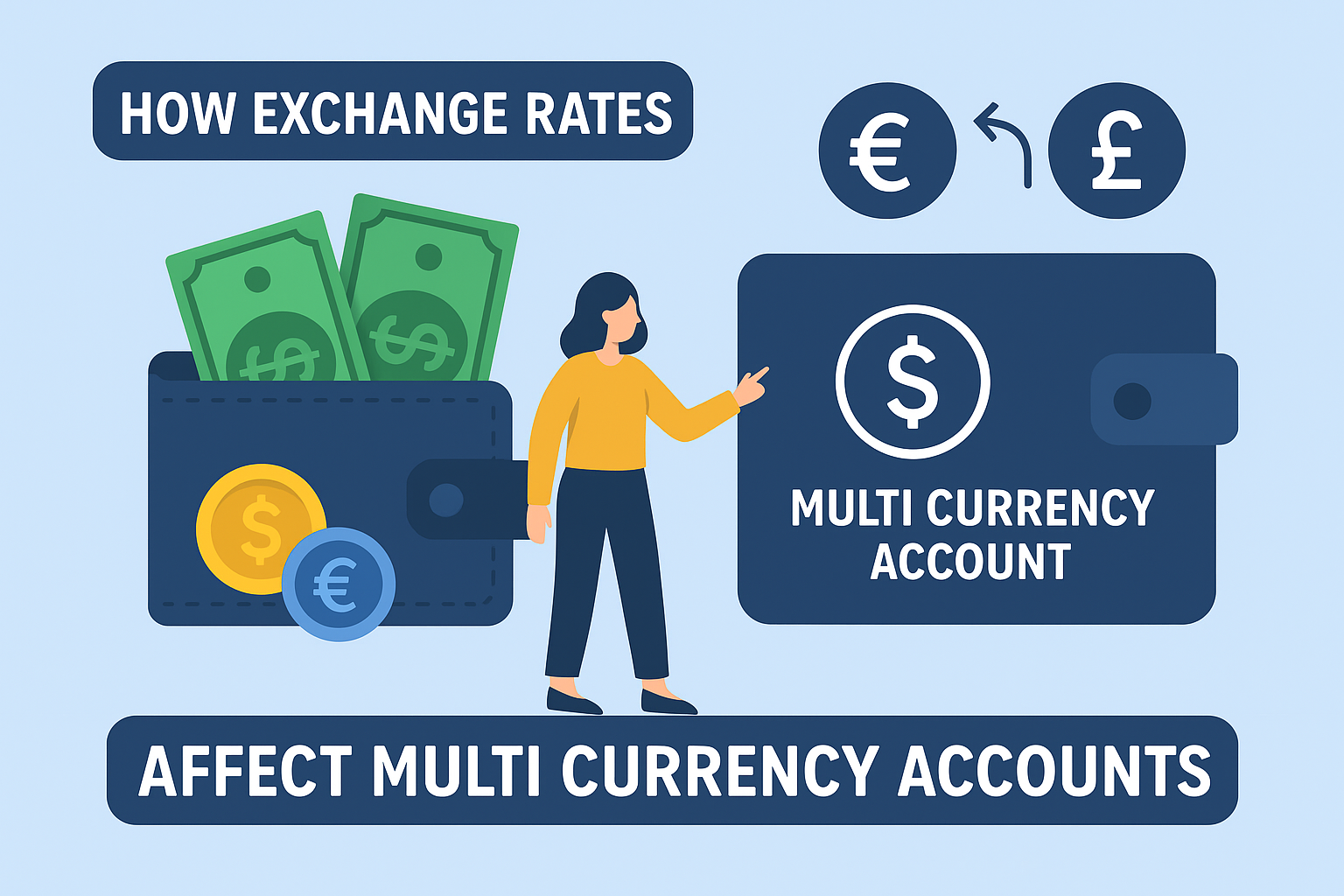
In today’s interconnected global economy, managing finances across multiple currencies has become a necessity for businesses and individuals alike. Multi-currency accounts make international trade, travel, and investments more convenient by allowing users to hold, send, and receive money in different currencies. However, one factor plays a significant role in determining the real value of these accounts—exchange rates. Whether you are an entrepreneur handling cross-border payments or a frequent traveler, fluctuations in exchange rates can directly affect your purchasing power, savings, and business profits.
Let’s dive deeper into how exchange rates impact multi-currency accounts and why understanding this relationship is crucial for smarter financial management.
1. The Basics of Exchange Rates and Multi-Currency Accounts
At its core, an exchange rate is the price of one currency in terms of another. For example, if 1 USD equals 280 PKR, this means you can exchange one US dollar for 280 Pakistani rupees. Exchange rates are not static—they fluctuate daily based on market forces such as supply and demand, inflation, interest rates, and geopolitical stability.
Multi-currency accounts are financial tools that allow users to hold balances in different currencies under a single account. For instance, you might hold USD, EUR, GBP, and PKR simultaneously without converting each transaction immediately. This provides flexibility and cost savings, especially for businesses that deal with international clients or suppliers.
But here’s the catch: the actual benefit of holding multiple currencies depends heavily on exchange rate movements. When exchange rates rise or fall, they directly impact the value of your funds.
2. How Exchange Rate Fluctuations Influence Account Value
Exchange rate fluctuations can either work in your favor or against you. Let’s break down the different ways they affect multi-currency accounts:
A. Gains and Losses from Currency Conversion
Whenever you convert funds within your multi-currency account—say from USD to EUR—you are exposed to the prevailing exchange rate. If the USD strengthens against the EUR, you’ll get more euros for your dollars. Conversely, if the USD weakens, you’ll receive fewer euros. This gain or loss can significantly impact businesses operating across multiple countries.
B. Impact on International Business Transactions
Companies using multi-currency accounts often settle invoices in different currencies. A favorable exchange rate can increase profits by reducing costs, while an unfavorable one can shrink margins. For example, an importer paying in euros will face higher expenses if the euro strengthens against their local currency.
C. Travel and Remittance Costs
For individuals, especially travelers or those sending remittances, exchange rate volatility can affect how much money they get abroad. A strong home currency means more spending power overseas, while a weaker one reduces value.
D. Long-Term Savings and Investments
If you hold savings or investments in multiple currencies, exchange rates directly determine your portfolio’s worth. A weakening of one currency can reduce the overall value of your holdings when converted to your base currency.
3. Strategies to Manage Exchange Rate Risks in Multi-Currency Accounts
The unpredictability of exchange rates means that account holders need to adopt strategies to minimize potential losses. Here are some effective approaches:
A. Hedging Against Currency Risks
Businesses often use hedging tools such as forward contracts, options, or swaps to lock in favorable rates and protect against sudden swings. Even individuals can benefit from hedging strategies offered by some banks and fintech companies.
B. Holding Strong and Stable Currencies
Diversifying funds by holding stronger and more stable currencies such as USD, EUR, or GBP can safeguard against devaluation of weaker currencies. This approach reduces exposure to volatility.
C. Timing Currency Conversions
Monitoring global currency trends and converting funds when rates are favorable can maximize account value. While timing the market perfectly is impossible, being aware of economic indicators like interest rate decisions and inflation data helps.
D. Using Fintech Tools and Alerts
Modern fintech platforms provide real-time exchange rate tracking, alerts, and even automated conversions at target rates. Leveraging these tools ensures smarter decisions without constantly monitoring markets.
4. The Future of Exchange Rates and Multi-Currency Accounts
With globalization, digital banking, and fintech innovations, multi-currency accounts are becoming increasingly common. At the same time, exchange rates will remain volatile due to geopolitical events, inflation trends, and shifts in global trade dynamics.
Looking ahead, artificial intelligence and blockchain-based financial systems may reduce conversion costs and provide more stable exchange mechanisms. Still, the basic principle remains: exchange rates will continue to be the deciding factor in maximizing the benefits of multi-currency accounts.
For businesses, this means better planning of international transactions. For individuals, it highlights the importance of staying informed about market movements. Those who manage exchange rate risks wisely will always gain more from their multi-currency accounts.
Conclusion
Exchange rates are the invisible hand shaping the true value of multi-currency accounts. While these accounts offer flexibility and convenience, their effectiveness largely depends on how well you understand and manage currency fluctuations. Whether you’re a global business, a digital nomad, or someone sending money abroad, being exchange-rate savvy ensures that your financial decisions work in your favor.
In a world where currencies rise and fall every second, the winners will be those who treat exchange rate awareness not as an option, but as a necessity.

 Arabic
 Français
 Español
 Português
 Deutsch
 Türkçe
 Dutch
Dutch
 Italiano
 Russian
 Romaian