


Asbestos-Free Compressed Gaskets: Development, Manufacturing, and Applications
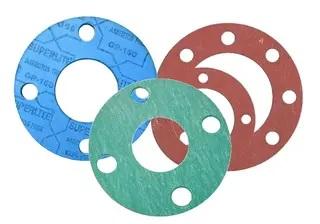
Asbestos-Free Compressed Gaskets: Development, Manufacturing, and Applications
In industrial operations, the choice of gasket material is critical for ensuring reliable sealing performance. Traditionally, asbestos gaskets dominated the market due to their excellent load-bearing capacity, aging resistance, compressive strength, and high-temperature endurance. However, growing environmental awareness and the identification of health risks associated with asbestos have shifted the focus toward asbestos-free compressed gaskets, which have gradually become the mainstream choice. This article explores the development, manufacturing processes, and engineering applications of asbestos-free gaskets, highlighting their importance as an environmentally friendly and effective sealing solution.
The Rise and Decline of Asbestos Gaskets
Asbestos gaskets were once widely used due to the unique properties of asbestos fibers, which offered:
-
Excellent load-bearing capacity
-
Stability under high temperature and corrosive conditions
-
Superior compressive strength
High-grade asbestos gaskets typically contained over 80% high-quality fibers, which directly affected their sealing performance. However, cost considerations often led manufacturers to mix fibers of varying quality, resulting in performance inconsistencies. Lower-grade asbestos gaskets, while sometimes physically similar to high-grade ones, performed poorly in high-temperature environments.
In the last 10–15 years, asbestos use has sharply declined in the United States due to its carcinogenic properties. Globally, asbestos gaskets are still occasionally used for critical sealing applications, but declining demand has discouraged many manufacturers from producing high-grade asbestos gaskets.
Emergence of Asbestos-Free Compressed Gaskets
Driven by environmental regulations, asbestos-free gaskets emerged in the early 1980s, primarily composed of rubber reinforced with fibers such as aramid or carbon. These gaskets offered a safer alternative but faced initial challenges:
-
Higher production costs
-
Inability of a single type to fully replace all asbestos gasket applications
Unlike asbestos gaskets, which could rely on one material to provide multiple functions, asbestos-free gaskets often require 10 or more materials to achieve comparable sealing performance, making design more complex.
Manufacturing Processes of Asbestos-Free Gaskets
Although the general process of producing compressed gaskets has remained similar over decades, raw materials and techniques have evolved. The two main manufacturing methods are:
1. Layer-by-Layer Pressing
-
Rubber, fibers, fillers, and solvents are mixed into a dough-like consistency.
-
This dough is fed between a hot roller (105–115°C) and a cold roller (15–38°C), building the sheet layer by layer.
-
Chemicals added during mixing ensure even dispersion and prevent material layering.
-
Most sheets produced are 60 inches wide, though some manufacturers can produce sheets up to 3 m².
2. Pulp Molding
-
Less common but still used for certain industrial applications, particularly where preformed gasket shapes are required.
Asbestos-Free Sheet Production:
-
Typically involves up to 30 components, compared to 10 in asbestos gaskets.
-
Requires advanced hydraulic, pneumatic, and monitoring equipment to manage interactions among multiple additives.
Gasket Coefficient in Engineering Design
The gasket coefficient is a critical factor for flange design, but its determination has evolved:
-
ASTM procedures were initially designed for asbestos gaskets, whose high fiber content allowed consistent M and Y values.
-
Asbestos-free gaskets display more variation due to differences in materials and formulas.
-
Today, manufacturers adjust M and Y values to provide usable design data, but differences still exist across suppliers.
-
ASME has been developing more reproducible calculation methods to standardize these values, improving comparison and selection.
Tensile Strength Considerations
-
For asbestos gaskets, tensile strength correlates closely with fiber quality and sealing performance.
-
For asbestos-free gaskets, tensile strength is mainly a quality control indicator, verifying manufacturing consistency rather than performance.
-
Differences between 1500 psi and 2000 psi are generally not critical unless operating near the material’s upper limits.
Conclusion
With increasing environmental awareness and health considerations, asbestos-free compressed gaskets are poised for continued growth in industrial applications. Advances in formulation and manufacturing have improved performance and reduced costs, while engineering understanding of gasket coefficients and material properties ensures reliability.
These gaskets represent a significant advancement in sealing technology, combining environmental compliance, safety, and dependable performance. By understanding their manufacturing processes and key design factors, engineers and manufacturers can better utilize asbestos-free gaskets to ensure safe equipment operation and long-term environmental protection.
It's important to know about Google SEO to help your website rank higher in search results.
 Deutsch
 English
 Arabic
 Français
 Español
 Português
 Türkçe
 Dutch
Dutch
 Italiano
 Russian
 Romaian