


CDPs and First-Party Data: Building Privacy-First B2B Strategies in 2025
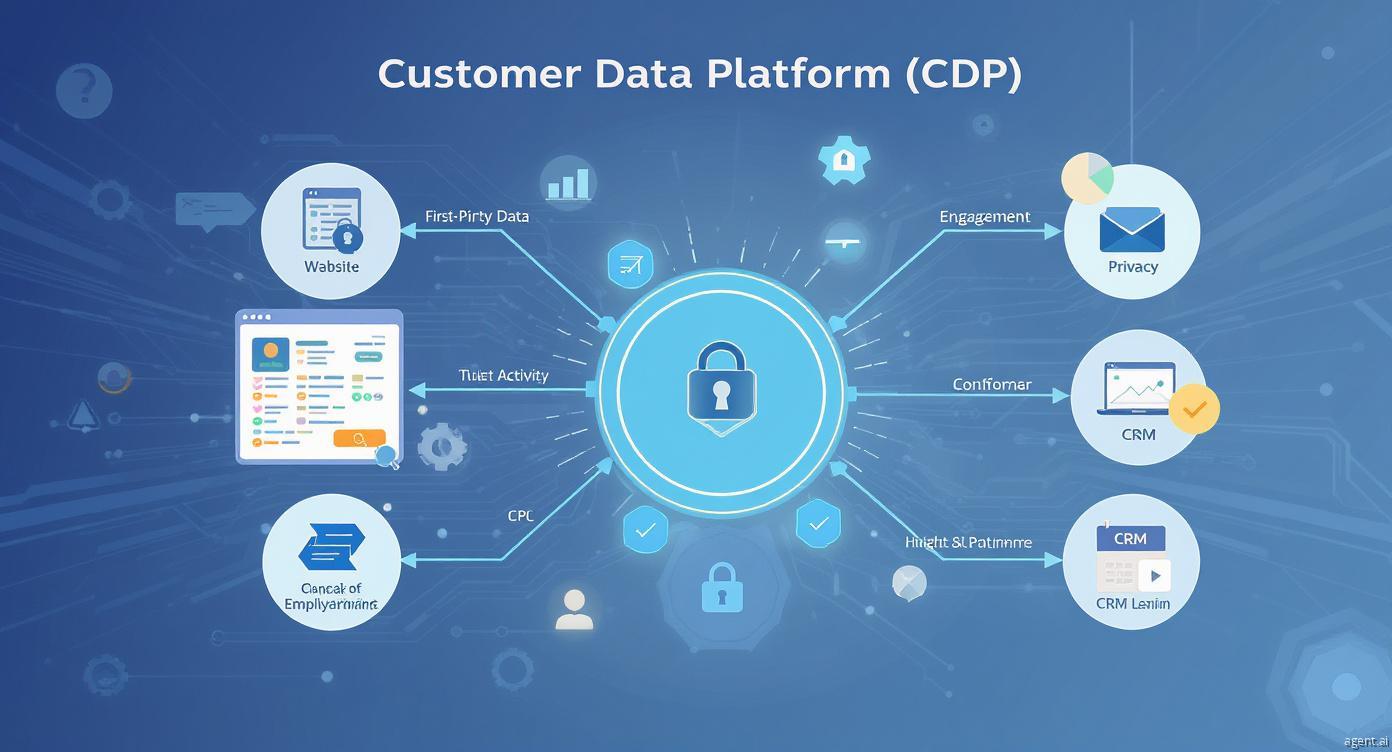
In a world where data privacy has become the foundation of trust between brands and buyers, B2B marketers are facing a new frontier of responsibility and innovation. The shift from third-party to first-party data is not just a regulatory response it’s a strategic transformation in how businesses collect, manage, and leverage insights. At the center of this evolution are Customer Data Platforms (CDP), which serve as the intelligent infrastructure connecting privacy compliance with personalization and engagement.
As 2025 unfolds, CDPs are redefining how marketers use data without compromising ethical standards. They allow organizations to unify consent-based data from trusted sources while ensuring transparent, value-driven communication. This transition from invasive tracking to responsible insight-gathering represents the new era of privacy-first B2B marketing.
The End of Third-Party Cookies and Its Implications for B2B
The phase-out of third-party cookies has sent ripples through the digital marketing ecosystem. B2B marketers, long dependent on external data for targeting and measurement, now face the challenge of maintaining accuracy in the absence of traditional tracking.
Customer Data Platforms (CDP) have emerged as the ultimate alternative enabling brands to build sustainable, first-party data frameworks that prioritize customer consent and relevance. Instead of relying on anonymous identifiers, CDPs unify data collected directly from owned channels such as websites, webinars, social engagements, and CRM systems.
This direct relationship between data and audience creates a more accurate, compliant, and long-term foundation for marketing personalization. In this new paradigm, trust is earned through transparency, and engagement is nurtured through authenticity rather than intrusive tracking.
First-Party Data: The Core of Privacy-First Engagement
First-party data is becoming the lifeblood of modern B2B marketing. Unlike third-party information, it originates from interactions that buyers willingly participate in filling out a form, subscribing to a newsletter, or downloading a resource. These touchpoints represent genuine engagement and consent-based relationships.
Customer Data Platforms (CDP) make this data actionable by consolidating it into unified customer profiles. Each record contains a detailed view of buyer intent, preferences, and behavior allowing marketers to deliver highly relevant messages while respecting privacy boundaries.
The real power of first-party data lies in its accuracy and trustworthiness. Since it is sourced directly from the customer, it reflects authentic needs and interests. As privacy regulations tighten across global markets, this ethical data advantage becomes a key competitive differentiator for B2B brands.
How CDPs Enable Compliance with Global Privacy Laws
Regulatory frameworks such as GDPR, CCPA, and India’s DPDP Act have reshaped the digital marketing landscape. Non-compliance is not only a financial risk but also a reputational one. In this context, Customer Data Platforms (CDP) have become indispensable tools for compliance management.
Modern CDPs incorporate built-in consent management modules that track when and how users grant permissions. They store and update these records automatically, ensuring that all future communications adhere to the latest consent preferences.
Additionally, CDPs anonymize sensitive data where necessary, balancing insight generation with data protection. This proactive approach reduces risk while reinforcing brand credibility in the eyes of security-conscious B2B buyers.
By aligning data strategy with regulation, CDPs empower organizations to achieve both compliance and performance a balance that will define marketing success in 2025.
Connecting Consent with Personalization
One of the biggest challenges in privacy-first marketing is maintaining personalization without overstepping data boundaries. Customer Data Platforms (CDP) provide the technological bridge to achieve this harmony.
When buyers share data through trusted interactions, CDPs interpret those signals to personalize engagement ethically. This means marketers can tailor messages based on approved information such as company size, interests, or past engagement without resorting to invasive tracking.
For example, a visitor who subscribes to product updates can receive relevant insights about upcoming releases or webinars, while those who downloaded a whitepaper may receive tailored case studies. This kind of consent-based personalization enhances trust and deepens engagement over time.
The Shift from Data Volume to Data Value
Traditional marketing often measured success by the volume of data collected. However, the privacy-first era emphasizes quality over quantity. Customer Data Platforms (CDP) help marketers focus on actionable, high-value data rather than accumulating unnecessary or irrelevant information.
Through intelligent segmentation, CDPs analyze which data points truly contribute to meaningful outcomes such as conversion likelihood or engagement depth. This helps marketing teams streamline efforts, reduce waste, and focus on high-intent leads that drive measurable business impact.
By aligning strategy with value-based data collection, organizations not only improve ROI but also ensure that their practices remain transparent and sustainable.
Building Trust Through Transparency
Trust has become one of the most valuable currencies in B2B relationships. Customer Data Platforms (CDP) play a crucial role in maintaining this trust by offering transparency into how data is collected and used.
By allowing customers to control their preferences such as communication channels or content types CDPs make personalization feel collaborative rather than intrusive. Clear communication about data use builds confidence, while ethical data practices enhance brand loyalty.
B2B buyers today expect brands to protect their information as carefully as they protect their own. By demonstrating integrity through CDP-powered transparency, businesses can turn privacy into a long-term trust-building strategy.
How CDPs Strengthen Account-Based Marketing (ABM)
Account-Based Marketing has always depended on precision targeting and insight-driven engagement. In a privacy-first landscape, Customer Data Platforms (CDP) are enhancing ABM by delivering compliant personalization at scale.
CDPs aggregate first-party data from verified interactions across multiple contacts within a target account. This unified view allows marketing and sales teams to identify shared interests, intent signals, and engagement patterns.
By leveraging this insight, teams can craft personalized outreach strategies that align with each stakeholder’s role and needs all while maintaining compliance and consent alignment. This approach ensures ABM remains data-driven without crossing ethical or legal lines.
CDPs and the Future of Predictive Data Modeling
Predictive analytics once relied heavily on third-party data sources, but the future belongs to first-party-driven models. Customer Data Platforms (CDP) are evolving to fill this gap by applying machine learning to first-party datasets.
Predictive models within CDPs analyze behavior and engagement history to forecast future actions. They can identify which accounts are most likely to convert, which content types drive the highest engagement, and when a lead is likely to move down the funnel.
The result is a smarter, more efficient marketing ecosystem one that relies on trusted data to make accurate predictions without compromising privacy. Predictive modeling built on first-party insights ensures precision while honoring consent.
The Role of Zero-Party Data in Privacy-First Marketing
While first-party data comes from observed interactions, zero-party data is intentionally shared by customers such as survey responses, preferences, and feedback. Customer Data Platforms (CDP) unify this data alongside behavioral insights to enhance personalization accuracy.
When used strategically, zero-party data empowers brands to deliver experiences that reflect customer intent directly. For instance, if a prospect indicates a preference for video case studies over eBooks, CDPs ensure that future engagement aligns with this preference.
This intentional sharing builds deeper relationships, positioning the brand as responsive and respectful of customer choice. As transparency becomes the new norm, the integration of zero-party data through CDPs will be essential for meaningful engagement.
Cross-Channel Integration and Unified Experiences
Modern B2B buyers engage across multiple platforms websites, email, events, and social channels. Customer Data Platforms (CDP) unify these touchpoints into a cohesive narrative, enabling marketers to deliver consistent experiences.
By centralizing first-party and zero-party data, CDPs ensure that each interaction whether online or offline feels connected and relevant. A buyer attending a webinar might receive a follow-up email referencing specific topics discussed, while a website visitor exploring pricing pages could be invited to a live demo.
This synchronization transforms fragmented interactions into unified journeys that drive stronger engagement and loyalty.
The Strategic Value of Ethical Data Practices
Ethical data use is not just about avoiding penalties it’s a long-term brand differentiator. B2B organizations that use Customer Data Platforms (CDP) to implement privacy-first strategies demonstrate commitment to protecting client interests.
Ethical data practices enhance brand equity and increase buyer confidence. When customers know their information is handled with care, they’re more likely to share insights that improve personalization and relevance. Over time, this transparency creates a cycle of mutual value and sustained engagement.
Preparing for the Privacy-Driven Future of B2B Marketing
As digital ecosystems evolve, Customer Data Platforms (CDP) will remain the foundation for privacy-first marketing success. They enable organizations to balance compliance with creativity transforming limitations into opportunities for innovation.
Marketers who embrace first-party and zero-party data strategies today will be best positioned to thrive in the years ahead. With privacy as a guiding principle and trust as a measurable asset, CDPs are redefining how B2B relationships are built, nurtured, and sustained.
About Us
Acceligize is a global leader in B2B demand generation, helping businesses connect with the right audiences through data-driven marketing strategies. By leveraging advanced technologies such as AI, predictive analytics, and intent data, Acceligize enables organizations to drive growth, boost conversions, and elevate buyer engagement.
With a strong focus on content syndication and performance marketing, Acceligize empowers brands to build meaningful connections and achieve measurable results in today’s competitive digital landscape.

 Arabic
 Français
 Español
 Português
 Deutsch
 Türkçe
 Dutch
Dutch
 Italiano
 Russian
 Romaian