


Medical Simulation Market: A Comprehensive Insight
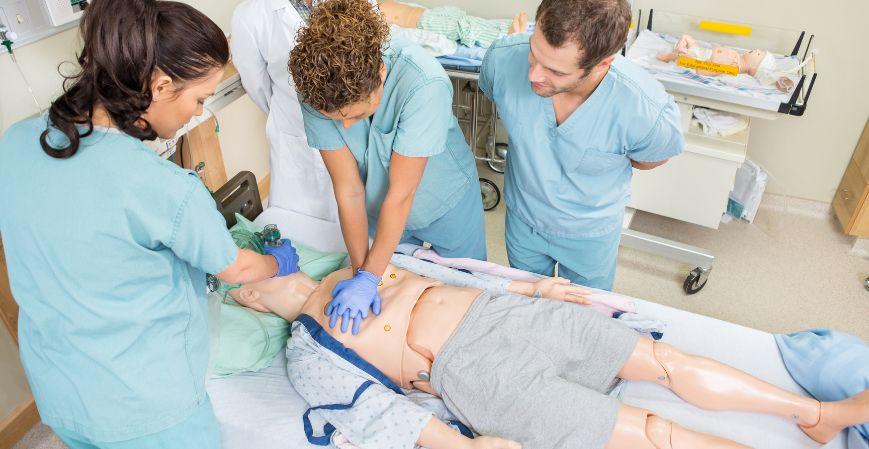
The medical simulation market represents one of the most transformative areas in modern healthcare training and clinical preparedness. It encompasses a wide range of technologies, tools, and methodologies designed to replicate real-world medical scenarios in controlled environments. These simulations allow healthcare professionals to practice, refine, and master their skills without risk to actual patients. As healthcare systems strive for higher standards of accuracy, safety, and efficiency, the medical simulation market has quickly become an essential pillar in education, clinical training, and organizational readiness.
Understanding the Concept
At its core, the medical simulation market includes products, platforms, and approaches that recreate clinical experiences for educational or operational purposes. These tools range from high-fidelity manikins that can mimic human physiological responses to advanced virtual reality environments that simulate surgical procedures, emergency situations, or complex patient interactions.
The market spans several major components:
-
Manikin-based Simulation: Mechanical or electronic models representing the human body, used for training in procedures such as resuscitation, airway management, trauma response, and obstetric care.
-
Virtual and Augmented Reality: Immersive digital environments that recreate clinical settings and allow practitioners to engage with lifelike situations using interactive headsets, controllers, or projection systems.
-
Task Trainers: Devices developed to teach specific skills like IV insertion, suturing, endoscopy, or catheterization. These tools help learners build dexterity before practicing on patients.
-
Simulation Software: Platforms for scenario creation, performance tracking, and digital learning, enabling educators to design realistic medical cases and evaluate trainees’ responses.
-
Web-Based and Remote Training Tools: Online solutions that support simulation-based learning outside traditional classrooms, helping institutions expand access to training.
The combination of these technologies forms a comprehensive ecosystem that supports continuous learning and competency development across healthcare specialties.
The Problem It Solves
Healthcare providers face increasingly complex clinical environments, where even minor errors can have serious consequences. Traditional training methods—lectures, supervised practice, and observation—often fail to prepare clinicians for the variety of real-life scenarios they may encounter. Time constraints, patient safety concerns, and limited access to rare or high-risk cases further complicate hands-on learning.
The medical simulation market addresses these challenges by offering:
-
Risk-free practice environments: Professionals can repeatedly perform procedures without jeopardizing patient safety.
-
Standardized learning experiences: Every learner can engage with the same case, ensuring consistency in training.
-
Exposure to rare or critical scenarios: Simulations can recreate complex emergencies that learners may not encounter frequently in real practice.
-
Improved team communication: Simulation enables interprofessional training, strengthening collaboration among physicians, nurses, and allied health workers.
-
Error analysis and corrective coaching: Digital and physical simulations allow educators to observe behaviors and provide targeted feedback.
By overcoming limitations in traditional training, medical simulation enhances both competence and confidence within clinical teams.
Significance
The medical simulation market is increasingly critical not only for learners but also for healthcare organizations striving to improve patient outcomes. It empowers institutions to uphold rigorous standards of quality and safety by ensuring their workforce is well-prepared and consistently trained.
For healthcare students, simulation-based learning bridges the gap between theoretical knowledge and practical application. For practicing clinicians, it supports continuous skill development and helps them adapt to new technologies, equipment, and clinical protocols. For health systems, simulation aids in assessing operational efficiency, preparing for emergencies, and reducing the likelihood of medical errors.
Overall, the market contributes to a culture of patient-centered care, precision, and accountability—values essential in modern healthcare.
Practical Applications
Today, the medical simulation market is widely used across educational institutions, hospitals, military medical units, and research organizations. In academic environments, students practice patient assessments, critical care responses, and technical skills using manikins and digital simulation tools. Hospitals employ simulations to train staff for high-risk procedures, rapid response protocols, surgical workflows, and crisis management.
Simulation is also used for:
-
Competency assessments before professionals advance to clinical practice.
-
Surgical rehearsal, allowing surgeons to practice complex cases in virtual or augmented environments.
-
Team-based training, helping units coordinate during emergencies.
-
Operational planning, such as testing healthcare facility layouts or evaluating clinical pathways.
These applications consistently lead to improved readiness, better communication, and enhanced patient safety.
Future Landscape
The future of the medical simulation market is expected to be shaped by technological innovation and evolving educational needs. Artificial intelligence will likely introduce more adaptive simulations that respond dynamically to learners’ decisions. Advances in VR and AR will provide deeper immersion and realism, transforming how practitioners experience clinical scenarios. Cloud-based platforms are set to expand remote simulation, making training accessible beyond hospital or classroom settings.
There is also growing interest in integrating simulation into routine clinical practice, not just education. Workflow rehearsal, predictive modeling, and digital twin technologies may enable healthcare teams to simulate entire care pathways before implementing them.
As healthcare continues to evolve, the medical simulation market will remain central to ensuring that professionals are prepared, confident, and capable of delivering high-quality care in every situation.

 Arabic
 Français
 Español
 Português
 Deutsch
 Türkçe
 Dutch
Dutch
 Italiano
 Russian
 Romaian