


Unpacking the Cost Drivers in Manufacturing Narrow Linewidth Laser Modules
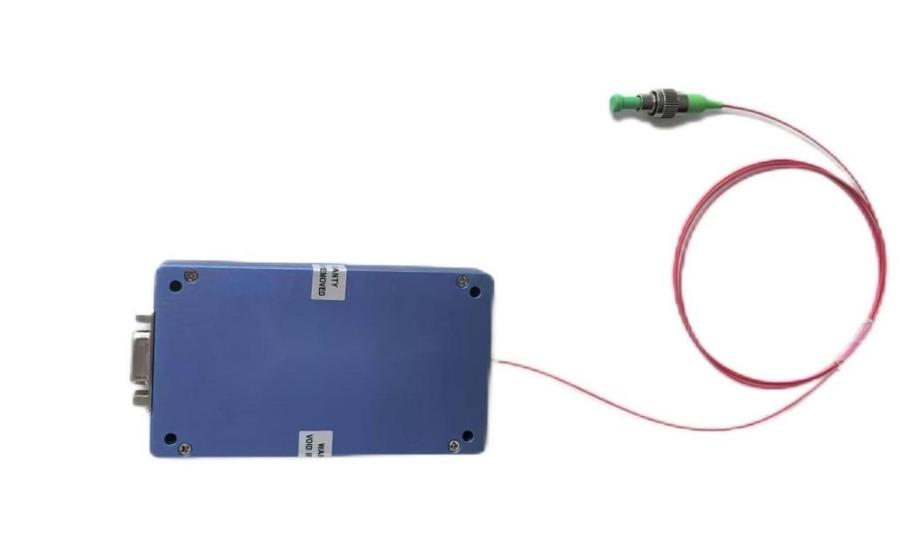
In our previous post, we explored why narrow linewidth lasers are indispensable for modern coherent optics. Their spectral purity is what enables the massive data capacities we rely on. However, this level of performance doesn't come for free. Manufacturing these lasers is a complex, precision-driven endeavor, and their cost reflects that.
If you've ever wondered why these critical components command a premium, here are the primary cost drivers in manufacturing narrow linewidth laser modules.
1. The Core Technology: Exotic Designs and Materials
Not all lasers are created equal. Standard Fabry-Perot or DFB lasers, while suitable for many applications, lack the spectral purity for coherent systems. Achieving narrow linewidth often requires more complex architectures:
External Cavity Lasers (ECLs): These use a discrete optical element (like a grating) outside the gain chip to select a very specific wavelength. This requires precise alignment and additional components.
Distributed Feedback (DFB) / Distributed Bragg Reflector (DBR) Lasers: While more integrated, achieving ultra-narrow linewidth in these designs often requires specialized indium phosphide (InP) materials and intricate wafer processing, which is costly.
Integrated Coherent Transmitter (ICT) PICs: The latest trend is to monolithically integrate the laser with modulators on a single Photonic Integrated Circuit (PIC). The development and fabrication of these complex InP PICs represent a massive R&D and capital investment.
2. The Packaging: More Than Just a Box
A bare laser die is fragile and sensitive. Packaging it into a robust, reliable module is a significant portion of the total cost.
Thermal Electric Coolers (TECs): A laser's wavelength and performance are highly sensitive to temperature. TECs are essential for active cooling and stabilization, but they are expensive components that also increase power consumption.
Hermetic Sealing: To protect the sensitive semiconductor from moisture and contaminants, the package must be hermetically sealed. This process is performed in a controlled, dry environment and adds considerable cost.
Fiber Alignment and Pig Tailing: Coupling the laser's tiny output to a single-mode fiber with high efficiency requires sub-micron precision alignment. This is a slow, manual, or semi-automated process that demands skilled technicians and expensive equipment.
3. The Testing and Calibration: The Invisible Cost
This is perhaps the most underestimated cost driver. Characterizing a narrow linewidth laser is not trivial.
Linewidth Measurement: Standard techniques like the delayed self-heterodyne method require sophisticated interferometer setups. This testing is time-consuming and adds to the factory footprint.
Performance Binning: Not all lasers come off the line with identical performance. They must be tested and binned based on key parameters like output power, linewidth, and side-mode suppression ratio (SMSR). This sorting process is essential for meeting different customer and application specs.
Aging and Reliability Tests: To ensure a 20-year operational life, samples from each batch undergo rigorous lifetesting under high temperature and power stress. This "burn-in" process ties up capital and delays revenue recognition.
4. Low Volumes and Specialization (For Now)
Unlike consumer electronics components that ship in the hundreds of millions, the market for high-performance coherent lasers is specialized and, relatively speaking, low-volume. The lack of massive economies of scale means the high fixed costs of R&D, cleanrooms, and specialized equipment are amortized over fewer units.
The Future: Integration and Automation
The path to reducing costs is clear: greater integration and automation. As more functions are integrated onto a single PIC (laser, modulator, monitor), the need for complex discrete assembly decreases. Furthermore, advancements in automated, active alignment for fiber attachment will help drive down labor costs and improve yields.
While the price of purity is high today, ongoing innovation in manufacturing is steadily making this critical technology more accessible for a wider range of applications, from datacenter interconnects to 5G transport networks.

 Arabic
 Français
 Español
 Português
 Deutsch
 Türkçe
 Dutch
Dutch
 Italiano
 Russian
 Romaian