


Why a CAPM Course Is Essential Before Taking the CAPM Exam?

The Certified Associate in Project Management (CAPM) isn’t just an entry-level certification, but a well-structured path into a profession that the world relies on more and more.
The global economy is expected to require 25 million new project professionals by 2030, according to the PMI Talent Gap analysis, and must add approximately 2.3 million roles in project-management-oriented professions each year just to keep pace with demand.
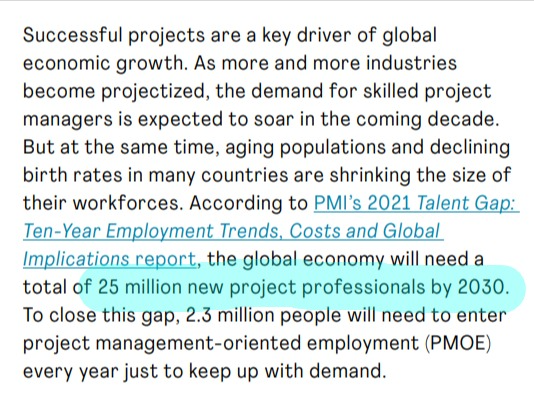
(source - https://www.pmi.org/-/media/pmi/documents/public/pdf/learning/thought-leadership/narrowing-the-talent-gap.pdf)
With this kind of growth, the CAPM certification becomes a powerful signal that you’re serious about project management.
But before you sit for the CAPM exam, investing in a structured CAPM course or CAPM training is not just a nice-to-have—it’s one of the smartest steps you can take.
The CAPM Exam Is More Structured Than It Looks
The CAPM exam is perfectly aligned with PMI’s official standards. PMI states that the CAPM exam consists of 150 questions to be completed in 180 minutes (3 hours).
These questions are built around project-management fundamentals, predictive and agile methods, and business analysis frameworks, all grounded in PMI’s global practices.
That’s a lot of content for a first-time candidate. A good CAPM course doesn’t just throw information at you; it organizes the material into logical lessons, connects related concepts, and helps you see how everything fits into the bigger project lifecycle.
Instead of trying to decode technical language alone, you get a guided path that makes exam content easier to understand and remember.
You Need 23 Hours of Education Anyway—Use Them Wisely
To even be eligible for the CAPM certification, PMI requires 23 contact hours of project management education, along with a secondary diploma (or global equivalent). This is clearly stated in PMI’s own guidance and in widely referenced eligibility summaries.
That means you’ll be doing some form of CAPM training no matter what. The question isn’t whether you should study formally; it’s whether you’ll choose a structured, high-quality CAPM course that:
- Covers the current Exam Content Outline
- Aligns with PMI’s latest CAPM exam format
- Integrates practice questions and mock tests
- Helps you meet the 23-hour education requirement efficiently
Instead of piecing together random resources, you can make those 23 hours work hard for you.
Why Mock Exams and Practice Matter So Much?
Because the CAPM exam has 150 questions to be done in 3 hours, time management and familiarity with the question style are crucial. PMI’s own practice tools, as well as those of many reputable providers, stress the importance of full-length mock exams to build exam stamina and pattern recognition.
A well-designed CAPM course typically includes:
- Topic-wise quizzes to reinforce each concept
- Full-length simulated exams mirroring the real CAPM exam format
- Explanation of why each option is right or wrong
- Strategies for handling tricky, scenario-based questions
This kind of preparation reduces exam-day surprises and gives you the confidence that you’ve already “seen” similar questions before.
The Bigger Picture: A Growing, High-Impact Career Path
Project management isn’t just another job function; it’s a major driver of global value. PMI’s employment studies show that project-management-oriented employment is expected to grow significantly—earlier analyses forecasted a 33% increase through 2027, adding nearly 22 million new jobs in key sectors.
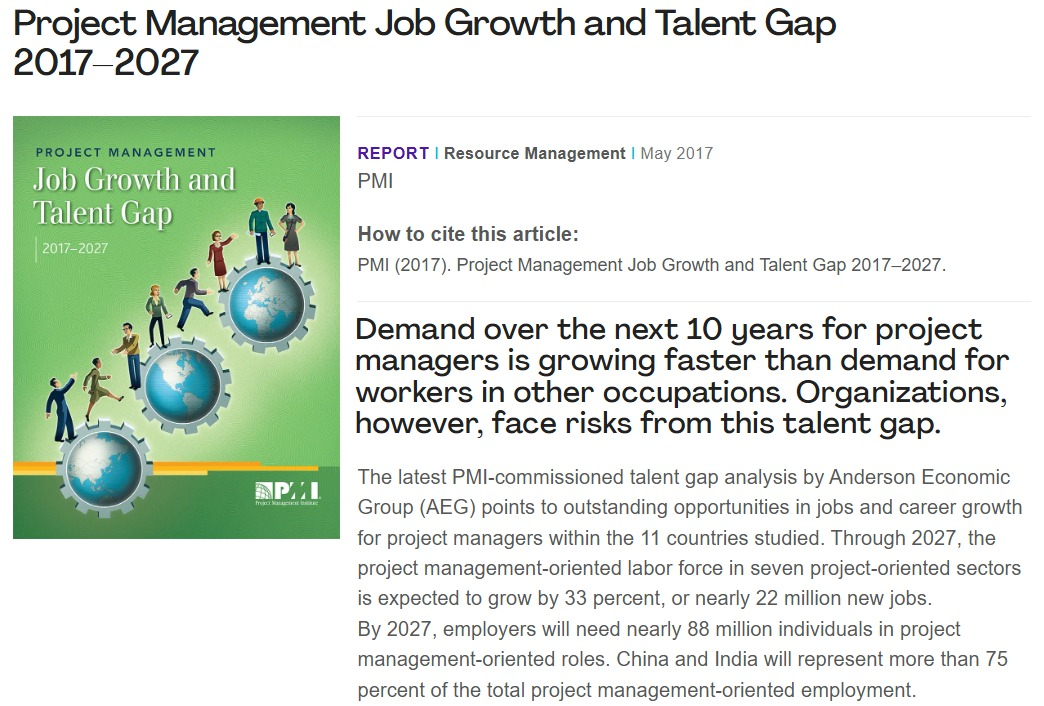
At the same time, if the talent gap isn’t addressed, the global economy could face a potential hit of up to $345.5 billion in GDP by 2030 due to a shortage of project professionals, according to PMI-related summaries.
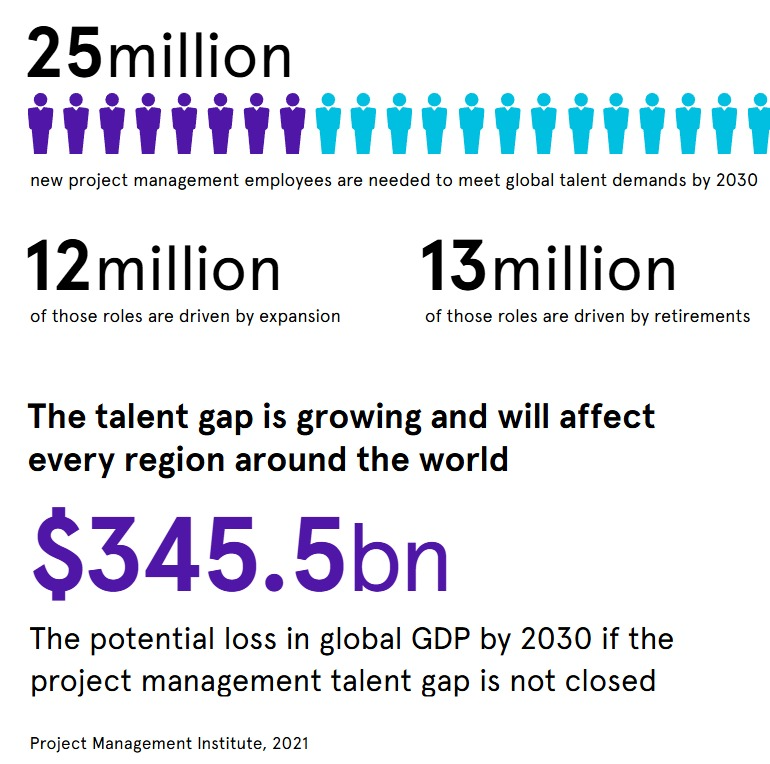
(source - https://insights.raconteur.net/closing-the-talent-gap-in-project-management)
In this context, taking a structured CAPM course does more than help you pass an exam. It helps you:
- Learn the language of modern project work
- Understand how projects deliver strategic value
- Position yourself for roles like Project Coordinator, Junior Project Manager, or PMO Analyst
The CAPM certification is your formal entry ticket; the training behind it is what makes you effective and employable.
Turning Eligibility into Advantage
Plenty of people now know about the CAPM certification and the rising demand for project managers.
What separates successful candidates is how well they prepare. A structured CAPM course turns the mandatory 23 hours of education into a true competitive advantage: it gives you depth, clarity, practice, and confidence.
Instead of treating CAPM training as a checkbox, you can use it as a springboard—to understand the PMBOK-style thinking, to become comfortable with exam-style questions, and to step into project roles with a strong foundation.
In a world that needs millions of new project professionals by 2030, isn’t it worth preparing for the CAPM exam in the most thorough, structured way possible?

 Arabic
 Français
 Español
 Português
 Deutsch
 Türkçe
 Dutch
Dutch
 Italiano
 Russian
 Romaian