


Why 2025 Is the Turning Point for Enterprise Risk Leaders Across All Industries
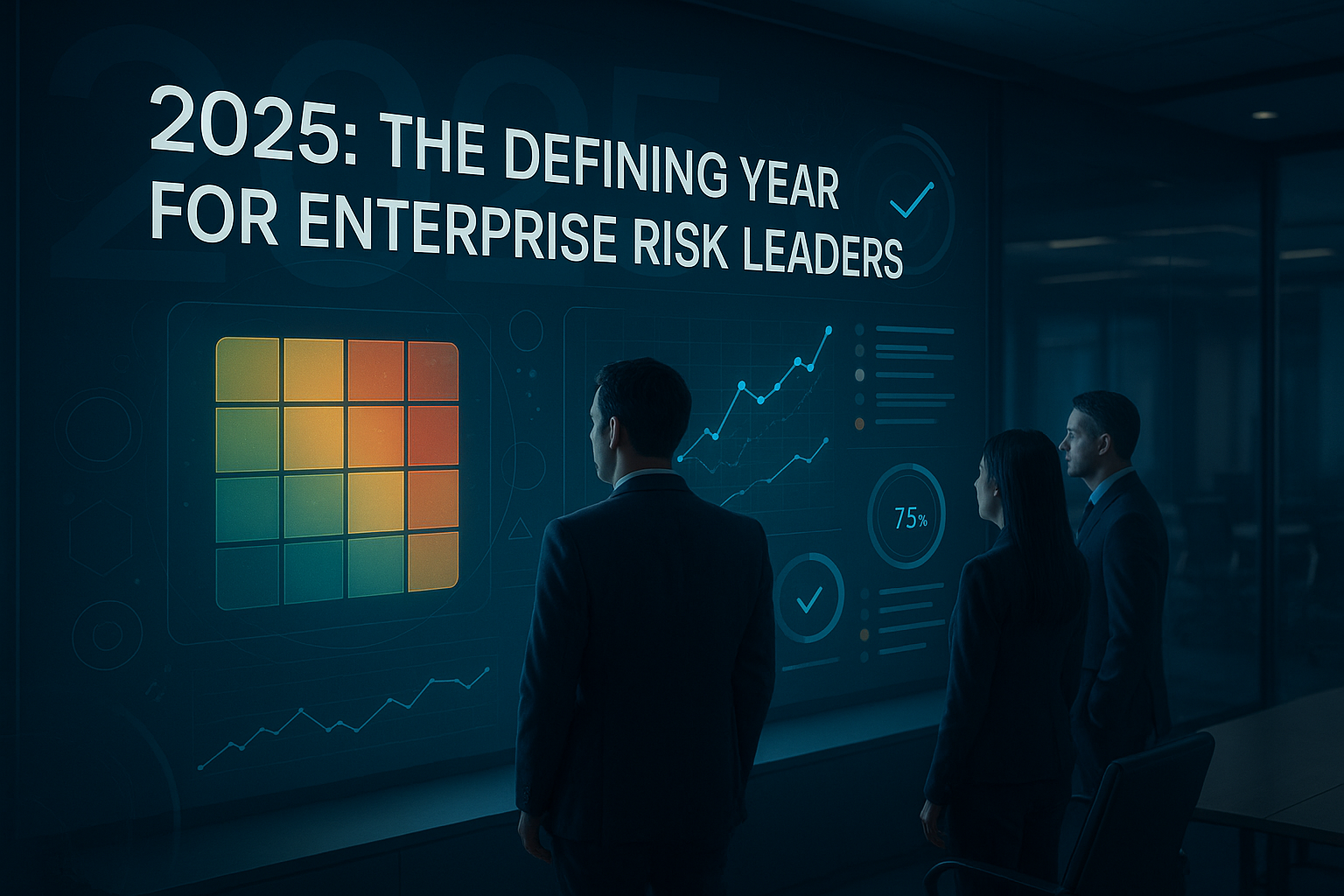
The year 2025 is shaping up to be one of the most defining moments for enterprise risk leaders. Across industries—whether it’s IT, finance, manufacturing, healthcare, or government—organizations are facing a level of disruption, uncertainty, and regulatory pressure that demands a new kind of risk leadership. What was once a supportive governance function is now becoming one of the most critical pillars of business survival.
A New Era of Business Risk Begins in 2025
The last few years have shown businesses how quickly operations, markets, and technology landscapes can shift. But 2025 is where these disruptions converge:
-
AI adoption is accelerating, creating new efficiencies but also new risk categories.
-
Cyberattacks are more sophisticated, and breaches now cost millions.
-
Regulatory frameworks are tightening, especially in industries dealing with data, safety, and consumer trust.
-
Supply chains remain fragile, despite global stabilization efforts.
-
Climate and ESG risks are no longer optional—they’re being monitored by investors, boards, and regulators.
In this environment, companies have realized that traditional reactive risk management no longer works. They need risk leaders who can forecast, quantify, and mitigate emerging threats before they escalate.
Risk Leaders Move From Support Function to Strategic Partners
2025 marks the shift where risk leaders are no longer reporting after issues occur—they’re now involved in shaping strategies, leading cross-functional decisions, and guiding digital transformation initiatives.
Key changes driving this shift include:
1. Greater Boardroom Visibility
Boards want real-time dashboards, measurable KPIs, and predictive insights. Risk leaders now participate directly in business planning, investment decisions, and governance reviews.
2. AI and Data-Driven Risk Tools
Modern risk teams are adopting automation, analytics, and risk intelligence platforms. Leaders must understand technology, innovation, and governance at a deeper level than ever.
3. Cross-Industry Convergence of Risks
Cybersecurity, operational, compliance, reputational, and third-party risks are blending together. This demands leaders who can manage multi-dimensional threats—not siloed ones.
4. Demand for Transparent, Documented Risk Systems
Auditors, regulators, and stakeholders now expect clear frameworks, documented controls, and structured risk processes. This pushes enterprises to adopt internationally recognized frameworks.
Why ISO 31000 Risk Manager Certification Matters in 2025
With risk roles evolving, the ISO 31000 Risk Manager certification has become one of the most valuable credentials for professionals in this domain. Here’s why it stands out:
1. It Offers a Universal Risk Framework
Organizations across industries trust ISO 31000 because it is globally recognized and adaptable. Certified professionals understand:
-
Risk principles
-
Governance structures
-
Assessment methods
-
Implementation steps
-
Continuous improvement
This makes them capable of guiding any organization through complex risk landscapes.
2. It Proves Strategic, Not Just Technical, Competency
2025 demands risk leaders who think beyond compliance. ISO 31000 certification covers strategic elements like leadership engagement, enterprise integration, and decision-making influence.
3. It Enhances Career Value and Employability
Companies increasingly prefer certified professionals because they bring consistent methodologies and demonstrate commitment to advanced risk practices. This opens opportunities in roles like:
-
Enterprise Risk Manager
-
Governance & Compliance Lead
-
Risk Consultant
-
Internal Auditor
-
Business Continuity Manager
4. It Aligns With Modern, Proactive Risk Approaches
ISO 31000 promotes preventive, flexible, and business-integrated risk management—exactly what organizations need in an uncertain 2025 landscape.
2025: The Year Risk Leaders Rise to Executive-Level Influence
As industries move into an era defined by complexity, risk managers who combine technical understanding with leadership, strategy, and standardized frameworks will become irreplaceable.
2025 isn’t just another year—it is the inflection point where enterprise risk leaders step into a future where their role is central to resilience, performance, and sustainable growth.
Organizations that invest in strong risk leadership—and professionals who pursue the ISO 31000 Risk Manager certification—will stand ahead of disruption and shape a more predictable, secure, and high-performing future.

 Arabic
 Français
 Español
 Português
 Deutsch
 Türkçe
 Dutch
Dutch
 Italiano
 Russian
 Romaian