


From Observation to Instruction: The Deep Science Behind Emergent Curriculum Design in Preschools
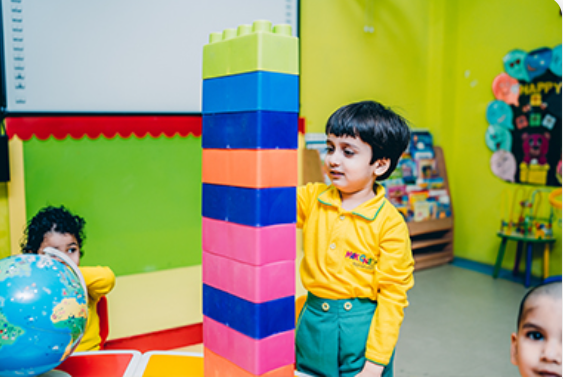
Emergent curriculum is not a trend—it is a scientific, child-centered approach deeply rooted in developmental psychology, cognitive science, and early-learning research. Instead of relying on rigid lesson plans created months in advance, emergent curriculum builds meaningful learning experiences directly from children’s interests, behaviors, and interactions. Whether you explore a preschool in Pune, a preschool in Lucknow, a preschool in Kanpur, a preschool in Gwalior, or a preschool in Hyderabad, the most progressive institutions today are shifting toward this dynamic model.
Why Observation Is the Starting Point
The scientific backbone of emergent curriculum lies in systematic observation. Teachers become researchers—carefully watching how children play, talk, explore, question, and wonder.
Types of Observations Used
-
Anecdotal records: Brief notes capturing spontaneous behaviors.
-
Running observations: Detailed, moment-by-moment tracking of an activity.
-
Time sampling: Looking at how long children stay engaged in certain tasks.
-
Interaction mapping: Understanding peer relationships and collaboration.
In leading centres like any forward-thinking preschool in Hyderabad or preschool in Pune, educators interpret these observations to reveal patterns of curiosity. For example, if several children repeatedly build towers, it may point to an emerging interest in balance, height, engineering, or even storytelling.
The Science Behind Connecting Interests to Learning Goals
Emergent curriculum does not mean randomness or unstructured learning. It is guided by:
-
Cognitive Development Theories (Piaget, Vygotsky)
-
Brain-based learning research
-
Early Childhood Learning Frameworks (social, emotional, cognitive, language, motor domains)
Teachers observe → identify interests → map those interests to learning objectives → plan activities.
Example:
If children at a preschool in Kanpur show interest in shadows during outdoor play, teachers may design experiences around:
-
light and dark (science),
-
body movement (gross motor),
-
drawing shadows (art),
-
vocabulary like “silhouette” or “reflection” (language).
This scientific mapping ensures that play becomes purposeful, leading to deeper learning.
Documentation: Turning Invisible Learning Into Visible Progress
Documentation is a hallmark of high-quality emergent curriculum. At many innovative centres—be it a preschool in Lucknow or a preschool in Gwalior—teachers create:
-
Photo journals
-
Learning stories
-
Child portfolios
-
Display panels
-
Progress narratives
These tools help educators track the evolution of a child’s thinking. They also allow parents to see the transformation from a simple interest (“I like cars”) to a structured project (“Let’s create a traffic system model”).
Teacher as a Facilitator, Not Instructor
In traditional models, teachers direct the learning. In emergent curriculum, they facilitate it.
Roles in This Approach
-
Listener: capturing children’s ideas
-
Guide: setting up stimulating environments
-
Co-learner: exploring alongside children
-
Researcher: analysing behaviors to design next steps
A skilled teacher in a progressive preschool in Hyderabad or preschool in Pune does not dominate the learning environment—they intentionally design it so children lead the journey.
The Environment Acts as the “Third Teacher”
Emergent curriculum relies on carefully curated spaces. Classrooms become laboratories where children can:
-
explore materials they’re curious about
-
collaborate with peers
-
discover sensory experiences
-
test ideas in real time
This approach is now popular in modern preschool in Gwalior, preschool in Kanpur, and fast-growing preschool in Lucknow because it encourages independence, agency, and problem-solving.
How Projects Emerge from Children’s Interests
A project could last a day or several weeks. It grows as children ask more questions and explore deeper.
Stages of Emergent Projects
-
Interest Trigger – Something fascinates children (e.g., rain, insects, vehicles).
-
Exploration – Teachers provide materials, stories, and experiments.
-
Investigation – Children research, build, document, and test theories.
-
Representation – They express learning through art, storytelling, models, drama.
-
Reflection – Teachers and children revisit what they learned.
At a child-centered preschool in Lucknow, for example, a simple rainy-day puddle dance may evolve into a multi-week water project involving cloud formation, measuring rainfall, floating and sinking experiments, and water-cycle art.
Benefits of Emergent Curriculum Backed by Research
1. Higher Engagement
Children learn better when they care about the topic. Cognitive science proves retention improves when curiosity is activated.
2. Better Social Development
Group projects foster collaboration, empathy, leadership, and communication.
3. Stronger Problem-Solving Skills
Instead of being told answers, children investigate, test, and discover.
4. Deeper Understanding
Learning is not superficial. It evolves through layers of exploration.
5. Inclusive & Differentiated Learning
Children with different abilities can engage at their own pace and style.
Whether in a preschool in Pune or a growing preschool in Kanpur, emergent curriculum supports each child’s unique developmental journey.
Why Parents Prefer Schools Using Emergent Curriculum
Today’s parents want more than memorization—they want creativity, real-world skills, and emotional intelligence. Preschools adopting emergent curriculum deliver exactly that.
Parents in major cities—from a tech-driven preschool in Hyderabad to a community-centric preschool in Gwalior—are seeing children become:
-
confident communicators
-
natural explorers
-
critical thinkers
-
independent learners
Conclusion: From Observation to Instruction—A Powerful Evolution
Emergent curriculum is not merely a teaching approach; it is a philosophy rooted in science, respect for children's natural curiosity, and a belief in meaningful learning. As more institutions—including every quality-focused preschool in Pune, preschool in Lucknow, preschool in Kanpur, preschool in Gwalior, and preschool in Hyderabad—adopt this model, early education in India is making a significant shift.
By starting with careful observation and building instruction from children’s genuine interests, educators are shaping classrooms where learning is joyful, relevant, and deeply impactful.

 English
 Arabic
 Français
 Português
 Deutsch
 Türkçe
 Dutch
Dutch
 Italiano
 Russian
 Romaian