


Tips to Successfully Pass ISO 31000 Certification
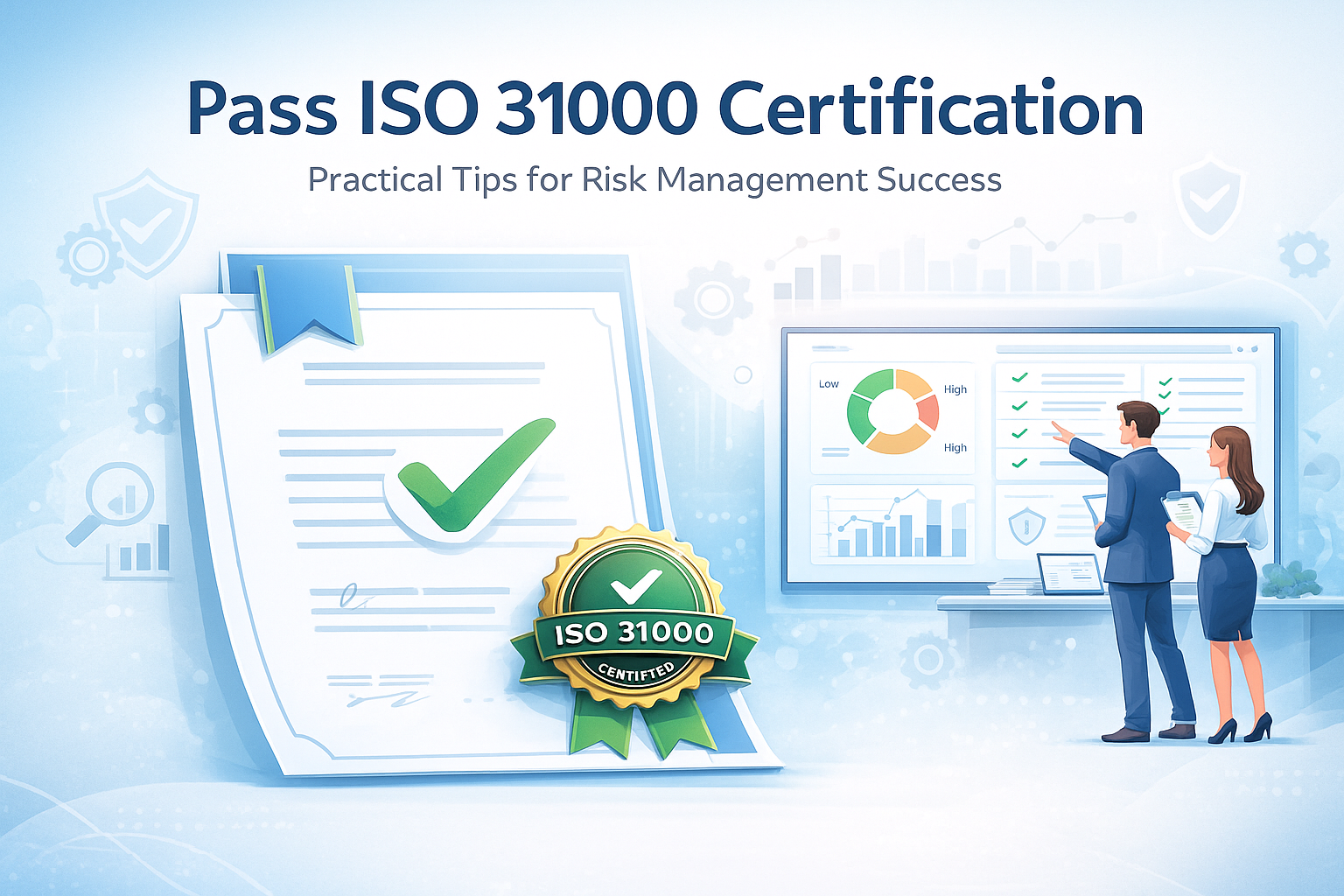
ISO 31000 certification is becoming increasingly vital for organizations and professionals aiming to manage risks effectively. It provides a structured framework for risk management, helping businesses identify, assess, and treat risks systematically. Achieving this certification not only enhances credibility but also improves decision-making, operational efficiency, and stakeholder confidence. For individuals, becoming ISO 31000 certified opens doors to exciting career opportunities in risk management across industries.
1. Understand the ISO 31000 Standard Thoroughly
Before attempting certification, it’s essential to have a deep understanding of ISO 31000’s principles and framework. The standard emphasizes a systematic approach to risk management, integrating it into the organization’s overall governance and strategy. Familiarize yourself with its key elements, such as risk identification, assessment, treatment, monitoring, and communication. Professionals should also understand the differences between risk management principles and processes, as both are evaluated during certification audits.
2. Conduct a Gap Analysis
A gap analysis helps identify areas where your organization’s current risk management practices fall short of ISO 31000 requirements. Compare existing policies, procedures, and risk registers against the standard. This analysis provides a clear roadmap of what needs improvement, ensuring that resources are directed efficiently. Addressing gaps before the audit reduces surprises and increases your chances of certification success.
3. Develop a Strong Risk Management Framework
ISO 31000 emphasizes the importance of a structured risk management framework. Establish clear processes for risk identification, analysis, evaluation, and treatment. Document roles and responsibilities, risk appetite, and reporting mechanisms. A well-documented framework demonstrates to auditors that risk management is systematic, consistent, and integrated into the organization’s decision-making process.
4. Train Your Team
Successful ISO 31000 implementation relies on people. Conduct training sessions to ensure that all employees understand their role in risk management. Awareness programs help staff identify risks early and follow standardized procedures. For individuals seeking personal certification, consider enrolling in ISO 31000 training courses to gain formal knowledge and practical insights into risk assessment and mitigation.
5. Maintain Comprehensive Documentation
Documentation is a critical part of ISO 31000 certification. Keep records of risk assessments, mitigation plans, monitoring reports, and management reviews. Well-maintained documentation provides evidence that the organization adheres to ISO 31000 principles. During the audit, auditors will closely examine records to verify compliance, so organized and accessible documentation significantly improves audit outcomes.
6. Conduct Internal Audits and Reviews
Regular internal audits allow you to identify issues before the official certification audit. Review your risk management processes, documentation, and reporting practices. Internal audits not only prepare your team but also demonstrate a commitment to continuous improvement, which is highly valued in ISO 31000 certification.
7. Engage with Experienced Consultants
If your organization is new to ISO 31000, engaging an experienced consultant can be invaluable. Consultants provide practical guidance, help develop risk frameworks, and ensure your processes align with ISO standards. Their expertise can significantly streamline the certification journey and reduce common pitfalls.
Why ISO 31000 Certification Is Important
ISO 31000 certification is more than a credential; it’s a strategic advantage. For organizations, it enhances the ability to anticipate and manage risks, safeguard assets, and improve overall resilience. For professionals, it validates expertise in risk management, making them more competitive in roles like risk manager, compliance officer, or project manager. Moreover, ISO 31000 certification signals to stakeholders and clients that risk is proactively managed, fostering trust and credibility.
In conclusion, passing ISO 31000 certification requires thorough preparation, a strong risk management framework, team training, and meticulous documentation. By following these tips, organizations and professionals can not only achieve certification but also leverage it to strengthen risk management practices, support strategic goals, and build long-term organizational resilience.

 English
 Arabic
 Français
 Português
 Deutsch
 Türkçe
 Dutch
Dutch
 Italiano
 Russian
 Romaian