In today’s interconnected world, small businesses are no longer limited to local markets. They now have the opportunity to expand internationally and tap into new revenue streams. However, one of the biggest hurdles faced by small businesses when going global is managing cross-border payments. The process of sending and receiving money internationally can be complex, time-consuming, and expensive due to high fees, lengthy processing times, and complicated regulatory requirements.
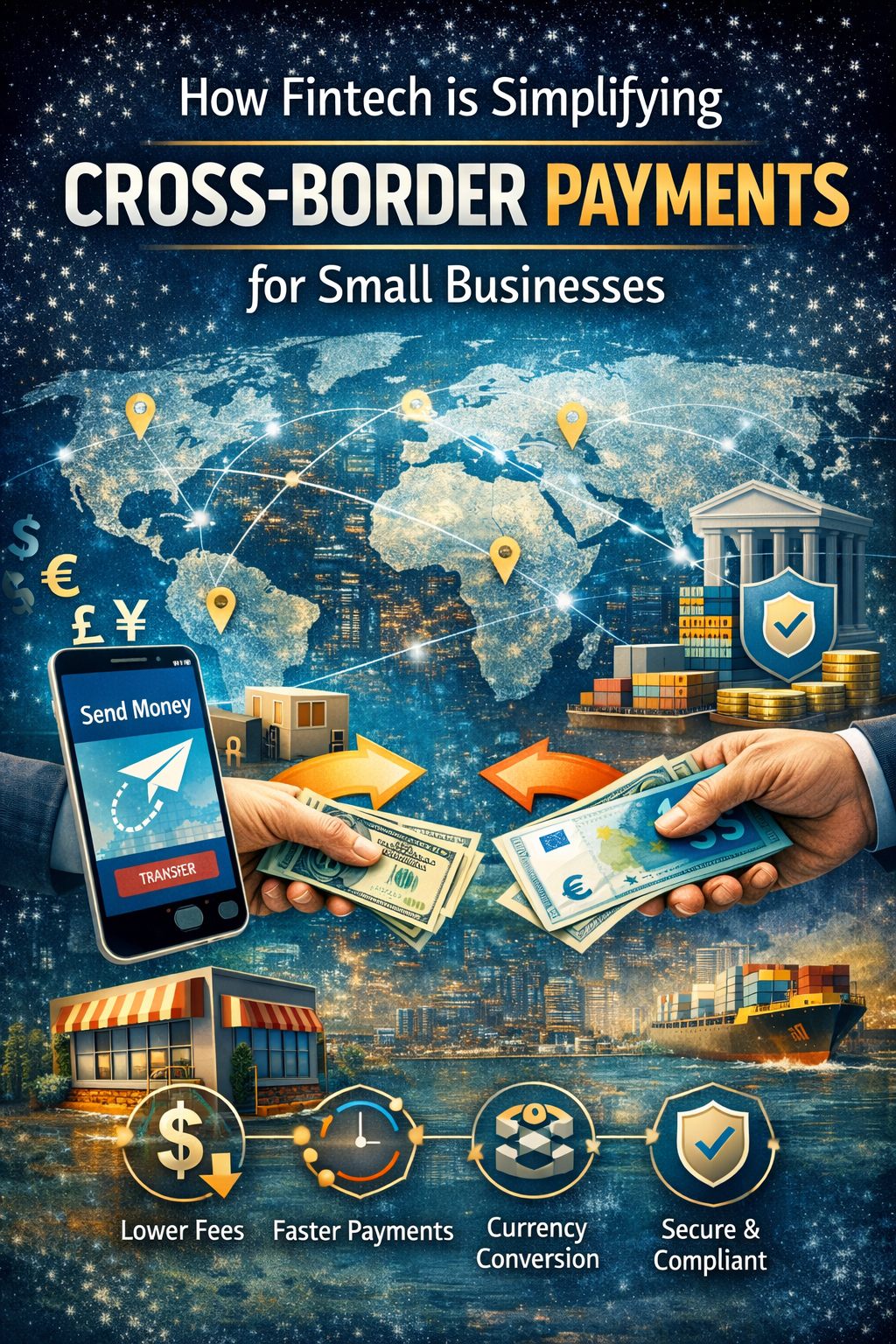
This is where fintech—financial technology—comes into play. In recent years, fintech companies have revolutionized the way businesses handle cross-border transactions, offering simpler, faster, and more cost-effective solutions. In this blog, we’ll explore how fintech is simplifying cross-border payments for small businesses and enabling them to thrive in the global marketplace.
1. Reducing Transaction Fees
One of the most significant challenges with traditional cross-border payments is the high fees associated with international money transfers. Banks and traditional financial institutions often charge hefty fees for processing cross-border transactions, which can be a significant burden for small businesses operating on tight margins.
Fintech companies have stepped in to offer alternative solutions that dramatically lower these fees. By using digital platforms that bypass traditional intermediaries, fintech providers reduce the need for multiple banks or institutions to process payments, lowering the associated costs. These platforms leverage technology to streamline the payment process, passing on the savings to businesses.
How Fintech Reduces Transaction Fees:
-
Direct Transfers: Fintech companies enable direct transfers between countries and businesses, eliminating the need for third-party intermediaries that often charge additional fees.
-
Transparent Pricing: Unlike traditional financial institutions, fintech platforms provide clear and upfront pricing with no hidden charges, making it easier for small businesses to understand the costs involved in cross-border transactions.
-
Better Exchange Rates: Many fintech platforms offer more competitive exchange rates than banks, which helps small businesses save on currency conversion costs.
2. Faster Payment Processing
Traditional cross-border payments can take anywhere from several days to over a week to process, depending on the countries involved. This delay can disrupt cash flow, affect business operations, and create frustrations for both businesses and their customers. In contrast, fintech solutions are designed to offer near-instantaneous or same-day processing for cross-border transactions.
Fintech companies use digital platforms that automate and expedite the transfer process, allowing businesses to send and receive payments much faster than with traditional methods. This speed is particularly crucial for small businesses that rely on timely payments to maintain their operations.
How Fintech Speeds Up Payments:
-
Real-Time Transfers: Many fintech platforms offer real-time or same-day payment services, enabling businesses to send and receive funds within minutes, rather than waiting several days for transactions to clear.
-
24/7 Availability: Traditional banking hours and time zone differences can delay payments, but fintech solutions operate around the clock, allowing businesses to make cross-border payments at any time of day.
-
Blockchain Technology: Some fintech companies utilize blockchain technology, which enables secure, decentralized transactions that can be processed in real time, bypassing traditional banking networks.
3. Simplifying Currency Conversion
Currency conversion is an inherent part of cross-border payments, but it can be complicated and costly. Traditional financial institutions often charge high fees for converting one currency into another, and exchange rates fluctuate constantly, making it difficult for small businesses to predict the exact amount they will receive or pay.
Fintech companies have made currency conversion more straightforward and affordable by offering competitive exchange rates, low conversion fees, and multi-currency accounts. Small businesses can now manage their international payments more easily by holding multiple currencies in one account, reducing the need to convert funds frequently.
How Fintech Simplifies Currency Conversion:
-
Multi-Currency Accounts: Many fintech platforms allow businesses to hold and manage multiple currencies in one account, reducing the need for constant currency exchanges and saving on conversion fees.
-
Real-Time Exchange Rates: Fintech platforms offer real-time exchange rates, allowing businesses to track the current value of currencies and make informed decisions about when to convert funds.
-
Automated Conversions: Fintech companies often offer automated currency conversion services, enabling businesses to seamlessly convert funds as needed, without manually tracking rates or worrying about hidden fees.
4. Ensuring Compliance and Security
Regulatory compliance is a major concern for businesses dealing with cross-border payments. Each country has its own set of financial regulations, including anti-money laundering (AML) and know-your-customer (KYC) rules. Small businesses often struggle to navigate these complex regulations, risking fines or penalties for non-compliance.
Fintech companies are helping small businesses comply with international financial regulations by providing built-in compliance tools. These platforms often have automated AML and KYC processes that ensure businesses are meeting local and global regulatory requirements without the need for costly legal consultations.
How Fintech Ensures Compliance and Security:
-
Automated KYC/AML Checks: Fintech platforms automate the process of verifying customer identities and ensuring that businesses comply with AML regulations. This reduces the administrative burden on small businesses and ensures compliance without extra effort.
-
Encrypted Transactions: Fintech companies use advanced encryption techniques to secure cross-border payments, ensuring that sensitive financial data is protected from cyber threats.
-
Regulated Platforms: Many fintech platforms are regulated by financial authorities, offering businesses a secure and compliant environment for making cross-border transactions.
5. Enhancing Global Reach for Small Businesses
The global marketplace offers vast opportunities for growth, but for small businesses, the barriers to entry can be high. Managing cross-border payments traditionally required businesses to navigate complex financial systems, which could be a significant deterrent to expanding internationally. Fintech is democratizing access to global markets by simplifying international transactions.
With fintech, small businesses can easily access international payment networks, allowing them to send and receive payments from virtually any country in the world. This expanded reach makes it easier for businesses to engage in international trade, expand their customer base, and increase their revenue potential.
How Fintech Enhances Global Reach:
-
Access to Multiple Markets: Fintech platforms allow businesses to process payments in multiple currencies and from various regions, enabling them to tap into new global markets without the complexity of dealing with local banks.
-
Global Payment Network: With fintech, small businesses gain access to a global payment network that enables them to engage with international customers, suppliers, and partners without the need for expensive intermediaries.
-
Localized Payment Solutions: Fintech companies often offer localized payment solutions, allowing small businesses to accept payments in their customers' preferred currencies and payment methods, enhancing the customer experience and improving conversion rates.
6. User-Friendly Platforms
One of the key advantages of fintech for small businesses is the ease of use. Traditional cross-border payment solutions are often cumbersome and difficult to navigate, especially for businesses with limited resources. Fintech platforms, on the other hand, are designed with user experience in mind, making it easy for business owners and their teams to manage international payments.
Many fintech companies offer intuitive, mobile-friendly platforms that allow businesses to initiate, track, and manage cross-border transactions from anywhere, at any time.
How Fintech Platforms Enhance User Experience:
-
Mobile Apps: Many fintech platforms provide mobile apps that allow business owners to manage cross-border payments on the go, offering full functionality at their fingertips.
-
Easy Setup and Integration: Fintech platforms are often quick and easy to set up, with seamless integrations into existing accounting and invoicing software, reducing the time and effort required to manage international payments.
-
Customer Support: Most fintech platforms offer 24/7 customer support, ensuring that businesses can get assistance whenever they need it.
Conclusion
As small businesses increasingly engage in cross-border transactions, fintech has emerged as a game-changer. By offering lower fees, faster payments, simplified currency conversion, enhanced security, and easy-to-use platforms, fintech is making it easier for small businesses to manage international payments.
Whether you’re sending payments to a supplier in China, receiving funds from a customer in Europe, or expanding your business into new markets, fintech is simplifying the cross-border payments process and helping small businesses unlock global growth. As the fintech industry continues to innovate, we can expect even more advancements that will further empower small businesses to compete and thrive in the international marketplace.




 English
 Français
 Español
 Português
 Deutsch
 Türkçe
 Dutch
Dutch
 Italiano
 Russian
 Romaian