


Understanding the Difference Between AIS and TIS in Income Tax
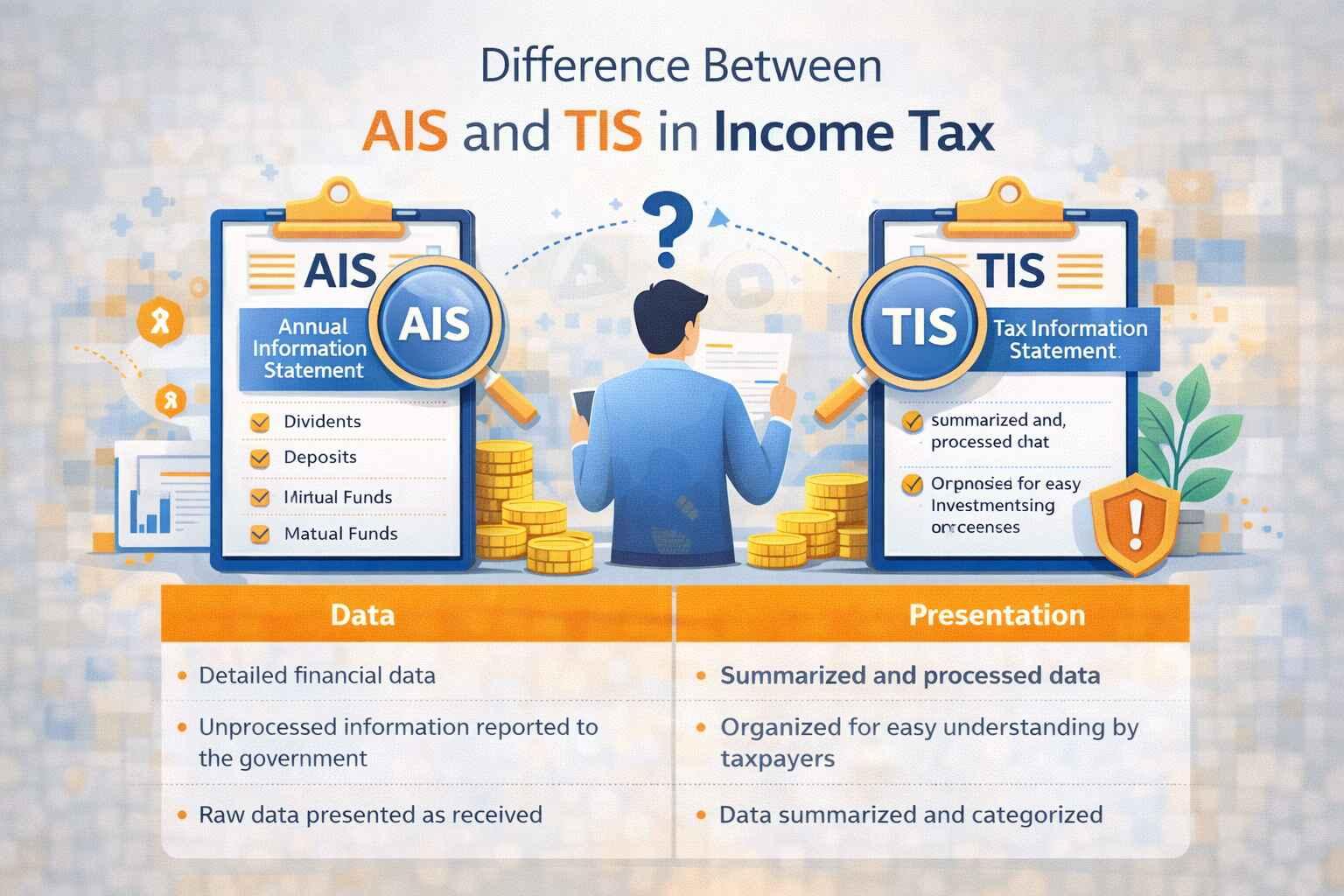
Income tax reporting in India has changed significantly in recent years. The tax department now relies heavily on data collected from multiple reporting entities to track taxpayer transactions. This is where AIS and TIS come into play. Understanding the difference between AIS and TIS is no longer optional if you want accurate tax filings and fewer notices.AIS and TIS are designed to bring transparency, but they serve different purposes. Many taxpayers see mismatches simply because they do not understand AIS vs TIS in income tax explained properly. What this really means is that clarity is essential before filing returns. This section sets the foundation for understanding how to reconcile AIS and TIS correctly and avoid common compliance mistakes.
-
AIS stands for Annual Information Statement and reflects detailed transaction-level data
-
TIS stands for Taxpayer Information Summary and provides summarized figures
-
Both are auto-populated based on third-party reporting
-
AIS shows raw data while TIS shows processed data
-
The Difference between AIS and TIS affects return filing accuracy
-
Knowing AIS vs TIS in income tax explained helps prevent incorrect disclosures
-
Reconciliation is critical before submitting your ITR
What AIS Represents in Income Tax Reporting
AIS is the most detailed data source provided to taxpayers by the income tax department. To truly grasp the Difference between AIS and TIS, you must first understand what AIS actually contains.AIS captures every financial transaction reported against your PAN during the financial year. This includes information from banks, employers, mutual funds, registrars, and other reporting entities. When AIS vs TIS in income tax is explained, AIS is the raw database that feeds into TIS. This section explains how AIS works and why it matters when learning how to reconcile AIS and TIS effectively.
-
AIS reflects interest income, dividend income, salary details, and capital transactions
-
It includes both reported and derived information
-
Transactions may appear duplicated or unverified initially
-
AIS allows taxpayers to submit feedback on incorrect entries
-
The Difference between AIS and TIS starts with the level of detail
-
AIS data may include exempt income for tracking purposes
-
Understanding AIS is the first step in how to reconcile AIS and TIS
Meaning and Role of TIS in Income Tax
TIS is a summarized view derived from AIS data. While AIS shows everything, TIS shows what the tax department considers relevant for return filing. This is a core point in the Difference between AIS and TIS. When AIS vs TIS in income tax explained, TIS is essentially the cleaned and categorized version of AIS. It removes duplications and aggregates values under specific income heads. This section explains why TIS exists and how it simplifies tax compliance.
-
TIS presents category-wise income totals
-
It eliminates duplicate entries visible in AIS
-
Only relevant figures appear in TIS
-
TIS helps taxpayers understand expected disclosures
-
The Difference between AIS and TIS lies in processing and presentation
-
TIS is used for risk assessment and scrutiny
-
Accurate TIS review is essential for how to reconcile AIS and TIS
Structural Difference Between AIS and TIS
One of the most practical ways to understand the Difference between AIS and TIS is by looking at how both statements are structured. AIS is transaction-centric, while TIS is income-centric. When AIS vs TIS in income tax explained, this structural distinction explains why figures may look different even though they come from the same source.This section breaks down how structure impacts reconciliation.
-
AIS lists individual transactions with dates and sources
-
TIS groups transactions under income heads
-
AIS may show provisional or pending data
-
TIS reflects processed and validated data
-
The Difference between AIS and TIS impacts reporting decisions
-
Structure affects how notices are generated
-
Understanding structure helps in how to reconcile AIS and TIS
Data Sources That Feed AIS and TIS
Both AIS and TIS rely on third-party reporting, but how the data is used creates the Difference between AIS and TIS. Banks, employers, mutual funds, registrars, and even state authorities feed information into AIS. TIS then extracts usable data from AIS. This section explains how data flows and why mismatches occur.
-
AIS collects data directly from reporting entities
-
TIS uses AIS as its base dataset
-
Errors in reporting affect AIS first
-
Corrections reflect in TIS after processing
-
The Difference between AIS and TIS begins at data validation
-
Taxpayers must verify source accuracy
-
This understanding improves how to reconcile AIS and TIS
Why AIS and TIS Figures May Not Match
A common concern among taxpayers is a mismatch between AIS and TIS. This confusion is central to the Difference between AIS and TIS. When AIS vs TIS in income tax explained, mismatches usually occur due to duplicate entries, timing differences, or categorization adjustments. This section clarifies why mismatches are normal and how to interpret them.
-
AIS may show duplicate transaction entries
-
TIS removes duplications during processing
-
Provisional data may exist in AIS
-
TIS updates after feedback or corrections
-
The Difference between AIS and TIS is not always an error
-
Taxpayers should not blindly copy AIS data
-
Correct approach matters in how to reconcile AIS and TIS
How to Reconcile AIS and TIS Step by Step
Understanding how to reconcile AIS and TIS is critical for accurate return filing. This process ensures that your declared income aligns with tax department records. When AIS vs TIS in income tax explained, reconciliation acts as the bridge between raw data and reported income. This section explains reconciliation in practical terms.
-
Review AIS thoroughly before return filing
-
Identify incorrect or duplicate entries
-
Submit feedback directly in AIS portal
-
Check updated TIS after processing
-
Match TIS figures with return schedules
-
The Difference between AIS and TIS guides reconciliation strategy
-
Proper reconciliation reduces notice risk
Impact of AIS and TIS on Income Tax Notices
The Difference between AIS and TIS plays a major role in notice generation. Most automated notices rely on mismatches between filed returns and TIS data. When AIS vs TIS in income tax explained, it becomes clear that TIS is the primary benchmark for compliance checks. This section explains how improper reconciliation leads to scrutiny.
-
Notices are triggered based on TIS mismatch
-
AIS feedback affects TIS accuracy
-
Unreported income in TIS raises alerts
-
Incorrect disclosures increase compliance risk
-
The Difference between AIS and TIS impacts risk profiling
-
Proactive reconciliation prevents follow-ups
-
Understanding how to reconcile AIS and TIS saves time
Common Mistakes Taxpayers Make with AIS and TIS
Despite availability of data, many taxpayers still misunderstand the Difference between AIS and TIS. These mistakes often lead to incorrect filings and avoidable notices. When AIS vs TIS in income tax explained, awareness becomes the best safeguard. This section highlights what to avoid.
-
Assuming AIS and TIS figures must match exactly
-
Ignoring duplicate AIS entries
-
Filing returns without reviewing TIS
-
Not submitting AIS feedback
-
Misunderstanding income categorization
-
The Difference between AIS and TIS is often overlooked
-
Proper knowledge improves how to reconcile AIS and TIS
Best Practices for Using AIS and TIS Together
The smartest approach is not choosing between AIS or TIS, but using both correctly. This mindset fully addresses the Difference between AIS and TIS. When AIS vs TIS in income tax explained, best practices ensure compliance without stress. This section outlines practical habits for taxpayers and professionals.
-
Always start review with AIS
-
Use TIS for final income confirmation
-
Keep documentation for discrepancies
-
Monitor updates after feedback submission
-
Understand the Difference between AIS and TIS clearly
-
Align return filing with TIS figures
-
Master how to reconcile AIS and TIS consistently
Conclusion
The Difference between AIS and TIS is not about which statement is right or wrong. It is about understanding how both work together. AIS shows everything the system knows about your financial life, while TIS shows what the tax department expects you to report. When AIS vs TIS in income tax explained properly, confusion reduces and compliance improves. Knowing how to reconcile AIS and TIS is now a core skill for every taxpayer and professional. It helps prevent mismatches, reduces notices, and ensures accurate reporting. Instead of treating AIS and TIS as technical jargon, view them as tools. When used correctly, they bring clarity, transparency, and confidence to income tax filing.

 Arabic
 Français
 Español
 Português
 Deutsch
 Türkçe
 Dutch
Dutch
 Italiano
 Russian
 Romaian