


Icon Status Rising: Designer Apparel as The Pulse of The Luxury Fashion Market
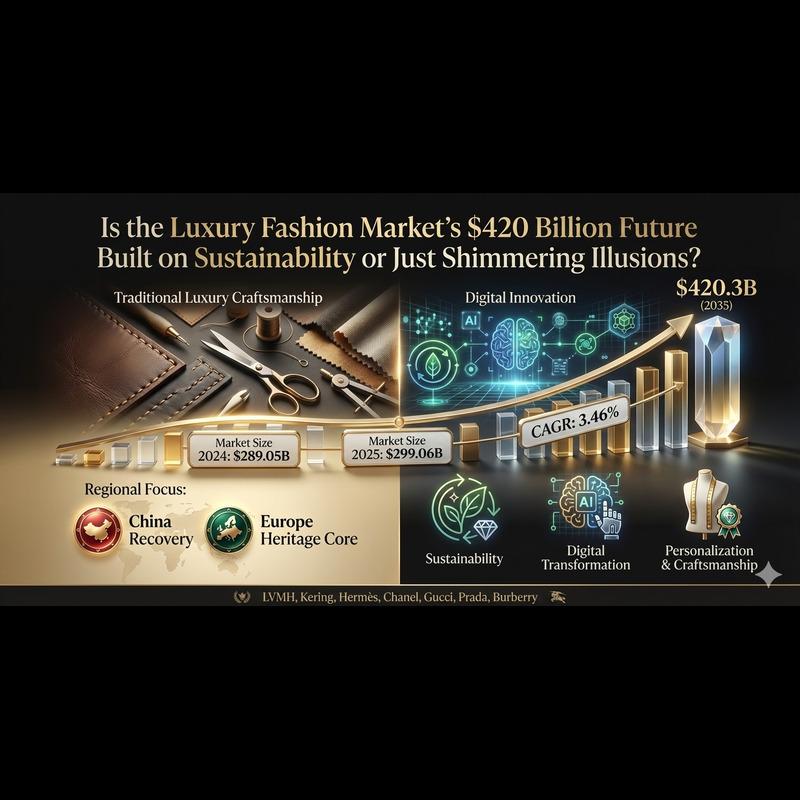
The global landscape for high-end apparel, leather goods, and accessories is transitioning from a phase of rapid expansion to more moderate, structurally driven growth. Demand is still supported by rising numbers of high-net-worth individuals, urbanization, and strong brand aspiration, but growth is increasingly concentrated in select geographies and consumer segments. Europe and North America remain core revenue hubs, while Asia Pacific, led by China, Japan, and India, is shaping the next wave of incremental demand through domestic luxury consumption and tourism-led spending.
A defining feature of the current phase of the Luxury Fashion Market is the shift toward digital engagement and direct‑to‑consumer commerce models. Brands are using online flagships, curated marketplaces, and social commerce to extend reach, while maintaining scarcity through controlled distribution and limited drops. Omnichannel integration—appointment-based boutiques, connected inventories, and unified loyalty programs—is becoming critical to sustain both conversion and full-price sell-through.
At the same time, luxury fashion market size expansion is tempered by macroeconomic uncertainty, currency volatility, and polarization between resilient top-spenders and more cautious aspirational buyers. Categories such as leather goods, jewelry, and logo-light ready-to-wear continue to outperform, supported by timeless positioning and relatively low fashion risk. Sustainability is no longer a peripheral theme; expectations around traceability, circular business models, and reduced environmental impact are influencing purchasing decisions, particularly among younger demographics.
AI is becoming a core enabler of profitability across the luxury value chain. Advanced analytics are improving demand forecasting, buy planning, and allocation, reducing markdown risk while keeping assortments tightly curated by store and client cluster. Computer vision and recommendation engines support hyper-personalized styling, while AI-assisted CRM surfaces micro‑segments and next‑best actions for sales associates to drive lifetime value. On the product side, AI-enhanced trend sensing allows brands to test creative directions quickly without diluting craftsmanship-led positioning.
FAQs
Q1: Which regions are currently most important for revenue in the Luxury Fashion Market?
A1: Europe and North America remain key revenue centers, while Asia Pacific is delivering the fastest structural growth through domestic spending and tourism-led luxury consumption.
Q2: How is sustainability influencing strategy in the Luxury Fashion Market?
A2: Sustainability is driving investments in traceable supply chains, circular initiatives like resale and repair, and material innovation, as consumers increasingly align purchases with ethical and environmental values.

 English
 Arabic
 Français
 Español
 Português
 Deutsch
 Dutch
Dutch
 Italiano
 Russian
 Romaian