


How to Implement Smart Hospital Technology for Better Care
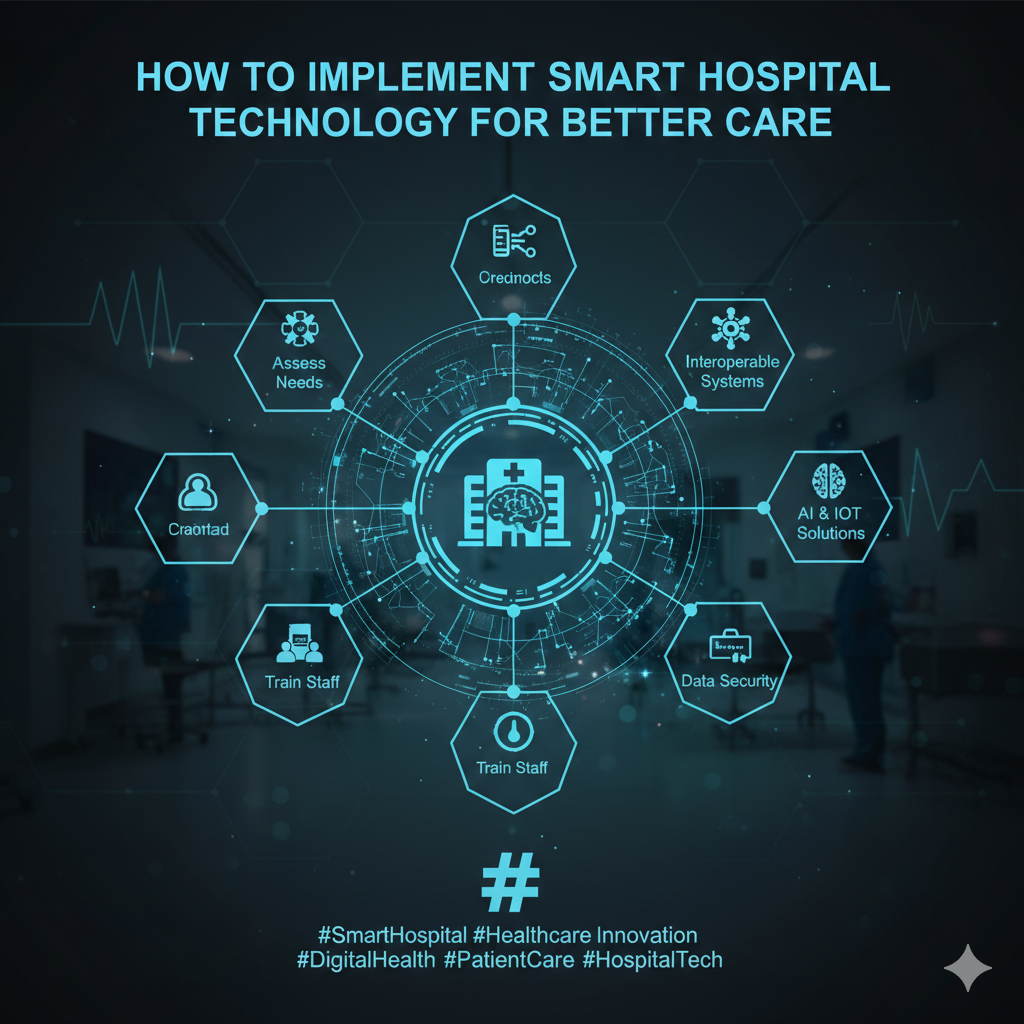
Healthcare is evolving rapidly, and hospitals are embracing smart technology to improve patient outcomes, streamline operations, and enhance staff efficiency. Implementing smart hospital technology is no longer optional—it is essential for delivering high-quality care in today’s digital era.
Why Smart Hospital Technology Matters
Smart hospital technology integrates artificial intelligence, IoT devices, electronic health records, and telemedicine solutions to improve patient care. Hospitals leveraging these innovations can reduce medical errors, improve patient monitoring, and optimize hospital workflows.
Steps on How to Implement Smart Hospital Technology for Better Care
1. Assess Hospital Needs and Goals
- Identify key areas for improvement, such as patient monitoring, workflow efficiency, or predictive analytics.
- Align technology adoption with clinical objectives and operational goals to maximize impact.
2. Invest in Interoperable Systems
- Choose platforms that can integrate with existing electronic health record (EHR) systems.
- Ensure devices and software communicate seamlessly to allow real-time data sharing across departments.
3. Implement AI and IoT Solutions
- Use AI-powered diagnostics and predictive analytics to detect potential health issues early.
- Employ IoT-enabled devices for patient monitoring, such as wearable sensors and smart beds, to track vital signs and alert staff in real time.
4. Train Staff and Encourage Adoption
- Provide comprehensive training programs for doctors, nurses, and administrative staff.
- Foster a culture of innovation by demonstrating the benefits of smart technologies in daily workflows.
5. Ensure Data Security and Compliance
- Protect patient data with advanced encryption, secure networks, and access controls.
- Comply with healthcare regulations such as HIPAA to maintain trust and avoid legal issues.
6. Monitor Performance and Iterate
- Continuously track key performance indicators (KPIs) such as patient satisfaction, treatment accuracy, and operational efficiency.
- Use insights from collected data to refine technology deployment and enhance overall hospital performance.
Conclusion
Implementing smart hospital technology for better care is a strategic move that benefits both patients and healthcare providers. By assessing needs, investing in integrated systems, adopting AI and IoT solutions, training staff, and safeguarding patient data, hospitals can create a smarter, more efficient healthcare environment. These steps ensure that technology serves its purpose: improving outcomes, enhancing patient experiences, and empowering staff to provide top-quality care.
Hashtags:
#SmartHospital #HealthcareInnovation #DigitalHealth #PatientCare #HospitalTech

 Arabic
 Français
 Español
 Português
 Deutsch
 Türkçe
 Dutch
Dutch
 Italiano
 Russian
 Romaian