


Exploring AI's Role in Voice-Based Depression Detection
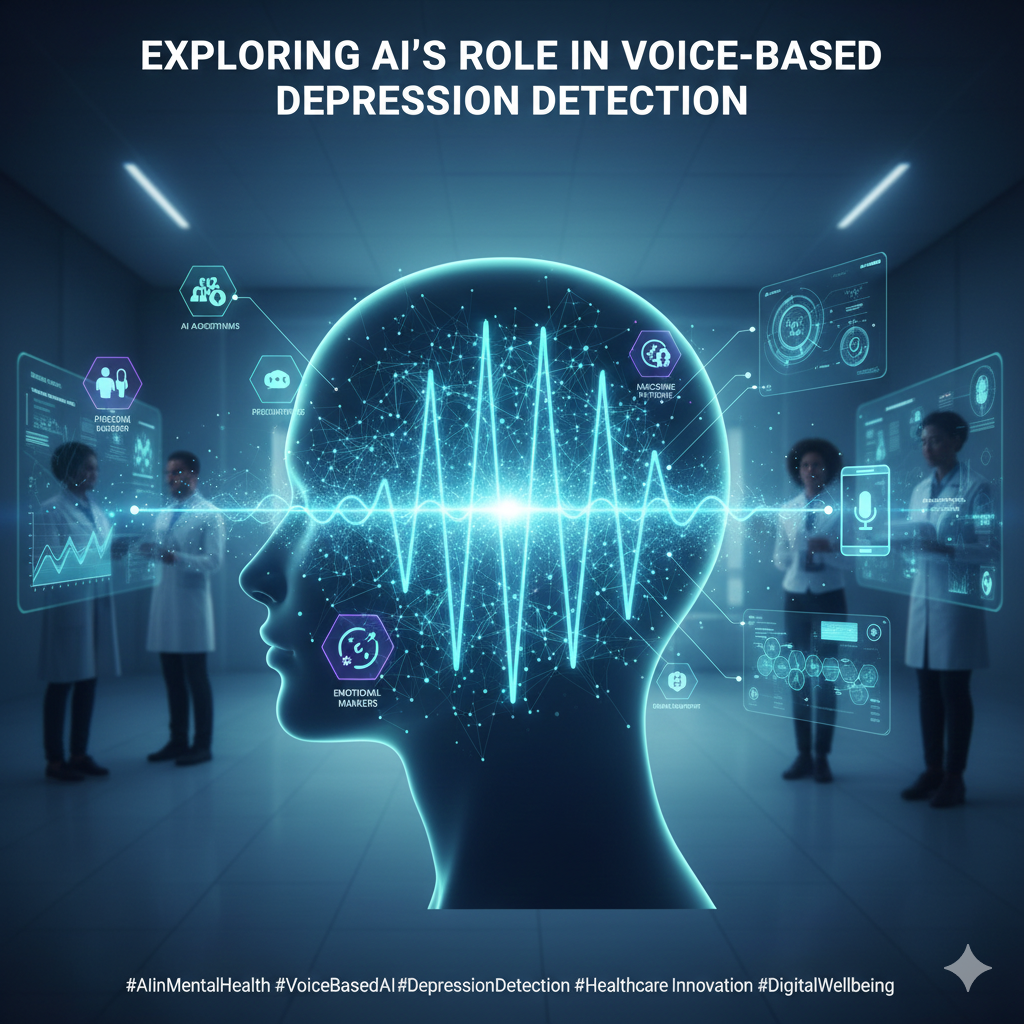
Exploring AI's Role in Voice-Based Depression Detection highlights how artificial intelligence is reshaping mental health assessment. Depression often influences how people speak, affecting tone, rhythm, and emotional expression. AI can analyze these vocal patterns to support early identification and timely intervention.
Understanding Voice-Based Depression Detection
Voice-based depression detection uses AI algorithms to study acoustic and linguistic features in speech. These include pitch variability, speaking rate, pauses, and vocal energy. Subtle changes in these elements may indicate emotional distress that is not always visible in traditional screenings.
How AI Processes Voice Signals
AI systems rely on machine learning and deep learning models trained on large voice datasets. These models extract features such as frequency patterns, speech tempo, and emotional markers. Over time, the system learns to recognize correlations between specific voice characteristics and depressive symptoms.
Key Components of AI-Driven Voice Analysis
- Data Collection: Secure voice recordings gathered through apps, telehealth platforms, or phone conversations with user consent.
- Feature Extraction: Identification of acoustic and linguistic indicators linked to mood changes.
- Model Training: Algorithms trained on clinically validated and diverse datasets.
- Risk Assessment: AI generates insights or scores indicating potential depression risk.
- Clinical Support: Results assist professionals rather than replacing medical diagnosis.
Benefits of AI in Voice-Based Mental Health Screening
AI enables continuous, non-invasive monitoring and improves accessibility for individuals hesitant to seek in-person care. It supports scalable screening, early detection, and personalized mental health support, especially in remote or underserved areas.
Ethical Considerations and Challenges
Data privacy, bias in training datasets, and transparency are critical concerns. Responsible implementation requires strong data protection, informed consent, and clear boundaries between AI assistance and clinical decision-making.
Conclusion
Exploring AI's Role in Voice-Based Depression Detection demonstrates the potential of technology to enhance mental health care. When combined with ethical practices and professional oversight, AI-powered voice analysis can become a valuable tool for early support and intervention.
#AIinMentalHealth #VoiceBasedAI #DepressionDetection #HealthcareInnovation #DigitalWellbeing

 English
 Arabic
 Français
 Español
 Português
 Deutsch
 Türkçe
 Italiano
 Russian
 Romaian