


Sportsbook Software Integration with Sports Data Providers
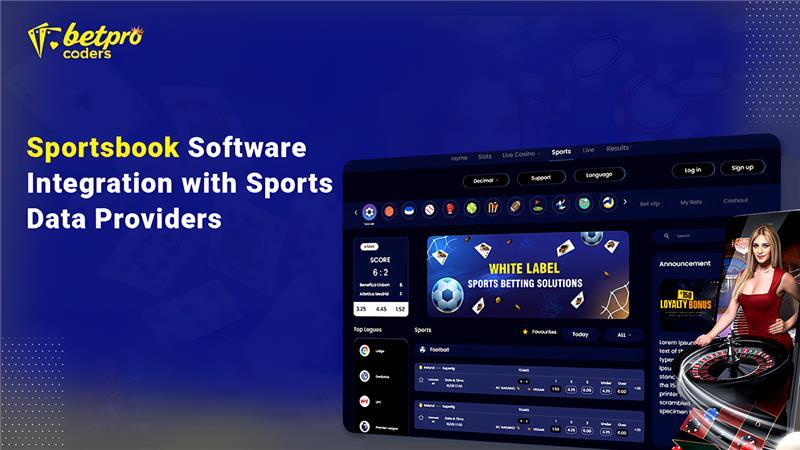
Modern sportsbooks are no longer just betting websites. They are complex, real-time digital platforms where thousands of users place bets simultaneously, often during fast-moving live events. The purpose of this guide is to explain how sportsbook software integrates with sports data providers, and why this integration is one of the most critical success factors for any betting platform.
From live odds to instant settlements, everything a player sees and interacts with depends on accurate, fast, and reliable sports data. Poor data integration can lead to delayed odds, incorrect results, user disputes, and revenue loss. Strong integration, on the other hand, builds trust, improves engagement, and supports long-term scalability.
Introduction to Sports Data Integration in Sportsbooks
Sports data integration is the backbone of sportsbook operations. Every market, every odds change, and every settlement relies on structured data flowing continuously into the platform.
What Sports Data Providers Do
Sports data providers collect, verify, and distribute information from sporting events worldwide. Their role goes far beyond simple score updates. They deliver:
-
Live scores and match status
-
Pre-match and in-play odds
-
Fixtures and schedules
-
Match events such as goals, cards, or wickets
-
Final results and official confirmations
This data is gathered from stadium feeds, official leagues, tracking systems, and statistical teams, then delivered to sportsbooks through APIs designed for betting-grade accuracy.
Why Data Quality Impacts Betting Revenue
Data quality directly affects a sportsbook’s bottom line. Accuracy ensures that odds and results are correct. Low latency ensures players see updates in real time. High uptime ensures the platform stays operational during peak events.
If odds are delayed by even a few seconds, sportsbooks risk arbitrage losses. If results are wrong or late, disputes increase. If feeds go down during major matches, players leave. Reliable data integration is not optional—it is a revenue safeguard.
Types of Sports Data Used in Sportsbook Software
Different stages of the betting lifecycle rely on different types of sports data.
Pre-Match Data Feeds
Pre-match data is used to build betting markets before an event starts. This includes:
-
Match fixtures and schedules
-
Available betting markets
-
Opening odds and price movements
This data allows sportsbooks to prepare markets well in advance and attract early bettors.
Live / In-Play Data Feeds
In-play betting depends on real-time updates. Live data feeds provide:
-
Live odds changes
-
Match events as they happen
-
Time-based updates and status changes
This is the most technically demanding data type, as delays or errors have immediate financial impact.
Post-Match and Historical Data
After events end, sportsbooks rely on post-match data for:
-
Final results confirmation
-
Bet settlement and payouts
-
Historical analytics and reporting
Historical data is also used for risk analysis, player behavior insights, and odds modeling.
Sports Data Provider APIs Explained
APIs are the technical layer that allows sportsbooks to consume and process sports data efficiently.
REST APIs for Sportsbook Data
REST APIs are commonly used for structured requests such as:
-
Fixtures and schedules
-
Market lists
-
Pre-match odds
-
Results retrieval
They are reliable, easy to cache, and ideal for non-time-critical data.
WebSocket and Streaming APIs
WebSocket APIs are used for live betting scenarios. They push data instantly to the sportsbook without repeated requests. This makes them ideal for:
-
Live odds updates
-
Match event streaming
-
In-play market changes
Streaming APIs significantly reduce latency compared to traditional polling methods.
Webhooks for Event Notifications
Webhooks notify the sportsbook when specific events occur, such as:
-
Match start or end
-
Market suspension
-
Result confirmation
They help automate workflows and reduce system overhead.
Also Read Relevant Article:- Future Directions for Bangladeshi Sportsbook Software Development
Sportsbook Software Integration Architecture
Behind the scenes, sportsbook software uses layered architecture to manage data flow.
Data Ingestion Pipeline
The ingestion pipeline receives raw data from providers and routes it into the platform. It ensures data is:
-
Received securely
-
Logged for auditing
-
Passed to processing systems
A stable ingestion layer prevents data loss during traffic spikes.
Normalization and Mapping Layers
Different providers use different formats. Normalization converts all incoming data into a unified internal structure. Mapping ensures that teams, players, and markets align correctly across systems.
This layer is crucial when using multiple data providers.
Betting Engine and Risk Engine Integration
Once normalized, data flows into the betting engine. Odds updates trigger market changes, while the risk engine evaluates exposure and applies limits automatically. This tight integration allows sportsbooks to react instantly to live events.
Live Odds Integration and Latency Management
Live odds are where integration quality is tested the most.
Real-Time Odds Synchronization
Odds must update in real time across all user devices. Synchronization ensures that:
-
All players see the same prices
-
Bets are accepted fairly
-
Market states remain consistent
Any mismatch can lead to disputes or financial risk.
Market Suspension and Auto-Trading
During critical moments, such as goals or penalties, markets must suspend instantly. Auto-trading systems use data feeds to:
-
Suspend markets automatically
-
Recalculate odds
-
Reopen markets safely
This protects both players and operators.
Latency Benchmarks and SLA Monitoring
Professional sportsbooks monitor latency in milliseconds. Service-level agreements (SLAs) define acceptable performance levels. Continuous monitoring helps detect issues before they affect users.
Choosing the Right Sports Data Provider
Not all data providers are equal, and the choice has long-term implications.
Coverage and Market Depth
A strong provider covers multiple sports, leagues, and regions with deep market options. This allows sportsbooks to attract diverse betting audiences.
Data Accuracy and Uptime Guarantees
Accuracy builds trust. Uptime guarantees availability during major events. Both should be validated through historical performance, not just promises.
Pricing Models and Commercial Terms
Pricing may be based on usage, sports coverage, or revenue share. Understanding these models helps avoid unexpected costs as the platform scales.
Security, Compliance, and Data Governance
Sportsbook data integration must follow strict security and regulatory standards.
API Security and Authentication
Secure authentication methods such as API keys, IP whitelisting, and encrypted connections protect data integrity and prevent unauthorized access.
Data Licensing and Usage Rights
Sports data is licensed content. Operators must ensure they have the right to use, display, and monetize the data in their target markets.
Regulatory Compliance Considerations
Different jurisdictions have different rules around data usage, reporting, and auditing. Compliance-ready integration helps avoid legal complications.
Integration Challenges and Common Pitfalls
Even experienced operators face challenges during integration.
Data Inconsistency Across Providers
Using multiple providers can lead to mismatched data. Without proper normalization, this creates settlement errors and reporting issues.
Scaling During High-Traffic Events
Major tournaments generate sudden traffic spikes. Systems that are not designed to scale may fail when demand is highest.
Vendor Lock-In Risks
Deep dependency on a single provider can limit flexibility. Migration becomes difficult if contracts change or performance declines.
Best Practices for Sportsbook Data Integration
Successful sportsbooks follow proven integration strategies.
Multi-Provider Redundancy
Using backup data providers ensures continuity if one feed fails. Redundancy reduces downtime and operational risk.
Caching and Failover Strategies
Smart caching reduces load and improves response times. Failover systems ensure uninterrupted service during outages.
Monitoring, Logging, and Alerting
Continuous monitoring and detailed logs help teams detect issues early and maintain platform stability.
Future Trends in Sports Data and Betting APIs
The role of data in betting continues to evolve.
AI-Driven Odds and Automation
Artificial intelligence is increasingly used to adjust odds dynamically and manage risk in real time.
Computer Vision and Tracking Data
Advanced tracking technologies provide deeper insights into player movement and match dynamics, enabling new betting markets.
Real-Time Personalization Engines
Future sportsbooks will use data to personalize markets, offers, and experiences for individual users.
Conclusion
Sportsbook software integration with sports data providers is not just a technical requirement—it is a strategic foundation for platform success. Accurate data, low latency, strong security, and scalable architecture directly impact user trust, betting volume, and long-term growth.
As betting platforms grow more competitive, operators must invest in robust data integration strategies that support live betting, risk management, and future innovation. Choosing the right architecture, providers, and integration approach can make the difference between a stable sportsbook and one that struggles under pressure.
For businesses looking to build or scale sportsbook platforms with reliable data integration and future-ready architecture, experienced technology partners like BetProCoders play a crucial role in delivering secure, scalable, and performance-driven sportsbook solutions.


 Arabic
 Français
 Español
 Português
 Deutsch
 Türkçe
 Dutch
Dutch
 Italiano
 Russian
 Romaian