


Understanding Healing Peptides: A Science-Focused Comparison for Injury Recovery
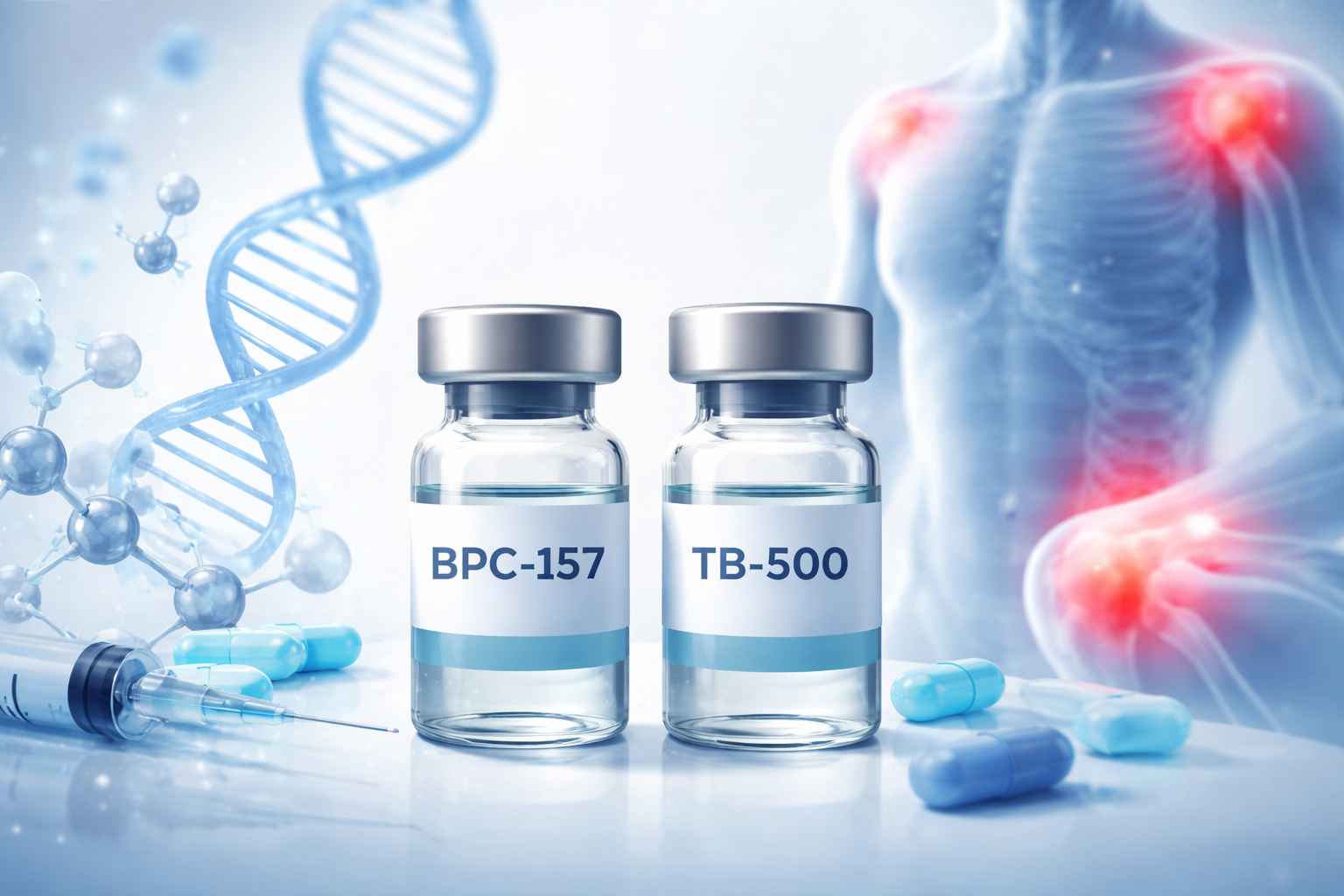
In recent years, peptides for healing have gained attention in research and wellness discussions due to their role in tissue repair and recovery. Among the most commonly studied compounds are BPC-157 peptides and TB-500, both known for their involvement in cellular regeneration processes. While these peptides are often discussed together, they differ in origin, function, and potential applications.
This article aims to provide an educational comparison to help readers understand how healing peptides work and how they may relate to different types of injuries—without commercial intent.
What Are Healing Peptides?
Peptides are short chains of amino acids that act as signaling molecules in the body. In the context of injury recovery, peptides for healing are studied for their ability to support processes such as cell migration, angiogenesis (formation of new blood vessels), and tissue regeneration.
Unlike traditional pain management approaches, healing peptides focus on supporting the body’s natural repair mechanisms rather than masking symptoms.
Overview of BPC-157 Peptides
BPC-157 (Body Protection Compound-157) is a synthetic peptide derived from a naturally occurring protein found in gastric juice. Research discussions often highlight its role in supporting soft tissue repair.
Key characteristics of BPC-157 peptides:
-
Associated with tendon and ligament recovery
-
Studied for gut lining and connective tissue support
-
Explored for its interaction with blood vessels and nitric oxide pathways
Because of these properties, BPC-157 peptides are frequently mentioned in educational content related to muscle strains, joint discomfort, and connective tissue injuries.
Understanding TB-500 and Its Functions
TB-500 is a synthetic version of a peptide fragment derived from Thymosin Beta-4, a naturally occurring protein involved in tissue repair.
Noted research-based benefits of TB-500 include:
-
Support for cell migration to injured areas
-
Potential role in reducing inflammation response
-
Association with muscle recovery and flexibility
When discussing the benefits of TB500 in scientific literature, the focus is often on systemic healing rather than localized repair, making it a broader-acting peptide in comparison to BPC-157.
BPC-157 vs TB-500: Key Differences Explained
|
Aspect |
BPC-157 |
TB-500 |
|
Origin |
Gastric protein fragment |
Thymosin Beta-4 fragment |
|
Primary Focus |
Localized tissue repair |
Systemic tissue support |
|
Common Research Areas |
Tendons, ligaments, gut |
Muscles, inflammation |
|
Healing Scope |
Targeted |
Broad |
Both peptides for healing are discussed in injury-related research, but their mechanisms suggest different applications depending on the nature of the injury.
Which Healing Peptide Is More Suitable for Injury Types?
The choice between BPC-157 peptides and TB-500 in educational discussions often depends on the injury profile:
-
Localized injuries such as tendon strains or joint discomfort are more commonly associated with BPC-157 research
-
Widespread muscle stress or recovery needs are often linked to TB-500 due to its systemic activity
It is important to note that current information is largely based on experimental and preclinical studies, and these peptides are not substitutes for professional medical care.
Safety and Research Considerations
Healing peptides remain an active area of scientific exploration. Most available data comes from laboratory and animal studies, with limited human trials. This makes responsible education and awareness essential. Platforms like Olympic Peptide often focus on providing research-grade information rather than clinical claims.
Frequently Asked Questions (FAQ)
1. What are peptides for healing used for?
Peptides for healing are studied for their potential role in tissue repair, inflammation modulation, and recovery support at the cellular level.
2. Are BPC-157 peptides and TB-500 the same?
No. BPC-157 peptides are more associated with localized connective tissue repair, while TB-500 is discussed for broader muscle and tissue recovery.
3. What are the benefits of TB500 according to research?
Research discussions highlight cell migration support, inflammation response regulation, and muscle tissue recovery as potential benefits of TB500.
4. Can these peptides replace medical treatment?
No. Healing peptides should be understood as research compounds and not as replacements for medical diagnosis or treatment.
5. Why are peptides discussed on platforms like Olympic Peptide?
Educational platforms like Olympic Peptide aim to share scientific knowledge and research-based insights related to peptide studies.
Conclusion
Healing peptides such as BPC-157 peptides and TB-500 represent an evolving area of scientific research focused on injury recovery and tissue repair. While both peptides are often discussed together, their mechanisms and potential applications differ significantly.
Understanding these differences helps readers make informed, education-based decisions when exploring peptide science. As research continues to develop, peptides for healing remain a promising yet carefully studied topic within regenerative science.

 Arabic
 Français
 Español
 Português
 Deutsch
 Türkçe
 Dutch
Dutch
 Italiano
 Russian
 Romaian