


How Vision-Language Robotics Is Redefining Autonomous Machines
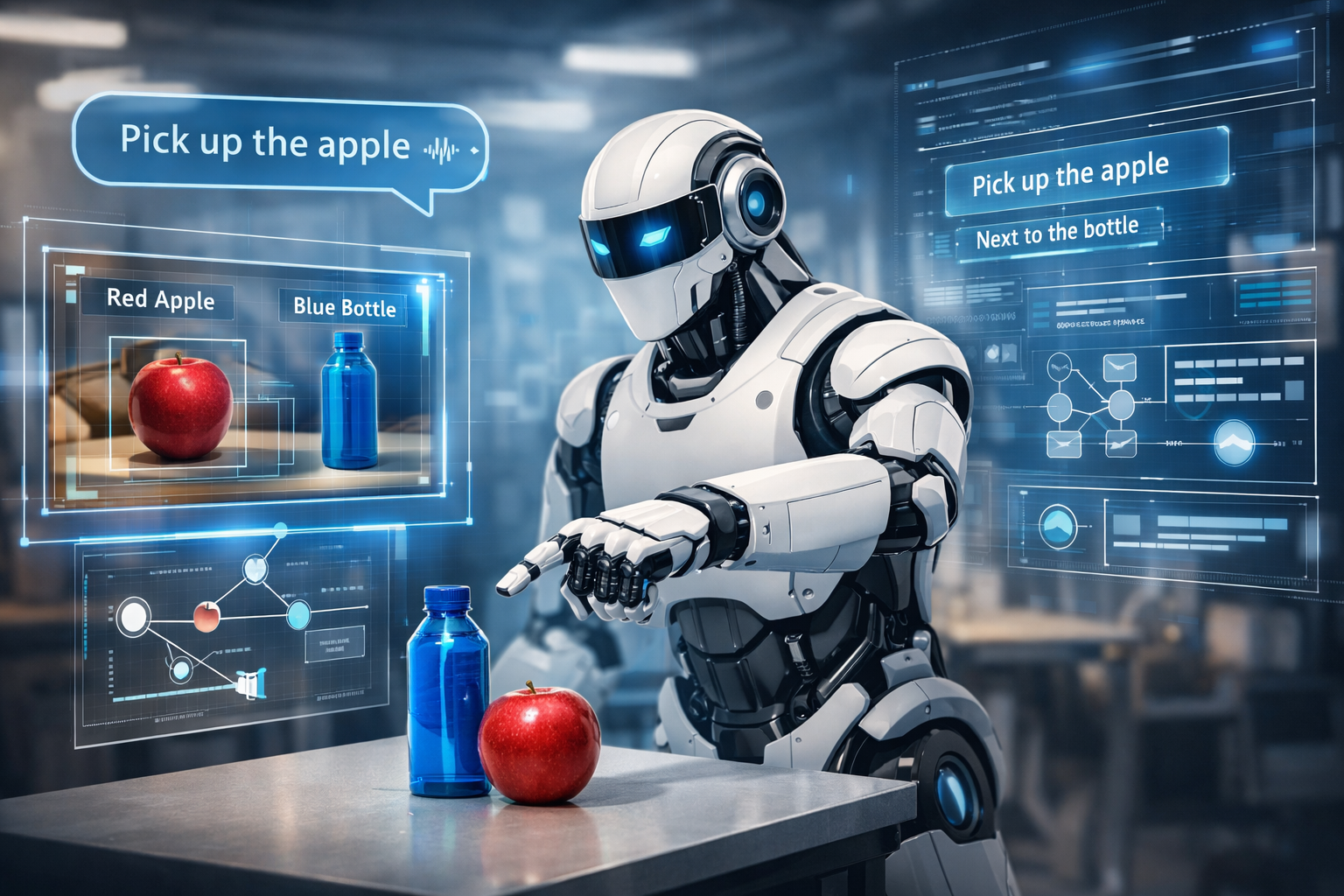
Autonomous machines have long been limited by a fundamental gap: they could either see the world or act within it—but they struggled to truly understand it. In 2026, that gap is closing rapidly thanks to vision-language robotics, a new generation of systems that combine visual perception, natural language understanding, and physical action into a unified intelligence loop.
This shift is redefining what autonomy actually means—and where robots can deliver real-world value.
From Task Automation to Contextual Understanding
Traditional robotics relied on rigid programming and predefined rules. Robots were trained to perform specific tasks in controlled environments, often breaking down when conditions changed.
Vision-language robotics changes this model by allowing machines to:
- Interpret visual scenes in real time
- Understand natural language instructions
- Reason about objects, relationships, and goals
- Adapt actions based on context rather than scripts
Instead of being told how to do something step by step, robots can now understand what needs to be done and figure out how to do it.
What Makes Vision-Language Robotics Different
At the core of vision-language robotics are multimodal AI models that fuse vision and language into a shared representation of the world. These models allow robots to connect what they see with what they’re told.
This enables capabilities such as:
- Identifying objects based on verbal descriptions
- Understanding spatial instructions like “next to,” “behind,” or “on top of”
- Generalizing tasks to new environments without retraining
- Asking for clarification when instructions are ambiguous
This blend of perception and language moves robots closer to human-like reasoning.
Learning Through Observation and Instruction
One of the biggest breakthroughs in vision-language robotics is how machines learn. Instead of requiring thousands of labeled examples or hard-coded logic, robots can now learn through demonstration and instruction.
For example, a human can:
- Show a robot how to perform a task once
- Describe a goal using natural language
- Correct the robot verbally when it makes a mistake
The robot uses visual input and language feedback to refine its behavior. This dramatically reduces training time and expands the range of tasks robots can perform.
Real-World Impact Across Industries
Vision-language robotics is moving autonomy out of labs and into real environments where unpredictability is the norm.
In manufacturing, robots can adapt to changing layouts and product variations without reprogramming. In logistics, machines can understand spoken instructions and navigate dynamic spaces safely. In healthcare, assistive robots can respond to both visual cues and verbal requests, making them more intuitive for patients and staff.
The common thread is flexibility. Robots no longer need perfect conditions to operate effectively.
Bridging the Human-Robot Interaction Gap
One of the most transformative aspects of vision-language robotics is how it changes human-robot interaction. Humans no longer need specialized interfaces or programming knowledge to work with machines.
Instead:
- Instructions can be given conversationally
- Feedback can be provided in plain language
- Collaboration feels more natural and intuitive
This lowers adoption barriers and allows robots to integrate more seamlessly into human-centered environments.
From Reactive to Reasoning Machines
Earlier autonomous systems were largely reactive—they responded to inputs without understanding broader goals. Vision-language robotics enables reasoning-based autonomy, where machines plan actions, evaluate outcomes, and adjust behavior over time.
This includes:
- Breaking complex goals into smaller steps
- Choosing tools or actions based on visual context
- Recovering gracefully from errors or unexpected changes
Autonomy becomes less about automation and more about problem-solving.
Challenges Still to Overcome
Despite rapid progress, vision-language robotics is not without challenges. Real-world environments are noisy, unpredictable, and safety-critical. Ensuring reliable performance, managing edge cases, and aligning robot behavior with human expectations remain ongoing concerns.
There are also questions around compute requirements, energy efficiency, and responsible deployment—especially as robots become more capable and autonomous.
Why This Moment Matters
Vision-language robotics represents a turning point in autonomous machine design. By giving robots the ability to see, understand, and communicate in a unified way, we move from machines that execute tasks to machines that understand goals.
This shift expands where robots can operate, who can work with them, and how quickly they can adapt to new challenges.
Final Thoughts
Vision-language robotics is redefining autonomy by bringing perception, language, and action together into a single intelligence loop. As these systems mature, autonomous machines will become more adaptable, more collaborative, and far more useful in real-world environments.
The future of robotics isn’t just about smarter machines—it’s about machines that can understand the world the way humans do and act within it responsibly.
About US:
AI Technology Insights (AITin) is the fastest-growing global community of thought leaders, influencers, and researchers specializing in AI, Big Data, Analytics, Robotics, Cloud Computing, and related technologies. Through its platform, AITin offers valuable insights from industry executives and pioneers who share their journeys, expertise, success stories, and strategies for building profitable, forward-thinking businesses.

 Arabic
 Français
 Español
 Português
 Deutsch
 Türkçe
 Dutch
Dutch
 Italiano
 Russian
 Romaian