


Future Scope of Risk Management Professionals
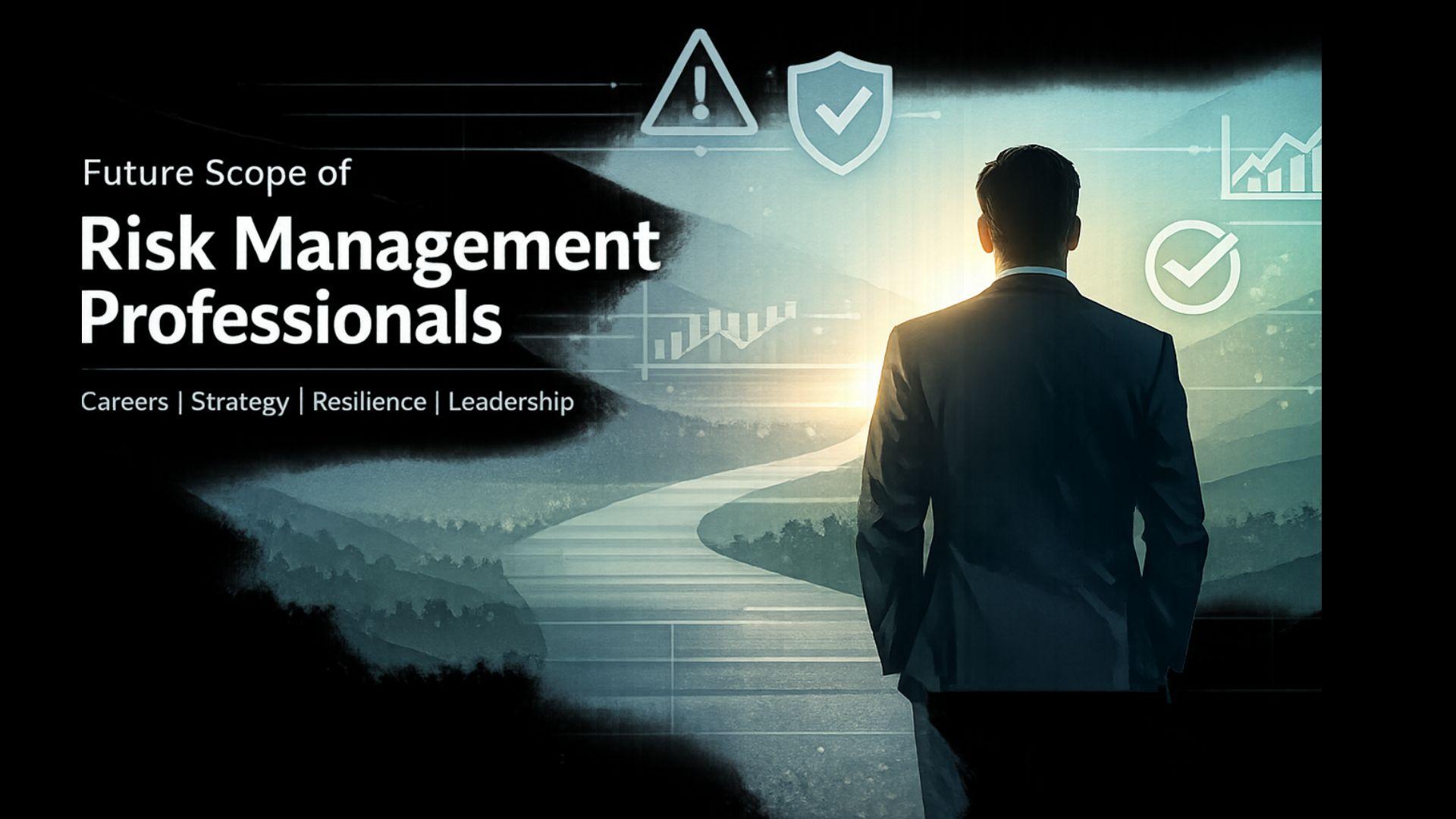
Risk is no longer a side function handled only during audits or compliance checks. In today’s fast-moving, uncertain business environment, risk management has become a strategic capability—and the professionals who specialize in it are more valuable than ever. From cyber threats and financial volatility to climate risks and AI-driven decisions, organizations now depend on skilled risk professionals to navigate uncertainty and protect long-term value.
The future scope of risk management professionals looks exceptionally strong, driven by global disruptions, regulatory pressure, and the growing need for resilience.
Why Risk Management Is Gaining Strategic Importance
Traditionally, risk management focused on identifying threats and minimizing losses. Today, its role has expanded. Organizations now expect risk professionals to support decision-making, enable growth, and help leaders balance opportunity with uncertainty.
ISO 31000 certification is important because it helps professionals develop a structured, organization-wide approach to managing risk rather than handling risks in isolation. From practical experience, it improves how risks are identified, analyzed, and linked to business objectives, making decision-making more confident and consistent.
Global events such as pandemics, geopolitical conflicts, supply-chain disruptions, and rapid digital transformation have exposed weaknesses in reactive risk approaches. As a result, businesses are shifting toward proactive, enterprise-wide risk thinking. This shift directly increases demand for professionals who can assess risks holistically and align them with business strategy.
Expanding Career Opportunities Across Industries
One of the biggest indicators of a strong future is the wide range of industries hiring risk management professionals. The role is no longer limited to finance or insurance.
-
IT and Technology organizations need risk experts to manage cybersecurity threats, data privacy concerns, and system reliability.
-
Banking and Financial Services rely heavily on risk professionals to manage credit, market, operational, and regulatory risks.
-
Healthcare organizations require structured risk approaches to ensure patient safety, compliance, and operational continuity.
-
Manufacturing and Supply Chain sectors need risk expertise to manage vendor dependencies, logistics disruptions, and quality risks.
-
Energy and Infrastructure industries depend on risk management to handle safety, environmental, and sustainability challenges.
This cross-industry relevance ensures long-term career stability and flexibility for risk professionals.
From Compliance Roles to Strategic Advisors
The future scope of risk management professionals is closely tied to how the role itself is evolving. Risk professionals are no longer seen as “control enforcers” or “policy checkers.” Instead, they are becoming trusted advisors to senior leadership.
Modern risk roles involve:
-
Supporting board-level risk discussions
-
Advising on strategic investments and expansions
-
Evaluating risks in mergers, acquisitions, and new technologies
-
Helping organizations define risk appetite and tolerance
This strategic positioning makes risk professionals critical contributors to business growth, not just loss prevention.
Growing Demand for Specialized Risk Skills
As risks become more complex, organizations are seeking professionals with specialized expertise. The future will see increased demand in areas such as:
-
Cyber and Information Risk – protecting digital assets and sensitive data
-
Operational Risk – managing failures in processes, systems, and people
-
Third-Party and Vendor Risk – assessing risks across extended supply chains
-
Climate and Sustainability Risk – addressing environmental, social, and governance concerns
-
Enterprise Risk Management (ERM) – integrating all risk types into a unified framework
Professionals who combine foundational risk knowledge with domain specialization will have a significant career advantage.
Technology and Data Are Reshaping Risk Roles
Technology is transforming how risk is identified, assessed, and monitored. Automation, analytics, and AI are enabling real-time risk insights instead of static reports.
Rather than replacing risk professionals, technology is enhancing their role. The future risk professional must:
-
Interpret data-driven risk insights
-
Validate automated risk models
-
Apply human judgment to complex scenarios
-
Translate technical risk findings into business language
Those who can bridge the gap between data, technology, and business decision-making will be highly sought after.
Strong Career Growth and Leadership Pathways
Risk management offers clear long-term growth paths. Professionals often progress from analyst or coordinator roles into senior and leadership positions such as:
-
Risk Manager
-
Enterprise Risk Lead
-
Compliance and Risk Head
-
Chief Risk Officer (CRO)
-
Governance, Risk, and Compliance (GRC) Leader
As organizations mature in their risk practices, leadership roles focused entirely on risk and resilience are becoming standard rather than optional.
Increasing Value of Structured Learning and Credentials
As demand grows, so does competition. Employers increasingly prefer professionals who demonstrate structured knowledge of risk frameworks, principles, and best practices.
Formal learning helps professionals:
-
Understand global risk standards and frameworks
-
Apply consistent risk assessment methods
-
Communicate risk clearly to stakeholders
-
Build credibility with leadership and regulators
In the future, risk professionals with recognized training and certifications will stand out in hiring, promotions, and leadership opportunities.
Global Relevance and Long-Term Stability
Risk management is not tied to a single economy or region. Every organization, regardless of size or location, faces uncertainty. This universal relevance makes risk management a future-proof career choice.
Even during economic downturns, organizations continue to invest in risk functions because managing uncertainty becomes more critical—not less—during crises.
The certification builds a common risk language across teams, strengthens governance, and supports proactive risk thinking instead of reactive problem-solving. For professionals, ISO 31000 certification enhances credibility, demonstrates strategic risk expertise, and prepares them to support leadership in navigating uncertainty, change, and long-term business resilience.
Conclusion: A Career Built for the Future
The future scope of risk management professionals is broad, resilient, and continuously expanding. As organizations face increasing complexity, the need for skilled professionals who can anticipate, assess, and manage risk will only grow.
For professionals who enjoy analytical thinking, strategic involvement, and cross-functional collaboration, risk management offers more than just job security—it offers influence, leadership, and long-term relevance.

 English
 Arabic
 Français
 Español
 Português
 Deutsch
 Türkçe
 Italiano
 Russian
 Romaian