


Building Scalable Data Center Network Architecture for the Future
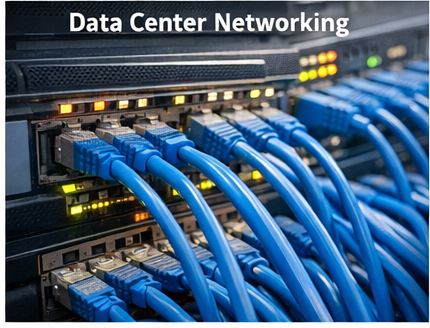
Data Center Networking Trends Shaping the Digital Backbone
Data center networking has become a strategic pillar for enterprises navigating cloud adoption, AI workloads, and real-time digital services. As applications grow more distributed and latency-sensitive, modern data centers are no longer just repositories of compute and storage—they are high-performance networking hubs designed to move massive volumes of data with speed, reliability, and flexibility. The latest trends reflect a clear shift toward scalable architectures, software-driven control, and seamless interconnection between geographically dispersed facilities.
Evolving Data Center Network Architecture for Scale and Agility
At the core of these changes is the evolution of data center network architecture. Traditional three-tier designs are increasingly replaced by flatter, more predictable topologies that can scale horizontally. Among these, spine leaf networking has emerged as a dominant model. By connecting every leaf switch to each spine switch, this architecture ensures consistent latency and bandwidth across the network, regardless of where workloads reside.
Spine leaf networking is particularly well suited for east–west traffic, which now represents the majority of data flows inside modern data centers. Virtualized workloads, container platforms, and microservices architectures depend on frequent server-to-server communication. A well-designed spine-leaf fabric minimizes bottlenecks and simplifies expansion, allowing operators to add capacity without disrupting existing services. This architectural shift is also enabling greater automation, as standardized topologies are easier to manage with intent-based networking and policy-driven tools.
The Rise of Data Center Interconnect and Distributed Infrastructure
Another major trend is the growing importance of data center interconnect solutions. As organizations deploy multiple data centers across regions to support disaster recovery, regulatory compliance, and edge computing, the need for fast and secure interconnection has intensified. Data center interconnect technologies, leveraging high-speed optical links and advanced routing, allow operators to treat multiple facilities as a single logical environment.
This interconnected approach supports workload mobility, real-time data replication, and hybrid cloud strategies. Enterprises can shift applications between on-premises and cloud environments while maintaining performance and security. Service providers, meanwhile, are using data center interconnect to build resilient networks that support 5G, content delivery, and AI inference closer to end users. The result is a more distributed yet tightly integrated digital infrastructure.
Momentum and Technology Investment
The rapid adoption of advanced networking models is also reflected in market growth. In simple terms, industry forecasts suggest that spending on data center networking technologies will accelerate sharply over the next decade as digital transformation initiatives mature. According to Grand View Research. the global data center networking market size is projected to reach USD 154.83 billion by 2033, growing at a CAGR of 17.2% from 2025 to 2033. This growth underscores the rising demand for high-capacity switches, intelligent network software, and robust interconnect solutions that can support data-intensive applications.
Vendors are responding by integrating AI-driven analytics, enhanced security features, and open networking standards into their portfolios. Disaggregation of hardware and software is also gaining traction, giving operators more flexibility in choosing components and optimizing costs. These investments are not just about speed; they are about building networks that can adapt quickly to changing workloads and business requirements.
Looking Ahead: Software-Driven and Sustainable Networks
Looking forward, data center networking will continue to move toward software-defined control and automation. Centralized visibility, predictive analytics, and closed-loop optimization are becoming essential as networks grow in size and complexity. At the same time, sustainability is emerging as a design priority. Energy-efficient switches, optimized traffic flows, and smarter capacity planning are helping reduce the environmental footprint of large-scale data centers.
In this landscape, a well-planned data center network architecture—supported by spine leaf networking and robust data center interconnect—will be critical for organizations aiming to remain competitive. As digital services expand and user expectations rise, the network will remain the silent engine powering performance, resilience, and innovation across the global digital economy.

 English
 Arabic
 Français
 Español
 Deutsch
 Türkçe
 Dutch
Dutch
 Italiano
 Russian
 Romaian