


Everything You Need to Know About RTO and DTO Differences
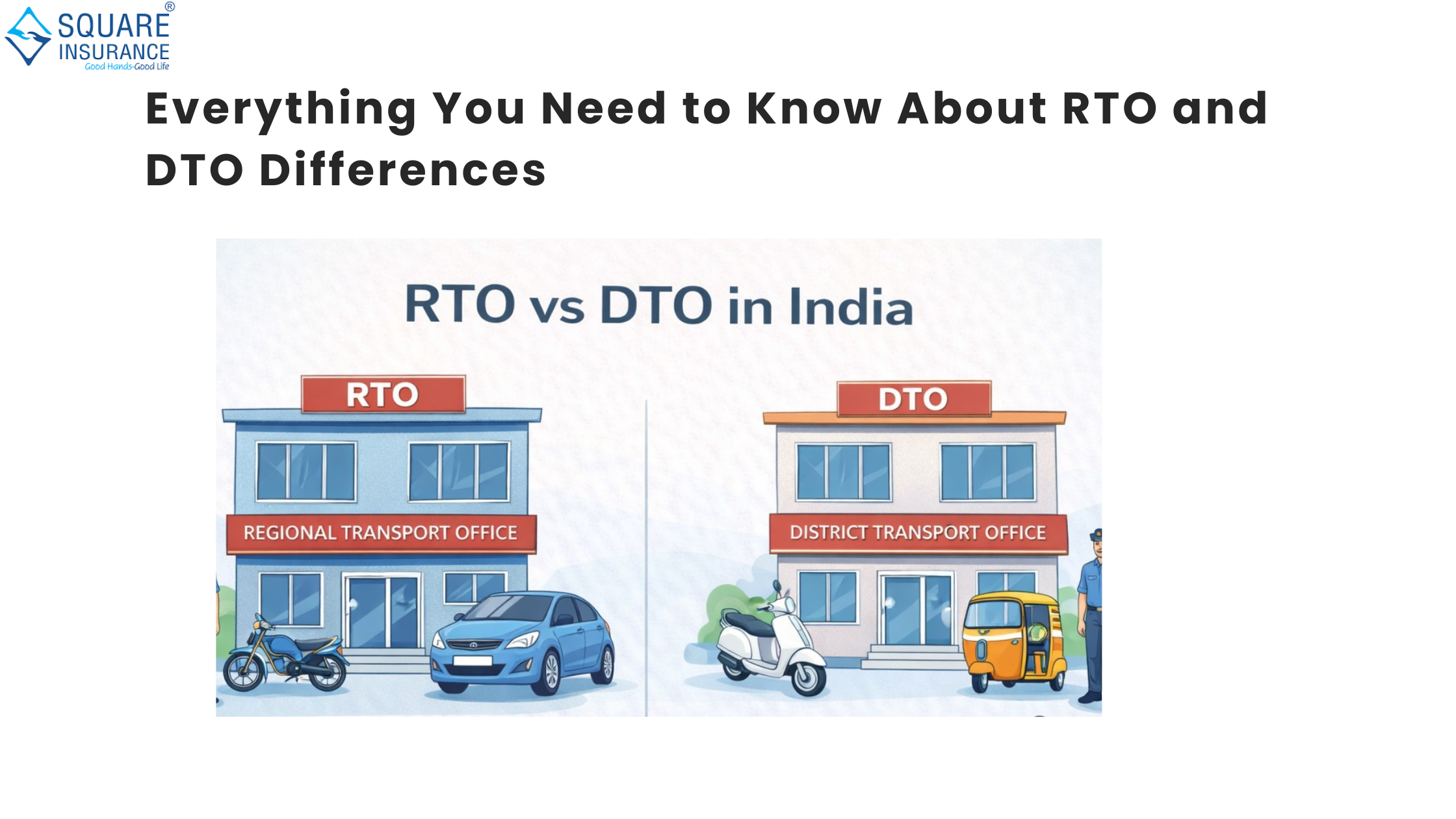
In India, vehicle ownership comes with several legal responsibilities, from registration and licensing to tax payment and compliance with road transport laws. Two authorities that play a central role in managing these responsibilities are the RTO (Regional Transport Office) and DTO (District Transport Office). While many people use these terms interchangeably, they are not exactly the same. What is The Difference Between RTO and DTO is a common question among vehicle owners, drivers, and insurance policyholders, especially when dealing with registrations, licences, or official documentation.
Understanding the difference between RTO and DTO is important as it helps ensure smoother interactions with transport authorities and avoids unnecessary confusion or delays. This guide explains everything you need to know about RTO and DTO differences, including their meaning, authority structure, roles, functions, and relevance to vehicle insurance and compliance in India.
What Is RTO?
RTO stands for Regional Transport Office. It is a government authority functioning under the State Transport Department and operates according to the provisions of the Motor Vehicles Act. An RTO generally has jurisdiction over a larger region, which may include multiple districts, cities, or administrative zones depending on the state.
The primary purpose of an RTO is to implement transport laws, regulate vehicle-related activities, and ensure road safety within its jurisdiction. Every registered vehicle in India is associated with a specific RTO, which is also reflected in the vehicle’s registration number.
Key Responsibilities of an RTO
An RTO performs a wide range of transport-related functions, including:
- Registration of motor vehicles
- Issuance and renewal of driving licences
- Collection of road tax and vehicle-related fees
- Issuance of permits for commercial vehicles
- Conducting driving tests
- Transfer of vehicle ownership
- Issuing duplicate RCs and licences
- Enforcement of transport laws and regulations
Because of its broader jurisdiction and administrative authority, an RTO often supervises or coordinates with lower-level transport offices.
What Is DTO?
DTO stands for District Transport Office or District Transport Officer. A DTO typically operates at the district level and functions under the supervision of the State Transport Department or an RTO, depending on the state’s administrative structure.
The role of a DTO is more localized. It focuses on handling transport-related services within a specific district, making it more accessible to residents in rural and semi-urban areas.
Key Responsibilities of a DTO
While a DTO may perform many functions similar to an RTO, its scope is usually limited to the district level. Common responsibilities include:
- Vehicle registration within the district
- Issuance and renewal of driving licences
- Collection of road tax and fines
- Handling learner’s licence applications
- Vehicle inspection and verification
- Processing ownership transfers and address changes
In many states, DTOs act as the first point of contact for local residents for transport-related services.
Administrative Difference Between RTO and DTO
The most significant difference between RTO and DTO lies in their administrative hierarchy and jurisdiction.
An RTO generally operates at a regional level and may oversee multiple districts or transport units. It often has greater decision-making authority and handles more complex or high-volume cases.
A DTO, on the other hand, functions at the district level and focuses on local implementation of transport policies and services. It usually reports to higher authorities such as an RTO or directly to the State Transport Department.
Jurisdiction and Coverage
RTOs cover a wider geographical area. In metropolitan cities or densely populated regions, there may be multiple RTOs serving different zones. These offices are responsible for managing large volumes of vehicle registrations and licences.
DTOs are more common in districts where a full-fledged RTO may not be necessary. Their jurisdiction is limited to the district boundary, making them more accessible for residents who may otherwise need to travel long distances.
Difference in Authority and Powers
RTOs typically have higher authority when it comes to:
- Issuing inter-district or inter-state permits
- Handling appeals or escalated cases
- Implementing state-level transport policies
- Supervising transport enforcement activities
DTOs generally handle routine, day-to-day transport services and may need approval from higher authorities for certain decisions or permits.
RTO and DTO in Vehicle Registration Numbers
Vehicle registration numbers in India usually begin with a state code followed by a district or regional code. This code indicates whether the vehicle is registered under an RTO or a DTO.
From a legal and insurance perspective, both RTO- and DTO-registered vehicles are equally valid. The difference lies only in the administrative office that issued the registration.
Impact on Driving Licence Services
Whether you apply for a driving licence at an RTO or DTO, the legal validity of the licence remains the same across India. However, the process may differ slightly in terms of appointment availability, processing time, and infrastructure.
RTOs in larger cities may have more advanced facilities and online systems, while DTOs may offer more personalized service with shorter queues in some regions.
Role of RTO and DTO in Vehicle Insurance
RTOs and DTOs play an important role in vehicle insurance-related processes, even though they do not issue insurance policies themselves.
Their involvement includes:
- Verifying vehicle details during insurance claims
- Providing registration and ownership records
- Updating RC details after claims involving total loss or ownership transfer
- Supporting legal verification in case of disputes
Accurate records maintained by RTOs and DTOs are crucial for smooth insurance claim settlements.
Digital Transformation and Online Services
With the digitization of transport services, many functions of both RTOs and DTOs are now available online. Vehicle owners can apply for licences, check application status, pay road tax, and update vehicle details without visiting the office in many cases.
Despite this, RTOs and DTOs remain essential for physical verification, inspections, and enforcement activities.
Which Is Better: RTO or DTO?
There is no concept of one being better than the other. Both RTOs and DTOs serve specific administrative needs based on region, population, and workload.
For vehicle owners, what matters most is accessibility, efficiency, and compliance with legal requirements, regardless of whether the service is provided by an RTO or a DTO.
Conclusion
Understanding the difference between RTO and DTO helps vehicle owners navigate India’s transport system with greater clarity. While RTOs operate at a broader regional level and hold higher administrative authority, DTOs focus on district-level services and local implementation. Both play a vital role in vehicle registration, licensing, compliance, and support for insurance-related processes.
When it comes to protecting your vehicle and staying legally compliant, having the right insurance is just as important as proper registration. Square Insurance helps vehicle owners choose suitable motor insurance policies, understand documentation requirements, and stay informed about transport-related regulations, making vehicle ownership simpler and more secure.
Frequently Asked Questions
1. Is RTO and DTO the same?
No, they are not the same. RTO operates at a regional level, while DTO functions at the district level, though both perform transport-related duties.
2. Does a vehicle registered at a DTO have the same validity as an RTO registration?
Yes, vehicle registrations from both RTOs and DTOs are legally valid across India.
3. Who issues driving licences, RTO or DTO?
Both RTOs and DTOs can issue driving licences, depending on the administrative structure of the state.
4. Can insurance claims be affected by RTO or DTO registration?
No, insurance claims are not affected as long as vehicle registration details are accurate and valid.
5. Why do some states have DTO instead of RTO?
DTOs are established for administrative convenience, especially in districts where a full regional office may not be required.

 English
 Arabic
 Français
 Español
 Português
 Deutsch
 Türkçe
 Dutch
Dutch
 Italiano
 Romaian