


How Businesses Avoid Capital Expenditure with Smarter Tech Decisions
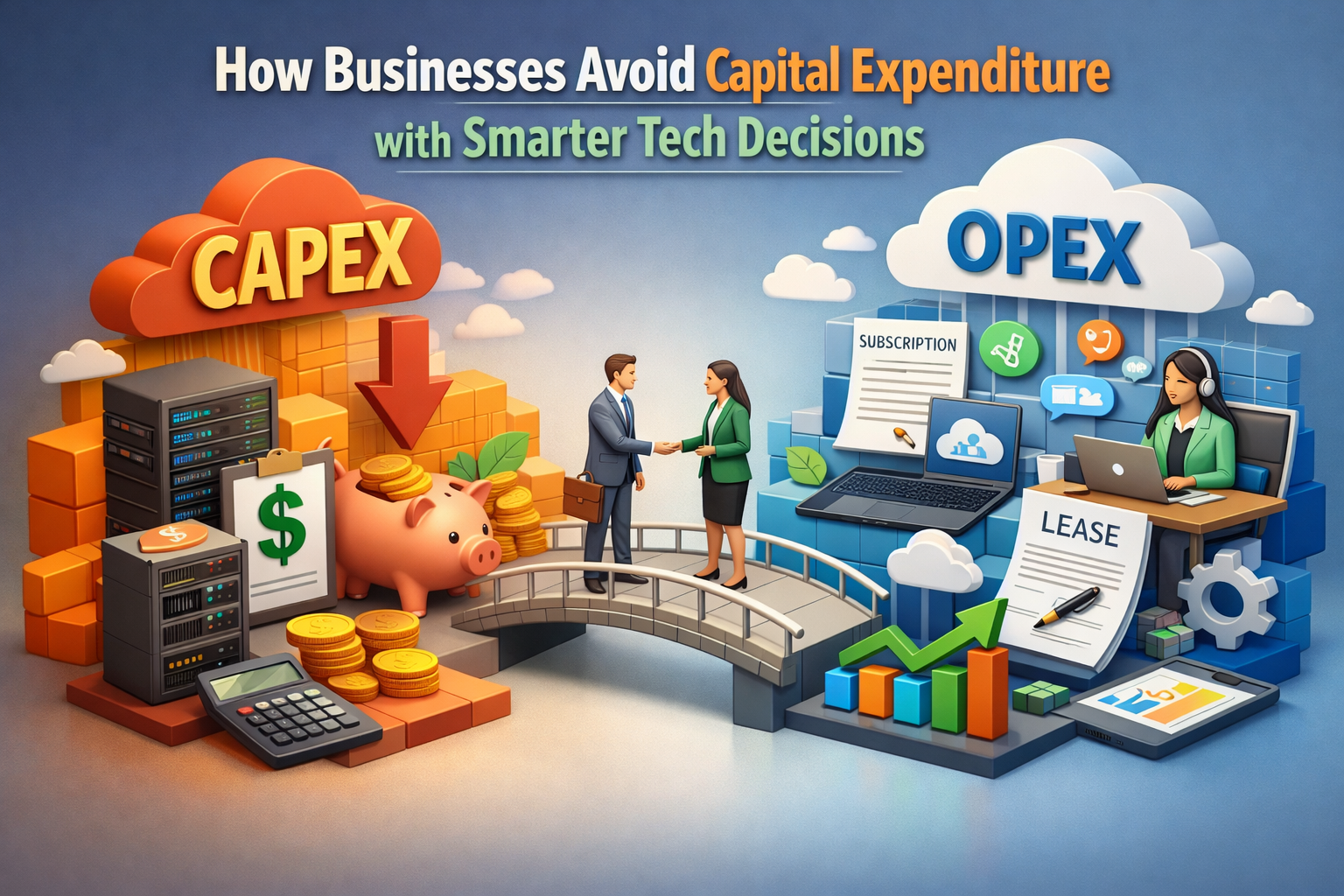
In today’s fast-moving digital economy, businesses are under constant pressure to grow while keeping costs under control. One of the biggest financial challenges organizations face is capital expenditure (CapEx)—large upfront investments in hardware, infrastructure, and long-term technology assets. Fortunately, smarter technology decisions are helping companies reduce or even avoid CapEx altogether, shifting instead toward more flexible and cost-efficient models.
Understanding the CapEx Problem
Capital expenditure typically includes spending on:
-
On-premise servers and data centers
-
Networking equipment
-
Licensed software with upfront fees
-
Long-term IT infrastructure upgrades
According to industry estimates, traditional on-premise IT infrastructure can require 30–50% of its total cost upfront, with additional maintenance and upgrade expenses every 3–5 years. For small and mid-sized businesses, this can severely limit cash flow and slow innovation.
Smarter tech choices allow companies to redirect these funds toward growth, talent, and customer experience.
Smarter Tech Decisions That Reduce Capital Expenditure
1. Cloud Computing Over On-Premise Infrastructure
Cloud adoption is one of the most effective ways businesses avoid CapEx.
Instead of purchasing servers and storage hardware, companies rent computing resources on a pay-as-you-go basis. Market data shows that organizations moving to the cloud can reduce infrastructure costs by 20–40% in the first two years.
Key advantages include:
-
No upfront hardware costs
-
Automatic updates and scalability
-
Pay only for what you use
For example, startups that once needed $50,000–$100,000 to set up servers can now launch on cloud platforms for a few hundred dollars per month.
2. Software-as-a-Service (SaaS) Instead of Licensed Software
Traditional enterprise software often requires large license fees, installation costs, and dedicated IT staff. SaaS tools eliminate most of these expenses.
Real-world impact:
-
SaaS reduces software ownership costs by 25–60% over five years
-
Updates, security, and maintenance are included
-
Users can scale licenses up or down instantly
Popular SaaS solutions for accounting, CRM, HR, and project management allow businesses to operate with minimal IT capital investment.
3. Shifting from CapEx to OpEx Models
Smarter tech decisions increasingly favor operational expenditure (OpEx) over CapEx. Instead of buying assets, businesses subscribe to services.
Why this matters:
-
Predictable monthly costs improve budgeting
-
Better cash flow management
-
Easier financial forecasting
A recent financial analysis found that companies using subscription-based IT models improved cash liquidity by 15–20% annually compared to CapEx-heavy organizations.
Read More: Understanding what is Amazon Aurora and its Clusters, Benefits, and Use Cases
4. Virtualization and Remote Work Technologies
Virtual desktops, collaboration tools, and remote work platforms reduce the need for physical office infrastructure and hardware.
Cost-saving outcomes include:
-
Lower spending on office space and equipment
-
Reduced travel and utility expenses
-
Fewer endpoint devices per employee
Businesses embracing remote-first or hybrid models report up to 30% savings in workplace infrastructure costs within the first year.
5. Managed Services Instead of In-House IT Assets
Rather than investing in servers, security tools, and specialized staff, many businesses now rely on managed service providers (MSPs).
Benefits include:
-
No capital investment in IT equipment
-
Access to expert support without hiring full-time staff
-
Faster deployment of new technologies
Industry data suggests managed IT services can reduce overall IT spending by 10–25%, while improving system reliability and security.
The Strategic Advantage of Avoiding CapEx
Avoiding capital expenditure is not just about saving money—it’s about agility. Companies that minimize CapEx can:
-
Adapt faster to market changes
-
Experiment with new tools without financial risk
-
Scale operations without long approval cycles
In an environment where technology evolves rapidly, flexibility often matters more than ownership.
Final Thoughts
Smarter technology decisions are reshaping how businesses invest in growth. By embracing cloud platforms, SaaS solutions, virtualization, and managed services, organizations can avoid heavy capital expenditure while staying competitive and innovative.
The shift away from CapEx is no longer a trend—it’s a strategic necessity. Businesses that adopt flexible, service-based technology models position themselves for long-term resilience, better cash flow, and faster digital transformation. For professionals looking to leverage cloud solutions to reduce CapEx, AWS Solutions Architect Associate Certification Training provides the skills to design cost-efficient, scalable, and flexible cloud architectures.

 English
 Arabic
 Español
 Português
 Deutsch
 Türkçe
 Dutch
Dutch
 Italiano
 Russian
 Romaian