


Project Management vs Risk Management – Key Differences

In this age of rapid change and market dynamism, enterprises depend on repeatable practices to add value and achieve strategic objectives. Two frequently confused topics, which are discussed in conjunction with one another- but which are different from each other- are project management and risk management. Both are key to successful end results, but they do two different things and need two different mentalities, skill sets, and approaches.
Knowing the differences between them — not just their overlap — can help professionals make smarter career decisions and acquire skills that are applicable in any industry.
1. What Is Project Management?
In essence, project management is about "getting things done" – delivering the right products (outputs), to the required standard of quality, within an established time frame and to budget. Project managers are tasked with bringing stakeholders into alignment, sequencing activities, resourcing initiatives, and driving teams to deliver outcomes.
It is a fact that project failure rates, even with all of these formal processes in place, are still quite atrocious – as many as 70% of those same projects will fail to deliver what they promised, if anything at all, because that’s the kind of planning or execution shortfall we’re talking about. In fact, such companies are 50% more likely to have project failures and waste almost $2 trillion per year as a direct consequence.
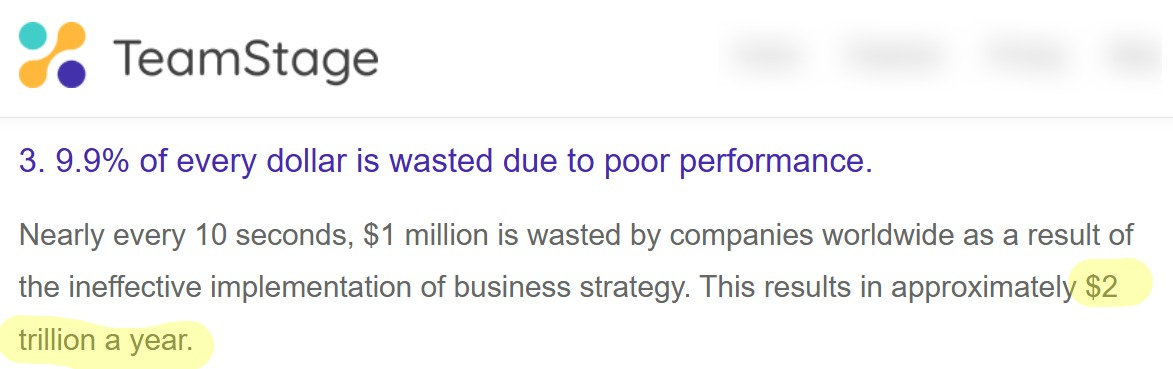
This info underscores the importance of project discipline in general, but it also suggests that at bottom this much is true: traditional project management isn’t enough to ensure your projects are successful.
2. What Is Risk Management?
Risk management is another such discipline dealing with uncertainty. It includes organized procedures to recognize, categorize, evaluate, and address the possibility of events that may influence what happens in a project, either positively or negatively.
It's not merely a matter of responding to them, for it deals with risk proactively. It equips teams to manage a myriad of issues — from cost-overruns and timing delays to shifts in external markets and operational barriers.
Studies have shown that up to 50% of projects fail primarily due to poor risk management, while as much as 85% of delays have been found to be related to unforeseen risks not identified or mitigated at an earlier stage.
It remains that well-embedded best practices don’t just guard against our fear of failure — they deliver agility. Talented risk practitioners help a company leverage rather than just avoid hazards.
3. Mindset: Delivery vs Uncertainty
An implicit contrast between the two fields is a matter of mentality.
Project management is all about reaching one's goal: to complete the project in its defined scope boundaries. Project managers concentrate on what is to be delivered and who is doing it based on performance indicators.
Risk management is a matter of uncertainty — looking into the future with an eye toward what may happen and thinking in advance about how to adjust. It is not so predictive of the future, but rather aims to reduce surprise and volatility.
It’s a subtle transition — from controlling outcomes to managing variability — but it is transformative. It’s part of why risk professionals sit within project teams and within leadership.
4. Tools Vs Skills: Generalist VS Specialist
Project managers depend on conveniences such as Gantt charts, stakeholder matrices, and resource plans to organize work. Risk managers, on the other hand, use different methods such as:
-
Risk registers
-
Probability-impact matrices
-
Monte Carlo simulations
-
FMEA - Failure Mode and Effects Evaluation
With these tools, risk professionals can measure uncertainty, model scenarios, and inform decision-makers on mitigation strategies well ahead of problems spiralling out of control.
5. Certification: Why It Matters Now More Than Ever
As companies evolve, they realize that it takes focused risk talent to manage. Professional credentials attest to competence and demonstrate commitment to employers. According to data, those with the relevant certifications can increase their wages by as much as 20 percent.
Image source - PMI
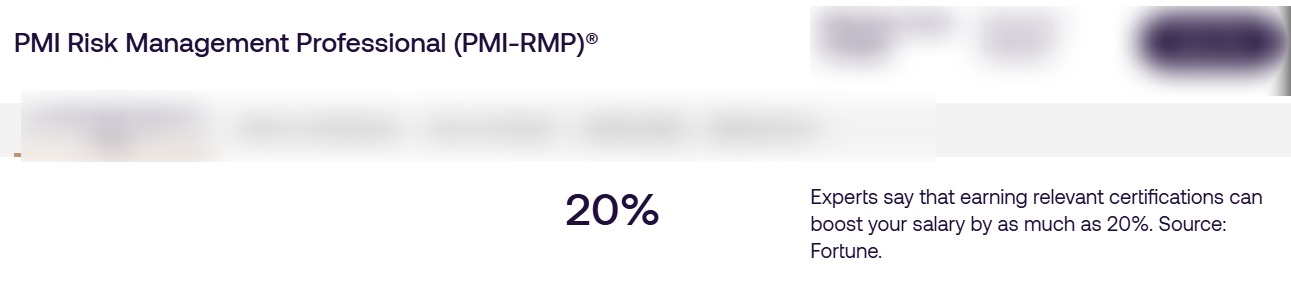
The PMI Risk Management certification (PMI-RMP) is a globally recognized resume-booster credential, known for its stringent requirements and industry recognition. It showcases advanced abilities in identifying, assessing, and responding to project risks – skills that are vital in an increasingly complex business environment.
Getting a risk management certification, such as the PMI-RMP, or completing a course for a risk event that contributes to it, not only provides you with specialized tools around risks but also an understanding of how project delivery can be done, taking into account risks.
New programs (e.g., a comprehensive preparation leading to the Risk Management Professional certification) integrate applied risk know-how with foundational project management skills in order to prepare learners for real-world challenges.
Career Impact: Bridging the Gap
So what does this mean for the budding professional? The boundaries between project and risk management are becoming increasingly blurred out there in the marketplace. And with it, more and more employers are looking for those who can get results while protecting their projects against the unknown. This hybrid skill set is precisely what risk professionals provide.
A RMP course doesn’t just prove your expertise, it puts you where the rubber meets the road: at the intersection of execution and resilience. If you know both sides of the coin, then you can be an incredible asset who knows how to put everything in its best way and set up projects for success before they even start.
But if you want to deepen your expertise, consider guided learning paths that will allow you to master risk fundamentals and solidify core project management principles—like the Risk Management Professional certification program mentioned earlier.

 English
 Arabic
 Français
 Español
 Português
 Deutsch
 Dutch
Dutch
 Italiano
 Russian
 Romaian