Tarps are one of the most practical and widely used protective solutions across residential, commercial, and industrial settings. From shielding construction materials to covering vehicles and creating outdoor shelters, tarps provide dependable protection against harsh environmental elements.
If you’re searching for the right tarp, understanding materials, uses, and features will help you make a smarter investment. This comprehensive, skimmable guide explains everything you need to know about tarps in a clear, structured format.
What Are Tarps?
Tarps, also known as tarpaulins, are large sheets made from strong, flexible, water-resistant or waterproof materials. They are designed to cover, protect, and contain items exposed to weather, debris, or moisture.
Modern tarps are engineered for durability while remaining lightweight and easy to handle, making them ideal for temporary and long-term coverage.
Why Tarps Are So Widely Used
The popularity of tarps comes from their unmatched versatility.
Key Advantages
Because of these benefits, tarps are used in industries ranging from construction to agriculture.
Common Uses of Tarps
Tarps serve countless functions across different environments.
Construction Protection
Builders use tarps to shield lumber, cement, and tools from rain and sun exposure.
Transportation & Trucking
Heavy-duty tarps secure cargo on flatbed trucks, preventing weather damage during transit.
Agriculture & Farming
Farmers rely on tarps to cover hay bales, grain, soil, and machinery.
Camping & Outdoor Activities
Tarps function as tents, ground sheets, and rain fly shelters.
Home Improvement Projects
They are ideal for roof repairs, painting jobs, and yard cleanups.
This multi-purpose functionality makes tarps an essential tool in daily operations.
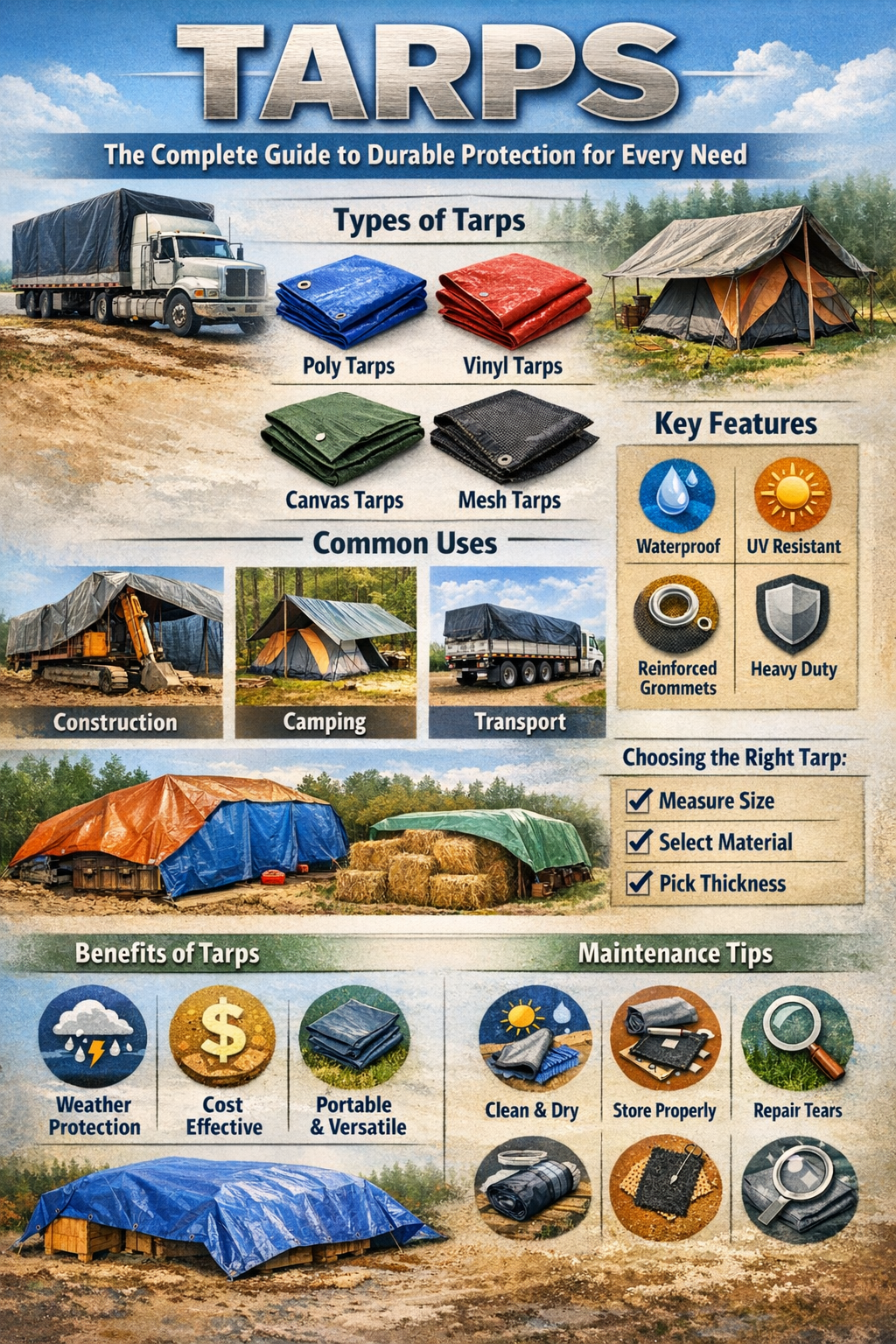
Types of Tarps Available
Choosing the right tarp begins with understanding material options.
Poly Tarps
Polyethylene tarps are lightweight yet durable.
Features include:
-
Waterproof coating
-
UV resistance
-
Affordable pricing
-
Tear resistance
They are ideal for general outdoor use and temporary coverage.
Vinyl Tarps
Vinyl tarps are designed for heavy-duty industrial applications.
Best suited for:
They offer superior strength and abrasion resistance.
Canvas Tarps
Canvas tarps are breathable rather than fully waterproof.
Advantages:
-
Prevent moisture buildup
-
Mildew resistant
-
Heat tolerant
They’re commonly used to cover machinery and painting areas.
Mesh Tarps
Mesh tarps allow airflow while blocking debris and sunlight.
Common uses:
-
Construction scaffolding
-
Dump trucks
-
Shade structures
They reduce wind resistance while maintaining coverage.
Important Features to Consider
When purchasing tarps, evaluating product specifications ensures the right choice.
Material Thickness
Measured in mils, thicker tarps provide greater durability.
Waterproof Capability
Fully waterproof tarps protect against heavy rain, while water-resistant options suit mild exposure.
UV Treatment
UV-coated tarps prevent sun damage and material breakdown.
Grommet Placement
Reinforced grommets allow secure tie-downs and better tension distribution.
Edge Reinforcement
Heat-sealed or rope-reinforced edges increase lifespan.
Duty Grades Explained
Tarps are categorized by strength levels.
Light-Duty Tarps
-
Short-term indoor use
-
Budget friendly
-
Lightweight coverage
Medium-Duty Tarps
-
Home improvement
-
Landscaping
-
Equipment covers
Heavy-Duty Tarps
Choosing the correct grade prevents tearing and premature wear.
Weather Protection Benefits
Tarps act as a first line of defense against environmental damage.
Rain Protection
Waterproof coatings prevent moisture penetration.
Sun & UV Shielding
UV resistance protects equipment from fading and cracking.
Wind & Debris Defense
Heavy tarps block flying debris during storms.
Snow & Ice Coverage
They prevent accumulation on roofs and machinery.
This makes tarps vital for emergency preparedness.
How to Select the Right Size
Proper sizing ensures effective coverage.
Measurement Tips
Slightly oversized tarps provide better sealing and flexibility.
Maintenance Tips for Long-Lasting Tarps
Taking care of tarps extends usability and performance.
-
Clean with mild soap and water
-
Allow to dry before storage
-
Fold instead of crumpling
-
Store in cool, dry areas
-
Avoid sharp surfaces
Routine care prevents mold, tears, and coating damage.
Custom Tarps vs Standard Tarps
Different projects require different solutions.
Standard Tarps
-
Pre-made sizes
-
Cost effective
-
Quick availability
Custom Tarps
-
Tailored dimensions
-
Specialized materials
-
Reinforced stress points
-
Industry-specific design
Custom tarps are ideal for unique equipment or structural coverage.
Safety and Compliance Features
Modern tarps may include advanced safety enhancements.
-
Fire-retardant coatings
-
Anti-mildew treatment
-
High-visibility colors
-
Reinforced seams
These features improve workplace safety and regulatory compliance.
Mistakes to Avoid When Buying Tarps
Avoid these common purchasing errors:
-
Choosing the wrong material
-
Ignoring thickness ratings
-
Underestimating size
-
Overlooking UV protection
-
Selecting light-duty for heavy tasks
Informed decisions prevent costly replacements.
Final Thoughts
Tarps remain one of the most dependable and versatile protective tools available today. Whether used for construction, transportation, agriculture, outdoor recreation, or emergency response, their durability and flexibility make them indispensable.
By understanding tarp materials, duty grades, sizing, and maintenance practices, you can select tarps that deliver reliable performance and long-term value. The right tarp not only protects your assets but also ensures peace of mind in any environment or weather condition.




 Arabic
 Français
 Español
 Português
 Deutsch
 Türkçe
 Dutch
Dutch
 Italiano
 Russian
 Romaian