


High-Precision Cross Roller Bearing for Robotics
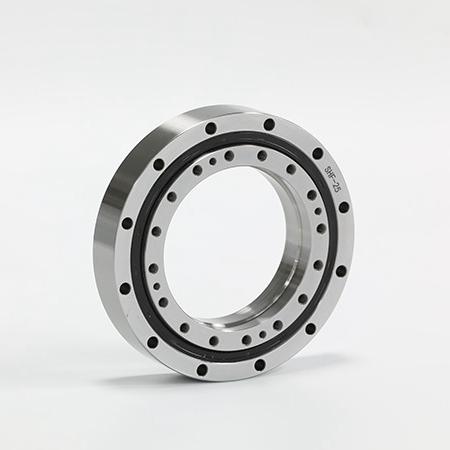
Modern industrial equipment demands extreme precision and stability. Robotics, CNC tables, and medical systems operate under combined radial, axial, and moment loads. When conventional bearings cannot handle these forces, machines lose accuracy and reliability.
Many manufacturers experience positioning errors, vibration, and structural instability. These issues often come from using multiple bearings to support complex load directions. The result is misalignment, higher assembly complexity, and increased maintenance costs.
To solve these challenges, engineers turn to a high-rigidity cross roller bearing. Its unique internal structure supports loads in all directions within a compact design, making it ideal for precision-driven industries.
The Core Problem: Rigidity, Accuracy, and Space Limitations
Multi-Directional Load Challenges
Equipment such as robotic arms and rotary tables faces:
-
Radial loads
-
Axial loads
-
Moment (tilting) loads
Traditional bearing arrangements require multiple units to manage these forces. This increases design complexity.
Limited Installation Space
Compact machinery designs demand smaller components. Using several bearings consumes space and reduces structural stiffness.
Accuracy and Vibration Issues
Low rigidity leads to:
-
Positioning errors
-
Excessive deflection
-
Reduced machining precision
-
Shortened service life
For B2B manufacturers, these problems directly affect productivity and product quality.
The Solution: High-Rigidity Cross Roller Bearing Design
What It Is
A cross roller bearing is a precision bearing where cylindrical rollers are arranged perpendicular to each other in a single raceway. This structure allows one bearing to handle radial, axial, and moment loads simultaneously.
For full specifications and configurations, visit:
cross roller bearing
https://yuwei-bearing.com/cross-roller-bearing/
How It Works
The rollers are alternately placed at 90-degree angles. This cross arrangement enables uniform load distribution across the bearing.
Working principle includes:
-
Cylindrical rollers increase contact surface area
-
Crossed arrangement supports loads in all directions
-
Integrated structure improves rigidity
-
Precision raceways reduce rotational runout
Problems with Traditional Bearing Systems
Older solutions often use separate radial and thrust bearings. These systems:
-
Require more mounting space
-
Increase alignment complexity
-
Reduce overall stiffness
-
Create assembly errors
How Cross Roller Bearing Solves Them
-
Single bearing supports multiple loads
-
Compact and space-saving design
-
Higher rigidity and accuracy
-
Simplified installation
-
Lower long-term maintenance
This makes it ideal for precision equipment manufacturers.
Key Features That Matter to Engineers
High Rigidity
Crossed rollers minimize elastic deformation under load. This improves structural stability.
Compact Structure
One bearing replaces multiple bearing combinations, reducing system size.
High Rotational Accuracy
Precision grinding ensures low runout and smooth motion.
Strong Load Capacity
Handles combined loads without compromising performance.
Easy Installation
Preload design reduces adjustment time and simplifies mounting.
Comparison: Cross Roller Bearing vs Conventional Bearing Arrangement
| Feature | Cross Roller Bearing | Traditional Bearing Setup |
|---|---|---|
| Load Handling | Radial + Axial + Moment | Separate bearings required |
| Rigidity | Very High | Moderate |
| Installation Space | Compact | Larger |
| Assembly Complexity | Simple | Complex |
| Positioning Accuracy | Excellent | Variable |
| Maintenance | Low | Higher |
This comparison highlights why precision industries increasingly adopt cross roller technology.
Real Industrial Applications
Robotics
Provides precise rotational movement for robotic joints and arms. Maintains stability under complex motion loads.
CNC Rotary Tables
Ensures accurate indexing and minimal vibration during machining.
Medical Equipment
Used in CT scanners and imaging systems requiring smooth, precise rotation.
Semiconductor Manufacturing
Delivers high positioning accuracy in wafer handling systems.
Automation and Inspection Systems
Supports precision alignment and stable motion in automated production lines.
These industries demand both precision and reliability.
Why Manufacturers Prefer Cross Roller Bearing
Improved Equipment Accuracy
Higher rigidity means less deflection and better positioning precision.
Reduced Design Complexity
Replacing multiple bearings with a single solution simplifies mechanical design.
Lower Total Cost of Ownership
Longer service life and easier installation reduce maintenance expenses.
Consistent Quality Standards
Manufactured with strict dimensional tolerances and surface finishing control.
To explore available sizes and technical data, check:
cross roller bearing
https://yuwei-bearing.com/cross-roller-bearing/
How to Choose the Right Cross Roller Bearing
Selecting the right bearing requires evaluating several engineering factors.
Load Requirements
Calculate:
-
Radial load
-
Axial load
-
Moment load
Ensure the bearing capacity matches application demands.
Accuracy Class
High-precision applications such as robotics require tighter tolerance classes.
Installation Space
Measure housing dimensions carefully to ensure proper fit.
Preload Requirements
Preloaded bearings improve rigidity but must match load conditions.
Operating Environment
Consider temperature, lubrication method, contamination exposure, and operating speed.
Working with a reliable manufacturer ensures accurate specification and consistent quality.
Reducing Downtime Through Better Bearing Design
For manufacturers, machine stability directly impacts output quality and production efficiency. Poor rigidity leads to vibration, which affects product finish and accuracy. Over time, this increases rejection rates and repair costs.
A well-designed cross roller bearing improves structural stiffness, reduces vibration, and maintains alignment. This supports long-term performance in high-precision systems.
Conclusion
Modern industrial equipment requires compact, rigid, and highly accurate bearing solutions. Traditional multi-bearing setups increase complexity and reduce stiffness. This leads to alignment problems and maintenance issues.
A high-precision cross roller bearing solves these challenges with its crossed cylindrical roller design. It supports multi-directional loads in a single compact unit while delivering superior rigidity and rotational accuracy.
For robotics, CNC systems, medical devices, and automation equipment, investing in the right bearing solution improves machine reliability, enhances precision, and lowers long-term operational costs. For B2B buyers and engineers, this is not just a component choice — it is a performance decision.

 English
 Arabic
 Español
 Português
 Deutsch
 Türkçe
 Dutch
Dutch
 Italiano
 Russian
 Romaian