


AI for Graphic Design: Boon or Risk?
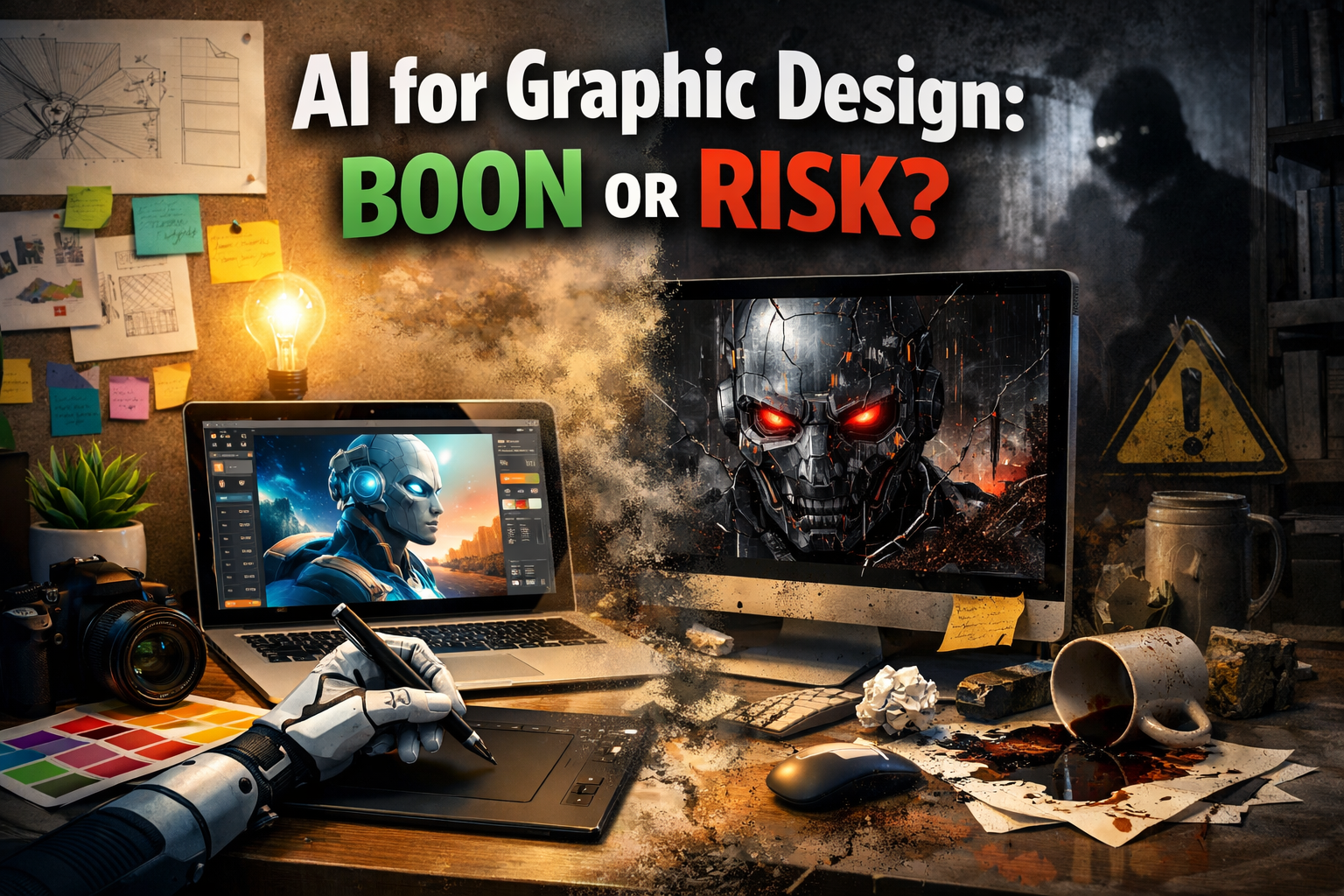
Artificial Intelligence (AI) is reshaping industries at an unprecedented pace, and graphic design is no exception. From automated logo creation to advanced image generation, AI-powered tools are transforming how designers work. Platforms like Adobe and Canva have integrated AI features that allow users to create high-quality designs in minutes. But while AI offers speed and efficiency, it also raises concerns about creativity, originality, and job security.
So, is AI in graphic design a boon or a risk? Let’s explore both sides.
The Boon: How AI Is Transforming Graphic Design
1. Increased Productivity and Speed
AI tools significantly reduce the time required for repetitive tasks. According to a 2023 McKinsey report, AI automation can increase productivity in creative industries by up to 40%.
For designers, this means:
-
Faster background removal
-
Automated color palette suggestions
-
Instant layout adjustments
-
Quick mockup generation
For example, Adobe Firefly enables designers to generate images from text prompts within seconds. What once took hours can now be done in minutes.
2. Accessibility for Non-Designers
AI-powered design tools have democratized creativity. Platforms like Canva Magic Design allow small business owners, marketers, and students to create professional-looking visuals without formal design training.
Recent industry surveys show that:
-
Over 75% of small businesses use some form of DIY design tools.
-
Nearly 60% of marketing teams rely on AI-based design assistance.
This accessibility empowers startups and entrepreneurs who may not have the budget for professional designers.
3. Enhanced Creativity and Inspiration
Contrary to popular belief, AI doesn’t necessarily replace creativity—it can enhance it.
Designers use AI to:
-
Generate concept variations
-
Experiment with typography styles
-
Explore unique visual directions
-
Overcome creative blocks
Instead of starting from a blank canvas, designers can refine AI-generated drafts, saving time and sparking new ideas.
4. Data-Driven Design Decisions
AI can analyze user behavior and engagement data to suggest optimized designs. For example:
-
Which color schemes increase click-through rates
-
What layout improves user engagement
-
Which fonts perform better on mobile devices
This blend of creativity and analytics helps brands create designs that are not only beautiful but also effective.
Read More: Generative AI vs Traditional AI – A Creator’s Guide for Content & Branding
The Risk: Challenges and Concerns
While AI offers undeniable benefits, it also brings risks that cannot be ignored.
1. Job Displacement Fears
One of the biggest concerns is automation replacing entry-level designers. According to the World Economic Forum, AI and automation could displace 85 million jobs globally by 2025, though it may also create new roles.
In graphic design:
-
Basic logo creation
-
Social media templates
-
Simple banner ads
These tasks are increasingly automated. Freelancers who rely on such services may face income challenges.
2. Creativity vs. Originality Issues
AI models are trained on massive datasets of existing designs. This raises questions about:
-
Intellectual property rights
-
Copyright infringement
-
Design originality
There have already been legal debates involving AI-generated artwork and copyrighted materials. Tools like Midjourney and DALL·E have sparked global discussions about who owns AI-created content—the user, the platform, or the original artists whose work trained the system.
3. Loss of Human Touch
Great design often carries emotional depth and cultural understanding. While AI can replicate patterns, it may struggle with:
-
Cultural nuances
-
Emotional storytelling
-
Brand personality alignment
Human designers bring empathy, strategic thinking, and lived experience—qualities that AI cannot fully replicate.
4. Over-Reliance on Automation
There’s also the danger of creative stagnation. If everyone uses similar AI tools, designs may start to look uniform and predictable.
When templates dominate:
-
Brand uniqueness decreases
-
Visual diversity shrinks
-
Creative innovation slows down
Over-dependence on AI could lead to a “design sameness” problem across industries.
Finding the Balance: Collaboration Over Replacement
The future of graphic design may not be about AI replacing humans—but about collaboration.
AI works best when it:
-
Automates repetitive tasks
-
Provides rapid experimentation
-
Supports data-driven decisions
Humans excel in:
-
Strategic thinking
-
Emotional intelligence
-
Storytelling
-
Brand identity creation
Designers who embrace AI as a tool rather than view it as a threat are more likely to thrive. In fact, LinkedIn’s 2024 skills report shows that AI-related creative skills are among the fastest-growing competencies in digital marketing and design roles.
Final Verdict: Boon with Boundaries
AI in graphic design is undeniably powerful. It boosts productivity, enhances accessibility, and supports creativity. However, it also raises ethical, legal, and professional concerns.
The key lies in responsible use:
-
Combine AI efficiency with human creativity
-
Respect intellectual property laws
-
Continue developing core design skills
-
Use AI to enhance—not replace—original thinking
In the end, AI is neither purely a boon nor entirely a risk. It is a transformative tool. Like any tool, its impact depends on how we choose to use it.
For graphic designers willing to adapt, AI may not be the end of creativity—but the beginning of a new creative era. To harness AI effectively and stay ahead in the evolving design landscape, enrolling in a professional Generative AI certification course and training can equip designers with the skills to blend creativity with cutting-edge technology.

 Arabic
 Français
 Español
 Português
 Deutsch
 Türkçe
 Dutch
Dutch
 Italiano
 Russian
 Romaian