


The Complete Guide to Using a Freight Class Calculator for Accurate Shipping Costs
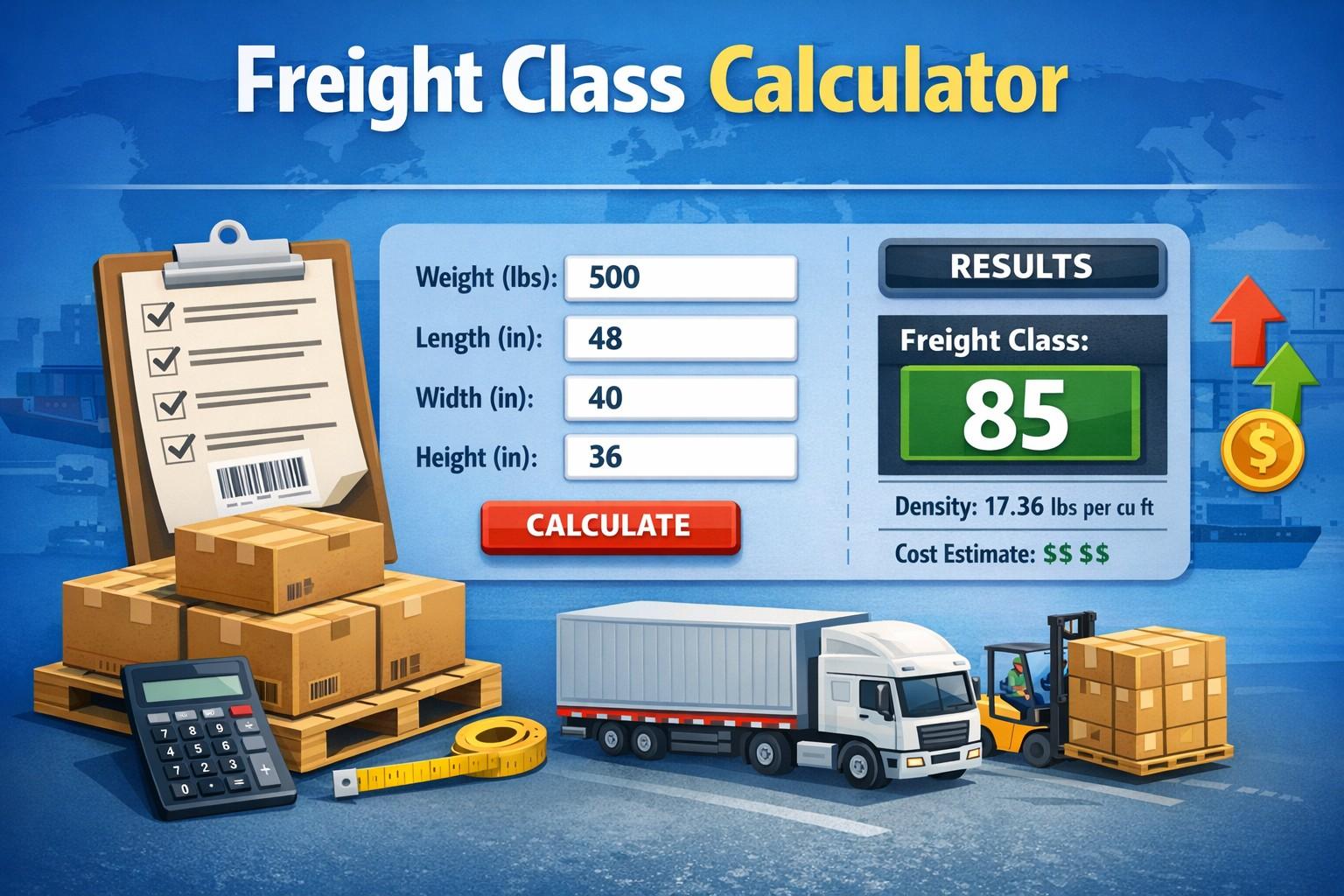
Shipping goods is an important part of many businesses. Whether you run a small online store or a large manufacturing company, you need to send products to customers safely and at the best possible cost. One of the biggest challenges in shipping is understanding freight class. Many business owners feel confused when they hear terms like density, NMFC codes, and freight classification. This is where a Freight Class Calculator becomes very helpful.
A Freight Class Calculator is a simple but powerful tool. It helps you find the correct freight class for your shipment. When you know the correct freight class, you can estimate shipping costs more accurately. This means fewer billing surprises and better profit control. If you choose the wrong freight class, you may end up paying extra charges later.
In this article, you will learn everything about a Freight Class Calculator in very simple language. We will explain how it works, why it is important, how it saves money, and how you can use it correctly. By the end of this article, you will clearly understand how a Freight Class Calculator can make your shipping process smooth and cost-effective.
What Is a Freight Class Calculator
A Freight Class Calculator is an online tool or software that helps shippers determine the correct freight class for their goods. In LTL (Less Than Truckload) shipping, freight class is very important. It directly affects how much you pay for transportation.
Freight class is usually based on four main factors: density, stowability, handling, and liability. Among these, density plays the biggest role. Density is calculated by dividing the weight of the shipment by its volume. A Freight Class Calculator makes this calculation easy. You simply enter the weight and dimensions of your shipment, and the tool calculates the density and suggests a freight class.
There are 18 freight classes in total, ranging from Class 50 to Class 500. Lower classes usually mean heavier and denser items. Higher classes are lighter and take up more space. For example, bricks may fall under a lower class, while ping pong balls may fall under a higher class.
Without a Freight Class Calculator, you would have to calculate everything manually. This can lead to errors. Even a small mistake in measurement can change the freight class and increase shipping costs. The calculator reduces this risk.
Businesses that ship regularly often depend on a Freight Class Calculator to avoid reclassification fees. Reclassification happens when a carrier checks your shipment and finds the wrong class listed. This can result in extra charges.
Using a Freight Class Calculator saves time, reduces mistakes, and improves accuracy. It is especially useful for small business owners who do not have deep knowledge of freight classification rules.
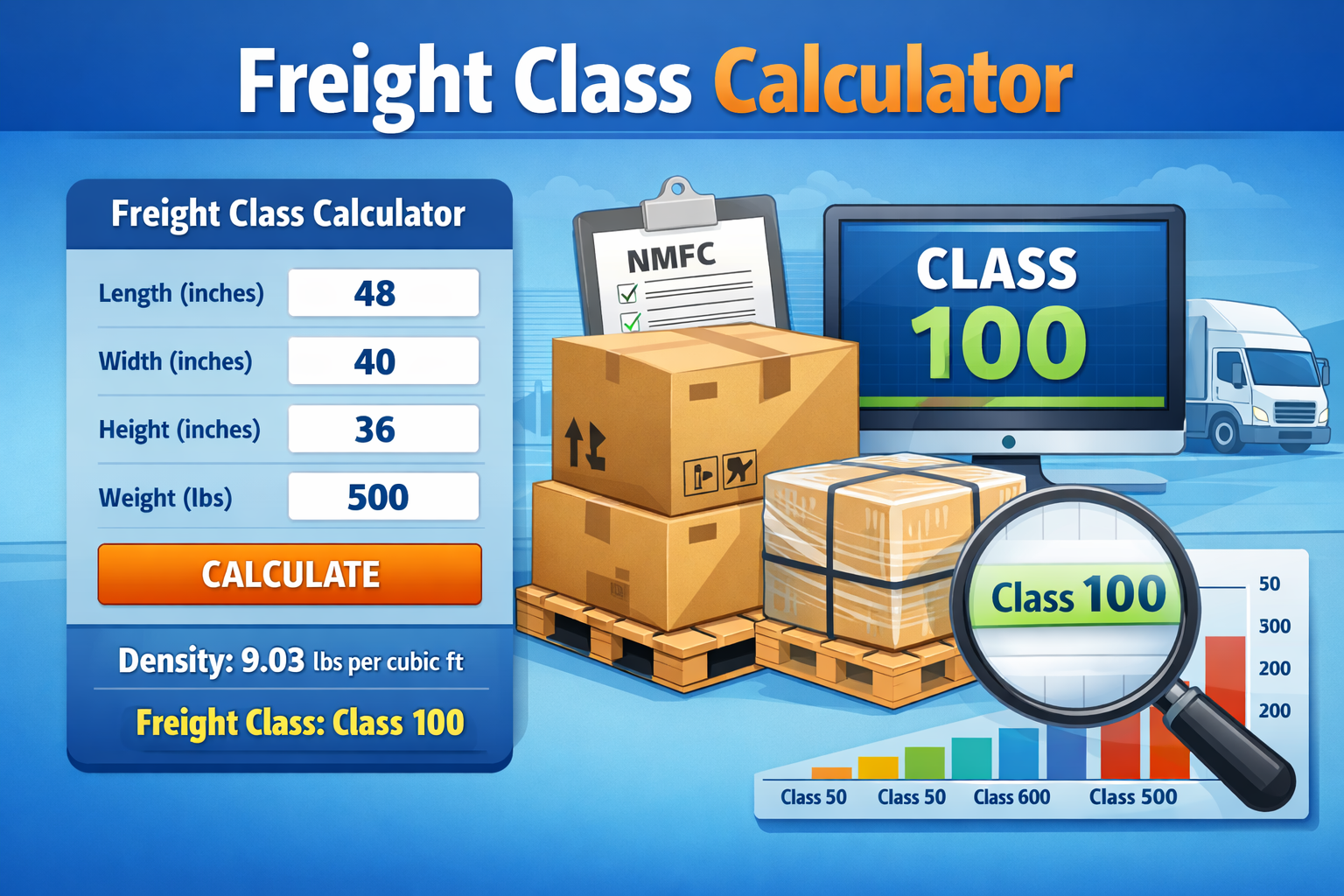
Why Freight Class Matters So Much
Many people think freight class is just a number. But in reality, it plays a very big role in shipping costs. If you use a Freight Class Calculator correctly, you can avoid many problems.
Freight class affects pricing because carriers need to plan space in their trucks. If your shipment is dense and heavy, it takes less space. If it is light but bulky, it takes more space. A Freight Class Calculator helps you understand this difference clearly.
For example, imagine two shipments weighing the same. One is compact and dense, and the other is large and light. Even though the weight is the same, the freight class will be different. The larger shipment will likely have a higher freight class and cost more to ship.
Another reason freight class matters is billing accuracy. If you guess the freight class without using a Freight Class Calculator, you may underpay at first. But once the carrier inspects the shipment, they may reclassify it. This leads to additional charges, called reclassification fees.
Freight class also impacts damage risk. Items that are fragile or valuable may have higher classes because they need special handling. A Freight Class Calculator helps you understand where your shipment stands.
In short, freight class is not just a number. It directly affects cost, safety, and efficiency. Using a Freight Class Calculator ensures you are paying the correct amount and avoiding unwanted surprises.
How Freight Class Is Calculated
Understanding how freight class is calculated will help you use a Freight Class Calculator more effectively. The main factor is density.
Density is calculated using this simple formula:
Weight ÷ Volume = Density
Volume is measured in cubic feet. To calculate volume, multiply the length, width, and height of the shipment in inches, then divide by 1,728 (the number of cubic inches in one cubic foot).
A Freight Class Calculator automatically performs these calculations. You only need to enter the shipment’s weight and dimensions.
Once density is calculated, it is matched to a freight class chart. Higher density usually means a lower freight class. Lower density usually means a higher freight class.
But density is not the only factor. The calculator may also consider:
-
Stowability: Can the item be stacked easily?
-
Handling: Does it require special care?
-
Liability: Is it fragile or valuable?
Most Freight Class Calculator tools focus mainly on density because it is the most common method for general goods. However, certain products have fixed NMFC (National Motor Freight Classification) codes. In such cases, the freight class is already assigned.
By understanding these basics, you can enter correct data into your Freight Class Calculator and get accurate results every time.
Benefits Of Using Freight Class Calculator
Using a Freight Class Calculator offers many advantages. It is not just about finding a number. It helps improve your entire shipping process.
First, it saves time. Instead of manually calculating density and checking freight charts, you get instant results. This is very helpful if you handle multiple shipments daily.
Second, it reduces errors. Manual calculations can lead to mistakes. Even small measurement errors can change the freight class. A Freight Class Calculator minimizes these risks.
Third, it helps control shipping costs. When you know the correct freight class, you avoid unexpected charges. Reclassification fees can hurt your budget. Using a Freight Class Calculator protects you from such issues.
Fourth, it improves customer satisfaction. Accurate shipping costs mean you can provide correct quotes to customers. There are no surprise price changes later.
Fifth, it increases confidence. Many small business owners feel unsure about freight classification. A Freight Class Calculator gives them clarity and confidence.
In today’s competitive market, every dollar matters. Even small savings on shipping can improve overall profit. A Freight Class Calculator helps you stay organized, accurate, and professional.
Common Mistakes In Freight Classification
Even experienced shippers sometimes make mistakes in freight classification. This is why a Freight Class Calculator is so important.
One common mistake is incorrect measurement. If you measure the pallet dimensions wrongly, the density calculation will be wrong. Always measure the longest points, including packaging.
Another mistake is guessing the weight. Some people estimate weight instead of using an accurate scale. This can change the freight class significantly.
Ignoring packaging is another error. The packaging adds to both weight and size. A Freight Class Calculator needs complete information, including pallets and boxes.
Some shippers also forget about NMFC codes. Certain products have fixed classifications. In such cases, using only density may not be enough.
Not updating shipment details is another issue. If you change packaging or combine items, the freight class may change too.
By carefully entering correct information into your Freight Class Calculator, you can avoid these mistakes. Accuracy in measurement and data entry is the key to correct freight classification.
Choosing The Right Freight Class Tool
There are many online tools available, but not all are equally reliable. Choosing the right Freight Class Calculator is important.
First, look for a tool that is simple and easy to use. You should be able to enter dimensions and weight quickly without confusion.
Second, make sure the Freight Class Calculator uses updated freight classification charts. Freight rules can change over time.
Third, check if the tool allows multiple pallet entries. Businesses that ship different sizes regularly need flexibility.
Fourth, consider whether the tool provides additional guidance. Some advanced Freight Class Calculator tools explain density results clearly.
Fifth, ensure it works well on both desktop and mobile devices. Many business owners manage shipments on the go.
A good Freight Class Calculator becomes part of your daily shipping routine. It should be fast, accurate, and reliable.
Investing time in finding the right Freight Class Calculator can make your logistics process smoother and more efficient.
Conclusion
Shipping can be complex, but tools like a Freight Class Calculator make it much easier. Freight class directly affects shipping costs, and even small errors can lead to extra charges. By using a Freight Class Calculator, you can calculate density quickly, avoid mistakes, and control your shipping budget.
Whether you are a small business owner or a large company, understanding freight classification is essential. A Freight Class Calculator saves time, improves accuracy, and builds confidence in your shipping process.
In today’s competitive world, efficiency and cost control are very important. A simple tool like a Freight Class Calculator can make a big difference. By using it correctly and entering accurate details, you ensure smooth deliveries and better profit management.
Frequently Asked Questions
1. What does a Freight Class Calculator do?
A Freight Class Calculator calculates the freight class of a shipment based on its weight and dimensions. It helps determine accurate shipping costs.
2. Why is freight class important?
Freight class affects LTL shipping prices. Incorrect classification can lead to reclassification fees and higher costs.

 English
 Arabic
 Français
 Português
 Deutsch
 Türkçe
 Dutch
Dutch
 Italiano
 Russian
 Romaian