


Designing Your Perfect Pair: KTSOX Custom Socks Factory Guide
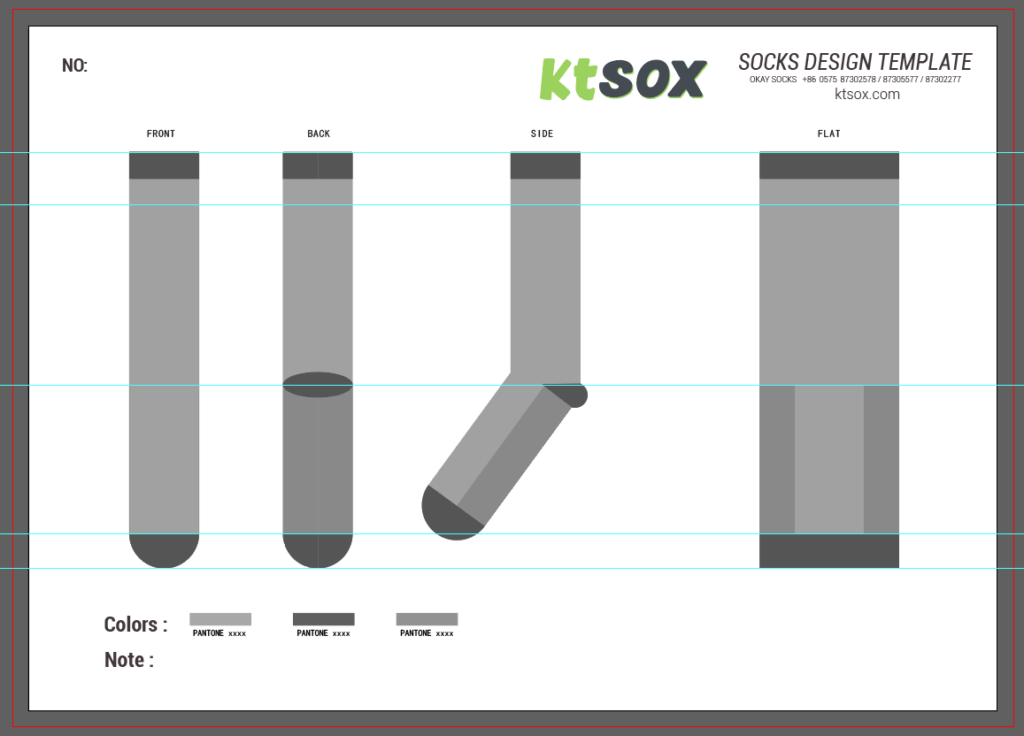
There is something uniquely satisfying about wearing a product that was designed by you. Whether it is a bold pattern for a startup brand, a unified look for a sports team, or a heartfelt gift for a bridal party, custom socks have become the canvas of choice for personal and professional expression. But if you have never navigated the world of manufacturing, the journey from a sketch on a napkin to a finished product can feel overwhelming. KTSOX has built its reputation on demystifying this process. This guide will walk you through how their factory operates, turning your creative vision into a tangible, wearable piece of art with precision and care.
Step One: From Concept to Visual Blueprint
Every great pair of custom socks starts with a single question: What should they look like? Before any machines are switched on, you need to solidify your design concept . This doesn't mean you need to be a professional illustrator. KTSOX encourages clients to start with a vague idea, a color palette, or even just a mood board. Their role is to take that inspiration and translate it into a technical design. To make this first step painless, they offer a Free Design Kit—a resource that includes templates for different sock styles and a physical yarn color card . Holding actual thread swatches in your hand eliminates the guesswork of digital colors, ensuring the "Ocean Blue" you envision is the exact shade that gets knitted.
The Art of the Digital Mockup
Once your concept is sketched out, the next phase is visualization, and this is where the KTSOX process truly shines. Instead of asking you to imagine the final product, their design team generates photorealistic digital mockups at no cost . These are not flat, two-dimensional images. They are renderings that show exactly how your logo or pattern will curve around the ankle, stretch across the instep, and sit on the calf. This step is transformative for the creative process. It allows you to see potential issues—like a logo getting lost in a seam—before a single thread is cut. It creates a collaborative loop where you can tweak, adjust, and perfect the design with confidence.
Decoding the Language of Yarn
With the design approved, the focus shifts to the soul of the sock: the material. The factory floor at KTSOX is stocked with a diverse library of yarns, each serving a specific purpose . For a soft, everyday casual sock, a high-quality cotton blend might be ideal. For high-performance athletic wear, moisture-wicking Coolmax or polyester ensures feet stay dry . Bamboo fiber is a popular choice for those seeking a luxurious, hypoallergenic feel with natural breathability . And for warmth without bulk, Merino wool provides natural insulation that regulates temperature . Understanding these options is crucial because the yarn determines not just the comfort, but the durability and function of your final product.
The Magic of the Knitting Machine
This is where the idea becomes physical. However, a sock machine cannot read a standard JPEG or PDF file. The design must first be converted into a specialized machine code . This code translates your pattern into individual pixels, each corresponding to a specific needle on the hosiery machine. The number of needles—ranging from 96 to 200—determines the resolution of the final sock . A higher needle count allows for finer, more detailed patterns. Once the machine is coded and loaded with the correct colored yarns, it begins the mesmerizing process of knitting, weaving the threads together in a precise order to create the tubular prototype of your sock.
The Finishing Touches: Toe Seaming and Reinforcement
When the sock comes off the knitting machine, it is not ready to wear yet. It is essentially a tube with an open toe. The next critical stop is the sewing station, where the toe is closed . While this is often done by machine, skilled hands sometimes perform this task to ensure quality and to spot any minor defects before they proceed. This stage is also where added features come to life. If your design calls for a non-slip silicone grip on the sole, a puffed terry sole for extra cushioning, or an embroidered logo, these elements are applied during post-processing . It is the phase where the sock gains its final functionality and personality.

Boarding: The Secret to a Polished Look
Have you ever wondered why socks look so crisp and shapely when you buy them, but lose that form after the first wash? The answer is a process called "boarding." At the KTSOX factory, after the socks are knitted and sewn, they are pulled over metal forms—or "boards"—that are shaped exactly like feet and calves . These boarded socks are then subjected to a precise combination of heat, pressure, and steam. This process sets the fibers, locks in the shape, and smoothens the fabric. It ensures that every pair of custom socks has a professional, retail-ready finish and maintains its elasticity and fit for the end-user.
Packaging and Shipping Your Creation
The journey concludes with presentation. KTSOX understands that the unboxing experience is part of the product. Whether you need simple poly bags, custom cardboard tags, or eco-friendly boxes, the factory offers comprehensive packaging solutions . They can attach your branded labels and prepare the socks for transport. Because socks are small and lightweight, they are incredibly easy to store and ship compared to bulkier apparel items . Once packaged, your custom creation is ready to be sent to your doorstep or directly to your customers, marking the successful end of a collaborative journey from a simple idea to a perfect pair.

 Arabic
 Français
 Español
 Português
 Deutsch
 Türkçe
 Dutch
Dutch
 Italiano
 Russian
 Romaian