


A Comprehensive Guide to Permanent Magnet Generators
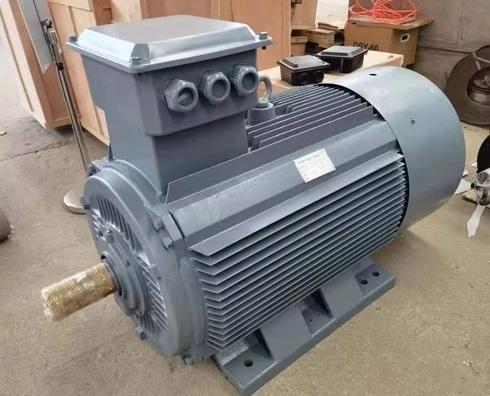
A permanent magnet generator (PMG) is a type of electrical generator sets that uses permanent magnets to establish its magnetic field. Its defining feature is the replacement of conventional electromagnets with high-performance permanent magnets — such as neodymium iron boron (NdFeB) and samarium cobalt (SmCo) — to create the excitation magnetic field. In this configuration, the permanent magnet acts both as the magnetic field source and a critical component of the magnetic circuit.
Compared with electrically excited generators, the fundamental difference lies in the method of magnetic field generation. Excited generators require an external power supply to energize field windings and produce a magnetic field. In contrast, permanent magnet generators rely on the inherent magnetic properties of permanent magnets and maintain a stable magnetic field without any external excitation current.
The magnetic characteristics of permanent magnets are affected by multiple factors, including manufacturing processes, magnet geometry and dimensions, magnetic energy capacity, and magnetization methods. These variables lead to considerable variation in the actual performance of permanent magnets, which represents an important consideration in the design and selection of permanent magnet generators.
Working Principle of Permanent Magnet Generators
Based on its unique magnetic field establishment method, the permanent magnet generator exhibits distinct technical characteristics during energy conversion compared with traditional electrically excited generators.
1. Basic Electromagnetic Induction Principle
Like all AC generators, the permanent magnet generator operates in accordance with Faraday’s Law of Electromagnetic Induction. This law states that an induced electromotive force (EMF) is generated across a conductor when it cuts magnetic flux lines or is exposed to a changing magnetic field. If the circuit is closed, an induced current will flow.
The operating sequence is as follows:
- Mechanical Energy Input: The rotor is driven by an external prime mover, such as a diesel engine, gasoline engine, wind turbine, or other power source.
- Rotating Magnetic Field: Permanent magnets mounted on the rotor rotate synchronously with the shaft, generating a rotating magnetic field.
- Electromagnetic Induction: Stator windings intercept the magnetic flux lines of the rotating field, causing periodic changes in magnetic flux linkage.
- Electrical Energy Output: A sinusoidal alternating EMF is induced in the stator windings. This energy is supplied directly to the load or regulated by power electronic devices before use.
2. Operating Principle of Permanent Magnet Synchronous Machines
The widely used Permanent Magnet Synchronous Motor/Generator (PMSM) features a sinusoidal magnetic field design. Its stator usually employs three‑phase symmetric sinusoidally distributed windings, or the rotor uses specially shaped magnets to achieve a sinusoidal air‑gap flux density distribution.
When operating at a constant speed, the EMF induced in the three‑phase stator windings is sinusoidal, giving rise to the term sinusoidal permanent magnet synchronous machine.
A PMSM is a typical mechatronic product that integrates the machine itself with position sensors, power electronic converters, and drive control circuits.
3. Principle of Minimum Magnetic Reluctance
Permanent magnet generators also follow the principle of minimum magnetic reluctance, meaning magnetic flux always closes along the path with the lowest magnetic resistance. The rotating magnetic field produced by the stator creates magnetic pulling force that drives the rotor to rotate in synchronism with the field. This behavior ensures stable synchronous operation.
Structural Components of Permanent Magnet Generators
The structural design directly determines performance and applicable scenarios. The main components are described below.
1. Rotor System
The rotor is the core component that generates the main magnetic field. Common permanent magnet materials include:
- Neodymium Iron Boron (NdFeB): High magnetic energy product and good cost‑effectiveness, but relatively limited temperature resistance.
- Samarium Cobalt (SmCo): Excellent high‑temperature stability, suitable for harsh thermal environments, but more costly.
- Ferrite: Low cost, but relatively low magnetic performance.
Magnetic Pole Topologies:
Radial, tangential, or Halbach array arrangements are used to optimize magnetic field distribution.
Magnet Installation:
- Surface‑Mounted: Magnets are bonded directly to the rotor surface. Simple structure, but reinforcement (epoxy or metal sleeve) is required at high speeds.
- Interior / Inset: Magnets are embedded inside the rotor core, providing high mechanical strength suitable for high‑speed operation.
Rotor Core: Laminated silicon steel sheets to support the magnetic circuit, improve magnetic conduction, and reduce eddy current losses.
Shaft: High‑strength alloy steel with precision machining to ensure dynamic balance and reliable power transmission.
2. Stator System
The stator converts the rotating magnetic field into electrical energy.
Stator Core: Laminated silicon steel with insulated layers to minimize iron losses.
Slot Types:
- Open slots: convenient for winding installation
- Semi‑closed slots: lower harmonics, improved performance
- Closed slots: high efficiency but more complex manufacturing
Stator Windings:
- Concentrated windings: Wound on single teeth, simple process, suitable for low‑power machines.
- Distributed windings: Arranged across multiple slots, uniform magnetic field, higher efficiency, widely used in medium and large generators.
Connection: Star (Y) or delta (Δ) configuration, which affects output voltage and current characteristics. Windings must be securely fixed and well insulated to avoid short circuits or abrasion from vibration.
3. Housing and Frame
Usually made of cast iron or aluminum alloy, the housing fixes the stator, supports bearings, and provides environmental protection with a defined IP rating.
4. Cooling System
- Natural Cooling: Through housing fins, suitable for small generators.
- Forced Air Cooling: Using internal or external fans, common in vehicle drive motors.
- Liquid Cooling: Water or oil cooling channels, used in high‑power, high‑temperature applications such as wind turbines.
5. Bearing System
- Deep groove ball bearings: general‑purpose, widely applied.
- Cylindrical roller bearings: high radial load capacity for heavy‑duty conditions.
Effective sealing is essential to prevent lubricant leakage and dust or moisture ingress.
6. Brushless Structure
Permanent magnet generators eliminate brushes and slip rings, achieving brushless, maintenance‑free operation when matched with electronic commutation (e.g., inverters). This greatly improves reliability and service life.
7. Anti‑Demagnetization Design
To avoid irreversible demagnetization under high temperatures or short‑circuit conditions, soft magnetic materials (such as low‑carbon steel) are integrated into the magnetic circuit to shunt reverse magnetic fields and protect magnet performance.
Comparison Between Permanent Magnet and Electrically Excited Generators
Structural Complexity
PMGs remove brushes, slip rings, and field windings, resulting in a simpler structure with fewer failure points and higher reliability.
Size and Weight
With an optimized rotor, PMGs are more compact. At the same power rating, they are smaller and lighter than excited generators.
Low‑Speed Performance
At idle speed, the output power of a PMG is approximately double that of an equivalent excited generator, providing higher effective power under low‑speed conditions.
Charging Performance
PMGs use open‑circuit rectification and low‑current pulse charging, offering superior charging behavior and extended battery life.
Efficiency
Without excitation losses or brush friction losses, PMGs achieve significantly higher energy conversion efficiency, typically above 90%.
Starting Performance
With self‑excited voltage regulation, PMGs begin generating power immediately upon rotation, with fast response and simple operation.
Environmental Adaptability
The brushless, slip‑ring‑free structure performs well in humid and dusty environments. It also eliminates electromagnetic interference from friction.
Magnetic Field Regulation
The magnetic field is fixed and cannot be easily adjusted externally. Output voltage control relies on external power electronic converters.
Temperature Sensitivity
Extreme temperatures or large reverse armature reactions may cause irreversible demagnetization.
Cost
High‑performance rare‑earth magnets increase manufacturing cost, but lower operating and maintenance expenses often result in a more favorable life‑cycle cost.
Technical Advantages
- High Efficiency: No excitation loss, greatly improving energy conversion.
- Low Maintenance: No wearing parts such as brushes or slip rings.
- High Reliability: Simplified structure reduces failure modes.
- Compact & Lightweight: Ideal for space‑limited applications.
- Excellent Dynamic Response: Stable magnetic field enables fast adaptation to load changes.
Technical Challenges
- Material Cost: High price of rare‑earth permanent magnets.
- Temperature Limitations: Risk of demagnetization at high temperatures.
- Fixed Magnetic Field: No built‑in excitation adjustment.
- Demagnetization Risk: Severe overload or short circuit may cause permanent performance degradation.
Conclusion
As an advanced power generation solution, the permanent magnet generator is widely applied in renewable energy, electric vehicles, wind power, and many other fields due to its high efficiency, reliability, and compact structure.
Although challenges such as material cost and limited magnetic field adjustability remain, continuous advances in permanent magnet materials and power electronics will further expand its application potential.
A thorough understanding of the working principles and structural features of permanent magnet generators supports proper selection, operation, and maintenance, allowing their technical advantages to be fully utilized in meeting diverse and critical power supply requirements.
China manufacturer offers high-quality industrial products with competitive pricing and advanced production capabilities.

 English
 Arabic
 Français
 Português
 Deutsch
 Türkçe
 Dutch
Dutch
 Italiano
 Russian
 Romaian