


How SUMMIT One Vanderbilt Transforms New York’s Skyline Perspective
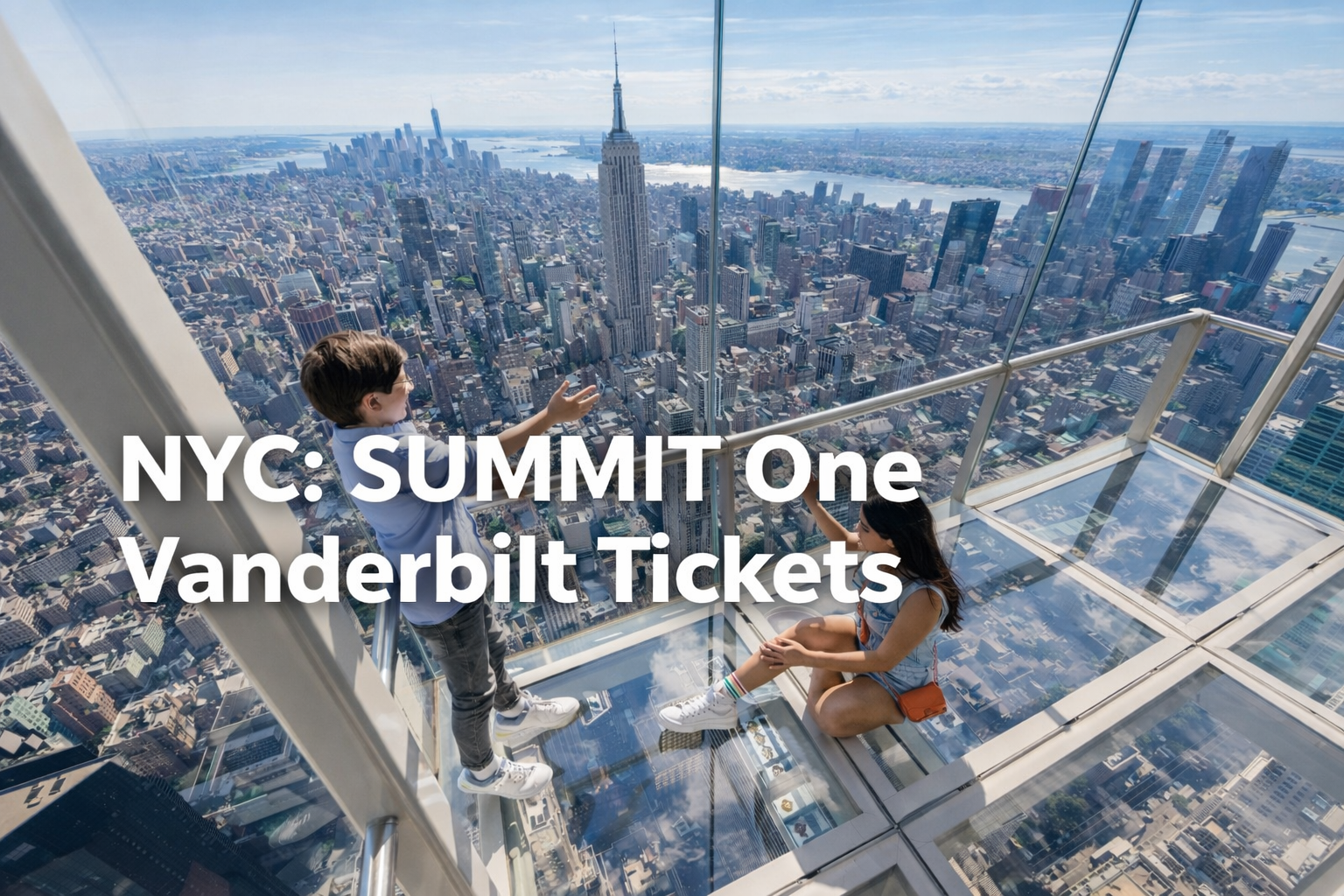
New York has never lacked observation decks. For decades, the city’s skyline has been experienced from familiar heights icons that frame Manhattan in predictable ways. Yet the arrival of SUMMIT One Vanderbilt quietly shifted that experience. Rather than simply offering another panoramic lookout, it redefined how visitors engage with altitude, reflection, and spatial perception.
For travelers researching one summit vanderbilt tickets, the appeal often begins with photos of mirrored floors and glass projections extending over Madison Avenue. But the transformation goes deeper than visual spectacle. It represents a broader evolution in how urban attractions design perspective itself turning observation into immersion.
A Vertical Experience Designed for Participation
Traditional observation decks prioritize outward views. SUMMIT introduces an inward component: the visitor becomes part of the skyline narrative. Mirrored surfaces multiply both the horizon and the human presence within it, creating layered reflections that blur boundaries between interior and exterior space.
From a practical standpoint, this changes how visitors plan their visit. Lighting conditions significantly affect the experience. Morning visits offer cleaner reflections and softer light; sunset brings dramatic tones but larger crowds and more intense glare. Those evaluating one summit vanderbilt tickets should consider timing as carefully as pricing.
There are trade-offs. The immersive design enhances photography opportunities, but it also demands patience. Reflective environments mean managing angles, crowd flow, and personal space. Visitors expecting a quiet, contemplative deck may find peak hours visually stimulating but socially dense. In return, they gain a multisensory experience that standard platforms rarely offer.
This shift from passive viewing to active participation marks the real transformation. The skyline becomes less of a backdrop and more of a shared stage.
Rethinking the Skyline: Height, Transparency, and Risk
Height in New York has always signaled ambition. What differentiates SUMMIT is how it leverages transparency. Glass ledges and open-air components introduce controlled exposure to verticality, inviting visitors to confront the city below rather than simply observe it from behind railings.
For first-time planners, this raises practical considerations. Those uncomfortable with heights may find certain installations intense, though they are engineered with extensive safety protocols. Understanding personal tolerance levels becomes part of the decision framework. The benefit is a heightened sensory engagement; the cost may be momentary discomfort.
From a strategic perspective, weekday visits often provide a more balanced experience. Shorter lines reduce time spent waiting in transitional corridors, preserving the intended pacing of the journey. For travelers already navigating packed NYC itineraries, this efficiency can influence whether one summit vanderbilt tickets feel worthwhile within a limited schedule.
There’s also a comparison dimension. Unlike heritage decks that emphasize historical storytelling, SUMMIT leans into contemporary design and experiential art. Visitors prioritizing architectural history may prefer older landmarks. Those seeking a modern reinterpretation of skyline viewing will likely find the newer format more aligned with their expectations.
Planning Beyond the Ticket Price
Observation decks in New York sit within a competitive pricing ecosystem. Evaluating one summit vanderbilt tickets involves more than base cost. Factors such as timed entry, peak-hour premiums, and add-on experiences affect overall value.
The key question is not simply “Is it worth it?” but “What kind of skyline experience am I looking for?” If the goal is a quick panoramic photo, other decks may suffice at lower cost during off-peak promotions. If the objective is a curated, design-forward encounter that blends art, architecture, and urban scale, SUMMIT positions itself differently.
A common mistake is underestimating time allocation. While marketed as a timed-entry attraction, visitors often spend longer inside than anticipated due to the layered environments. Rushing through diminishes the immersive effect. Building a buffer into your itinerary particularly if pairing the visit with nearby Midtown sites—prevents unnecessary stress.
There is also a psychological component. Immersive spaces tend to feel more crowded even when capacity is controlled, because reflective surfaces amplify movement. Managing expectations around this effect can improve overall satisfaction.
Is It Just Another Observation Deck?
It’s reasonable to question whether SUMMIT represents genuine innovation or simply aesthetic differentiation. The answer lies in intent. Traditional decks frame the skyline as an object to admire. SUMMIT frames it as an environment to enter.
That distinction matters for decision-stage travelers comparing options. If familiarity and historical continuity are priorities, established platforms deliver consistency. If reinterpretation and sensory experimentation appeal more, SUMMIT’s design philosophy stands apart.
The Broader Impact on New York’s Attraction Landscape
SUMMIT’s arrival reflects a wider trend in global urban tourism: attractions are moving toward immersive, shareable environments. This influences not only visitor expectations but also how competing venues evolve.
For planners researching one summit vanderbilt tickets, the takeaway is contextual. The experience doesn’t replace other skyline viewpoints; it complements them. Many seasoned visitors combine a heritage deck with SUMMIT to contrast traditional framing against contemporary immersion.
The transformation, then, is not solely architectural. It’s experiential. By reshaping how height, reflection, and human presence interact, SUMMIT redefines what it means to “see” New York from above.
In a city defined by reinvention, that perspective shift feels less like a novelty and more like a natural progression.

 English
 Arabic
 Français
 Español
 Português
 Deutsch
 Türkçe
 Dutch
Dutch
 Italiano
 Russian