


The Role of Standards in AI Risk Management
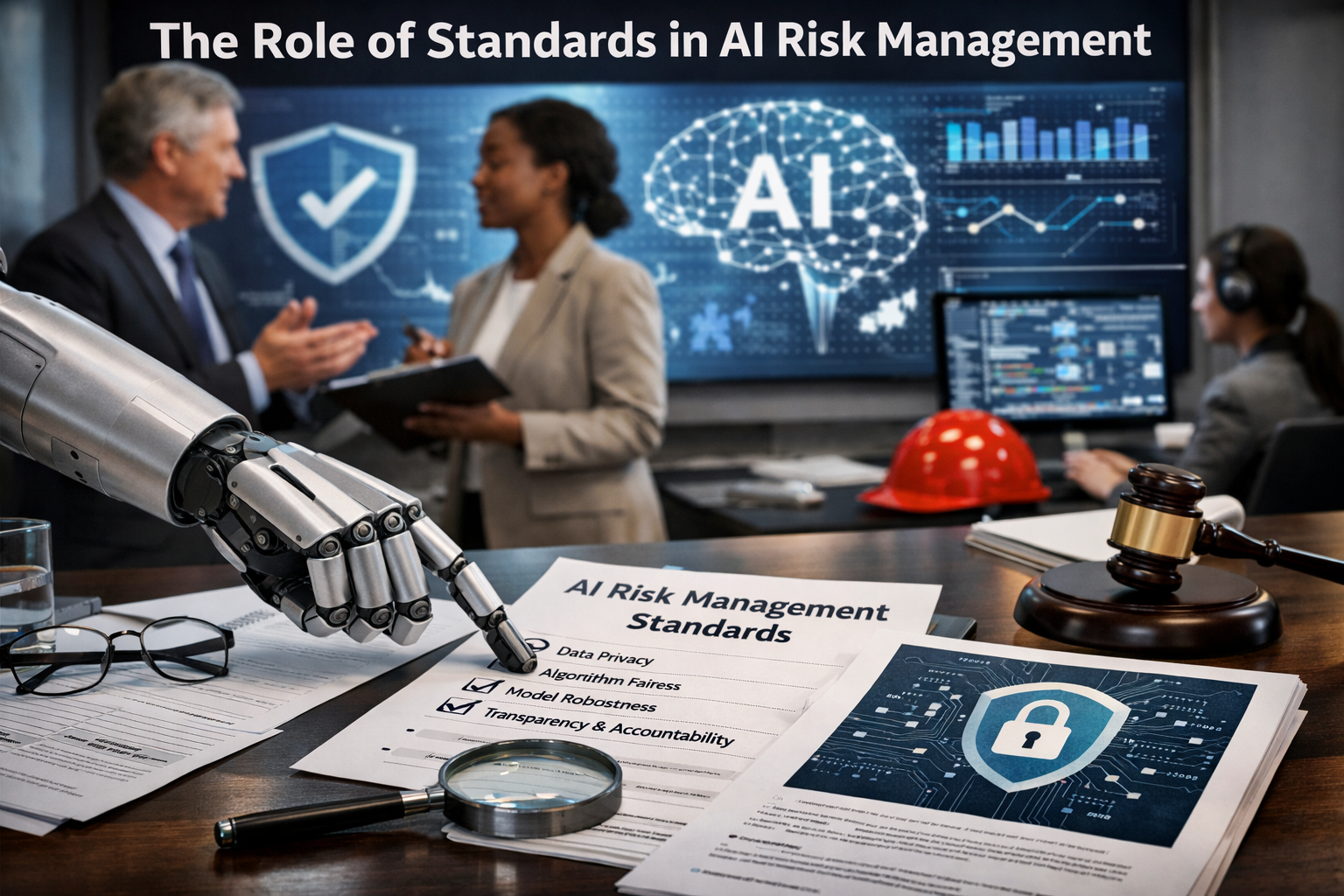
Artificial Intelligence (AI) is transforming industries, from healthcare and finance to transportation and manufacturing. However, the rapid adoption of AI systems brings significant risks, including algorithmic bias, data privacy breaches, cybersecurity threats, and operational failures. Effectively managing these risks is crucial to ensuring that AI technologies are safe, ethical, and reliable. One of the most powerful tools for achieving this is the establishment and adherence to standards.
Understanding AI Risk
AI risk is multi-faceted and can arise from several sources:
-
Bias and Discrimination: AI models trained on biased datasets can perpetuate unfair outcomes, particularly in hiring, lending, and law enforcement.
-
Privacy and Security: AI systems often process vast amounts of sensitive data, making them targets for breaches.
-
Operational and Systemic Risks: Malfunctioning AI in critical areas like healthcare or autonomous vehicles can cause significant harm.
-
Regulatory and Compliance Risks: Non-compliance with legal frameworks can result in fines, reputational damage, or business disruption.
According to a 2023 survey by the World Economic Forum, 62% of AI practitioners reported that lack of standardization is one of the top barriers to safely deploying AI systems at scale.
The Role of Standards
Standards in AI are formal guidelines or frameworks that define best practices, procedures, and metrics to manage AI risks. They help organizations align AI development with safety, ethics, and regulatory expectations. Here’s why they are critical:
1. Promoting Consistency and Reliability
Standards ensure that AI systems are developed, deployed, and maintained using consistent practices. This consistency reduces the likelihood of unpredictable behaviors and enhances trust in AI solutions. For example:
-
ISO/IEC 42001 (AI management systems) provides a framework for implementing AI governance.
-
IEEE’s P7000 series offers standards on ethically aligned AI design, focusing on transparency, accountability, and fairness.
2. Enhancing Safety and Risk Mitigation
Adopting standards helps identify and mitigate risks before they escalate:
-
Standardized risk assessments can uncover vulnerabilities in AI models, such as susceptibility to adversarial attacks.
-
Safety protocols for high-stakes AI (like autonomous vehicles) can prevent accidents and system failures.
In practice, companies following these standards report up to a 40% reduction in AI-related incidents within the first year of implementation.
3. Facilitating Regulatory Compliance
Governments worldwide are developing AI regulations. For example, the EU AI Act mandates that high-risk AI systems meet specific safety and transparency criteria. Adherence to recognized standards can help organizations:
-
Demonstrate due diligence.
-
Streamline audits and reporting.
-
Reduce the risk of legal penalties.
4. Building Public Trust
Public perception of AI is shaped by its reliability and ethical behavior. Transparent processes, guided by standards, can:
-
Reduce fear of AI misuse.
-
Encourage adoption in sectors like healthcare, finance, and public services.
-
Strengthen brand reputation and stakeholder confidence.
A 2022 PwC study found that 73% of consumers are more likely to trust AI-driven services if they follow recognized safety and ethical standards.
Read More: How ISO 42001 Addresses Generative AI and Privacy Risks
Key Areas Where Standards Apply
AI risk management standards can be applied across several domains:
-
Data Quality: Ensuring datasets are complete, accurate, and free from bias.
-
Model Development: Using rigorous testing, validation, and documentation practices.
-
Governance and Accountability: Establishing clear ownership, audit trails, and ethical oversight.
-
Transparency and Explainability: Providing interpretable outputs so users understand AI decisions.
-
Security: Implementing safeguards against cyberattacks, data leaks, and adversarial manipulation.
Real-World Example
Consider the financial sector, where AI models determine creditworthiness. A standardized approach to risk management can involve:
-
Bias testing in datasets to ensure fair loan approvals.
-
Stress-testing AI models for unusual market conditions.
-
Continuous monitoring for anomalies in predictions.
Institutions that implement AI risk standards have reported a 25% improvement in predictive accuracy and a 30% reduction in complaints related to bias.
Conclusion
The adoption of standards in AI risk management is no longer optional—it is essential. By establishing clear guidelines and frameworks, organizations can reduce operational and ethical risks, ensure regulatory compliance, and build trust among consumers and stakeholders. As AI continues to reshape industries, standardized practices will be the cornerstone of responsible and safe AI deployment.
Key Takeaways:
-
Standards provide consistency, reliability, and safety in AI systems.
-
They help organizations meet regulatory requirements and ethical obligations.
-
Adoption of standards improves public trust and operational efficiency.
-
Continuous monitoring and adherence to standards reduce risks and enhance outcomes.
In a world increasingly powered by AI, standards are not just a regulatory checkbox—they are a strategic imperative for sustainable innovation. Enhance your expertise and ensure your AI projects meet global standards by enrolling in an ISO/IEC 42001 training course and certification program.

 Arabic
 Français
 Español
 Português
 Deutsch
 Türkçe
 Dutch
Dutch
 Italiano
 Russian
 Romaian