


How Peristaltic Pump Filling Machines Work and Why They Excel in Precise Quantitative Filling
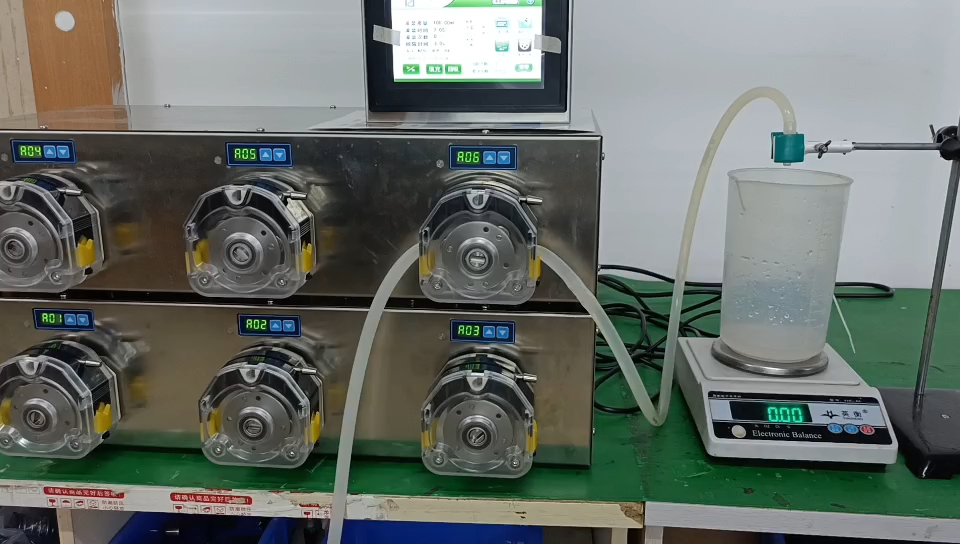
How Peristaltic Pump Filling Machines Work and Why They Excel in Precise Quantitative Filling
In modern liquid packaging industries—ranging from pharmaceuticals and cosmetics to food, beverages, and laboratory reagents—precision filling is no longer optional. Manufacturers demand accurate dosing, contamination-free transfer, and flexible production compatibility.
Among various liquid filling technologies, peristaltic pump filling machines have become a preferred solution for precise quantitative filling, especially in applications involving small to medium volumes and sensitive liquids.
This article explains how peristaltic pump filling machines work and why they offer significant advantages in high-accuracy dosing applications.
1. Working Principle of a Peristaltic Pump Filling Machine
A peristaltic pump filling machine operates based on a simple yet highly effective mechanical principle: rotary compression of flexible tubing.
Core Components:
l Flexible pump tubing
l Rotor with rollers or shoes
l Drive motor
l Control system (PLC or microcontroller)
l Filling nozzle
Step-by-Step Working Process:
Tube Compression
Rollers mounted on a rotating rotor compress the flexible tube.
Fluid Movement
As the rotor turns, the compression moves forward along the tube, pushing liquid toward the outlet.
Suction Effect
When the roller releases the tube, it returns to its original shape, creating suction and drawing more liquid into the tube.
Continuous Flow
This sequential compression and release create a smooth, pulsed-free, controlled flow.
Importantly, the liquid only contacts the inside of the tubing, not the pump body or mechanical components. This ensures excellent hygiene and eliminates cross-contamination risks.
2. Why Peristaltic Pump Filling Machines Are Ideal for Precise Quantitative Filling
2.1 High Accuracy and Repeatability
Peristaltic pump filling systems control volume through:
l Motor speed
l Number of rotor rotations
l Time-based control
Because each rotation displaces a fixed volume of liquid (based on tube diameter), highly consistent dosing can be achieved.
In well-calibrated systems, filling accuracy can reach ±0.5% or better, making them ideal for pharmaceutical and laboratory applications.
2.2 Excellent Control for Small Volumes
For micro-filling applications (e.g., 1 ml to 50 ml), traditional piston fillers may struggle with precision or mechanical wear.
Peristaltic filling machines excel in:
l Small batch production
l Sampling liquids
l High-value or reactive liquids
l Laboratory reagent filling
The absence of valves significantly reduces dosing deviation in low-volume filling.
2.3 Contamination-Free Liquid Transfer
Because the fluid path is limited to the disposable or replaceable tube:
l No metal contact
l No internal cavities
l No valve contamination
This makes peristaltic systems especially suitable for:
l Sterile pharmaceutical liquids
l Biochemical reagents
l Essential oils
l Food-grade liquids
Tube replacement is fast and cost-effective, simplifying sanitation procedures.
2.4 Gentle Handling of Shear-Sensitive Liquids
Unlike gear pumps or centrifugal pumps, peristaltic pumps generate minimal shear stress.
They are ideal for:
l Cell cultures
l Enzyme solutions
l Creams and lotions
l Foaming liquids
The controlled compression prevents structural damage to sensitive formulations.
2.5 Easy Maintenance and Low Downtime
Maintenance advantages include:
l No seals
l No check valves
l No pistons
l Minimal internal wear parts
When tubing wears out, operators simply replace it. This reduces downtime and maintenance costs significantly.
3. Comparison with Other Filling Technologies
|
Feature |
Peristaltic Pump |
Piston Filler |
Gear Pump |
|
Contact-Free Path |
Yes |
No |
No |
|
Micro-Volume Accuracy |
Excellent |
Good |
Moderate |
|
Suitable for Sterile Use |
Excellent |
Moderate |
Low |
|
Maintenance Cost |
Low |
Medium |
High |
For industries that prioritize hygiene, flexibility, and precise dosing, peristaltic pump filling machines often provide the best overall balance.
4. Ideal Applications
Peristaltic pump filling machines are widely used in:
l Pharmaceutical liquid filling
l Diagnostic reagent packaging
l Cosmetic serum and essence filling
l Food flavoring dosing
l Chemical laboratory sampling
They are particularly valuable in low to medium production runs requiring frequent product changes.
Conclusion
The working principle of peristaltic pump filling machines—based on rotary compression of flexible tubing—delivers unmatched hygiene, precision, and flexibility.
Their core advantages in precise quantitative filling include:
l High accuracy
l Contamination-free operation
l Gentle liquid handling
l Easy maintenance
l Excellent micro-volume control
For manufacturers focused on quality control, clean production standards, and accurate dosing, peristaltic pump filling technology represents a highly efficient and reliable solution.
 Deutsch
 English
 Arabic
 Français
 Español
 Português
 Türkçe
 Dutch
Dutch
 Italiano
 Russian
 Romaian