


How Does 3D Rendering Work in Architecture?
In modern architecture, visualization has become just as important as design. Before construction begins, architects, developers, and clients want to see exactly how a project will look. This is where 3D rendering in architecture plays a crucial role. It allows professionals to transform simple drawings and technical plans into realistic images or animations of buildings and spaces.Architectural 3D rendering helps architects communicate their ideas clearly, improve decision-making, and present projects more effectively. In this article, we will explore how 3D rendering works in architecture, the process behind it, the tools used, and why it has become essential in the architectural industry.
What Is 3D Rendering in Architecture?
3D rendering in architecture is the process of creating photorealistic images or animations of buildings and spaces using computer software. It converts architectural drawings, sketches, or 3D models into visual images that look almost like real photographs.
Instead of imagining a design from a blueprint, clients can see.
-
Building exteriors
-
Interior spaces
-
Lighting effects
-
Materials and textures
-
Landscaping and surroundings
These visualizations help everyone involved in a project better understand the final result before construction begins.
Why 3D Rendering Is Important in Architecture
Architectural rendering has become a standard practice in the industry because it improves communication, planning, and marketing.
Better Design Visualization
Architects can visualize their ideas in a realistic environment. This helps them identify design issues early and improve the overall concept.
Improved Client Communication
Many clients struggle to understand technical drawings. A realistic 3D render makes it easier for them to understand the project and give feedback.
Marketing and Presentation
Real estate developers and architects use renders in brochures, websites, and advertisements to promote upcoming projects.
Reduced Design Errors
By visualizing the project before construction, architects can detect mistakes, saving time and money during the building phase.
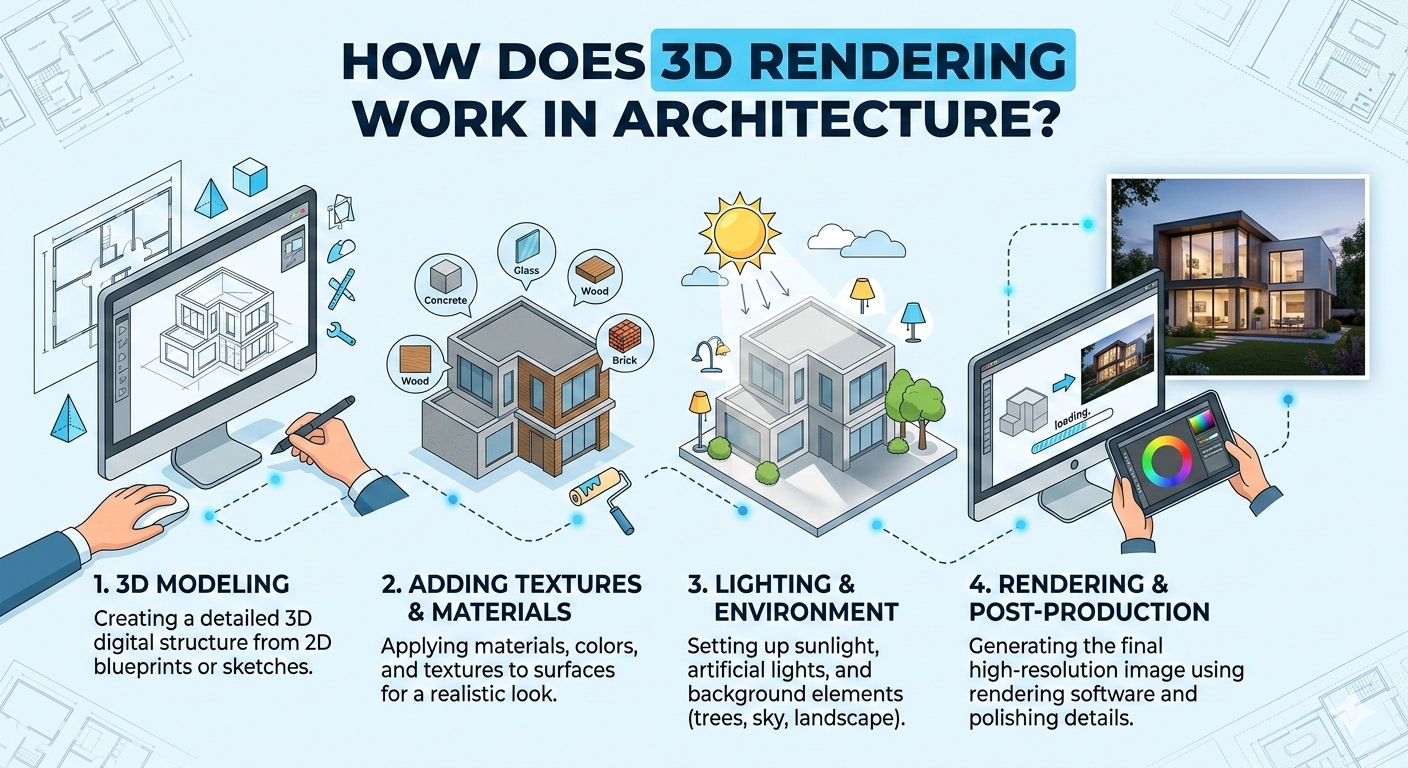
The Basic Process of Architectural 3D Rendering
The process of creating a 3D architectural render involves several stages. Each step plays an important role in achieving a realistic and accurate result.
Creating the 3D Model
The first step in architectural rendering is building a 3D model of the project. Architects or 3D artists use specialized software to transform 2D drawings into a digital three-dimensional structure.
This model includes.
-
Walls and floors
-
Windows and doors
-
Roof structures
-
Furniture and interior elements
Popular modeling software includes tools like SketchUp, 3ds Max, Blender, and Revit. These programs allow designers to construct precise architectural models with accurate measurements.
Applying Materials and Textures
Once the structure of the building is created, the next step is applying materials and textures. This process adds realistic surfaces to the model.
Examples include.
-
Concrete walls
-
Wooden flooring
-
Glass windows
-
Marble countertops
-
Metal structures
Textures help the model look more natural and detailed. High-quality materials are essential for producing realistic architectural renders.
Setting Up Lighting
Lighting is one of the most important aspects of 3D rendering. Proper lighting makes a scene look realistic and visually appealing.
There are two main types of lighting used in architectural rendering.
Natural Lighting
-
Simulates sunlight and daylight
-
Helps visualize how light enters a building during different times of the day
Artificial Lighting
-
Includes interior lights such as lamps, ceiling lights, and spotlights
-
Helps demonstrate how indoor lighting affects the atmosphere of a space
Lighting settings can significantly influence the mood, depth, and realism of the final image.
Adding Environment and Landscaping
To make the render more realistic, designers add environmental elements around the building.
These may include.
-
Trees and plants
-
Roads and sidewalks
-
Cars and people
-
Outdoor furniture
-
Sky backgrounds
Environmental details help viewers understand how the building fits into its surroundings.
Camera Position and Composition
Just like photography, architectural rendering requires proper camera placement.
3D artists carefully select angles that best showcase the design. For example,
-
Wide shots to display the entire building
-
Interior shots to highlight room layouts
-
Aerial views for large developments
Good composition ensures that the most important design features are clearly visible.
The Rendering Process
The final step is the rendering process, where the computer calculates lighting, textures, reflections, and shadows to generate the final image.
Rendering can take anywhere from a few minutes to several hours depending on.
-
Image resolution
-
Scene complexity
-
Lighting effects
-
Hardware power
The result is a high-quality photorealistic image that represents the architectural design accurately.
Types of Architectural 3D Rendering
Architectural visualization can be created in different formats depending on the project's purpose.
Exterior Rendering
Exterior renders show the outside of buildings including landscaping, roads, and surrounding environments.
They are commonly used for.
-
Real estate marketing
-
Urban planning presentations
-
Architectural portfolios
Interior Rendering
Interior rendering focuses on indoor spaces such as living rooms, kitchens, offices, and commercial interiors.
These renders highlight.
-
Furniture layout
-
Lighting design
-
Materials and colors
-
Interior decorations
3D Floor Plans
3D floor plans provide a detailed view of the layout of a building. They help clients understand room sizes and spatial relationships.
Architectural Animation
Architectural animation creates moving videos that allow viewers to take a virtual tour of a building.These animations are widely used for large real estate developments and luxury property marketing.
Virtual Reality (VR) Rendering
VR rendering allows users to explore buildings in an immersive virtual environment using VR headsets.This technology is becoming increasingly popular in modern architecture and real estate presentations.
Tools and Software Used in Architectural Rendering
Architectural rendering relies on advanced software to produce high-quality visualizations.
Some commonly used tools include.
3D Modeling Software
-
SketchUp
-
Autodesk Revit
-
Blender
Rendering Software
-
V-Ray
-
Lumion
-
Corona Renderer
Post-Production Tools
-
Adobe Photoshop
-
After Effects
These tools allow designers to refine lighting, improve image quality, and enhance visual realism.
Benefits of 3D Rendering for Architects and Developers
Architectural rendering offers many advantages for professionals in the construction and design industries.
Faster Project Approval
Clients and investors can easily understand the project, which speeds up approvals and decision-making.
Stronger Marketing Impact
Photorealistic renders attract buyers and investors by presenting properties in a visually appealing way.
Design Flexibility
Architects can test different design options, materials, and lighting conditions without making physical changes.
Cost Efficiency
Identifying design issues before construction reduces expensive changes during building.Professional visualization services like SMA Archviz help architects and developers present their projects more effectively through high-quality architectural renderings.
The Future of Architectural 3D Rendering
Technology continues to improve the quality and capabilities of architectural visualization.
Some emerging trends include.
Real-Time Rendering
Real-time rendering allows designers to instantly see changes in lighting, materials, and objects.
Artificial Intelligence in Rendering
AI tools are beginning to automate tasks like texture generation, scene optimization, and lighting adjustments.
Virtual Reality and Augmented Reality
VR and AR are making architectural presentations more interactive and immersive.
Cloud Rendering
Cloud computing allows large rendering tasks to be processed faster using powerful remote servers.These advancements are making architectural visualization more efficient, accessible, and realistic than ever before.
Conclusion
3D rendering has transformed the way architectural designs are presented and understood. By converting technical drawings into realistic visual images, architects can communicate their ideas more clearly and help clients visualize projects before construction begins.The architectural rendering process involves several important steps including 3D modeling, material application, lighting setup, environment creation, camera positioning, and final rendering. Each stage contributes to producing a high-quality visualization that accurately represents the design.With the growing demand for realistic project presentations and real estate marketing, architectural 3D rendering has become an essential tool in the modern construction industry. As technology continues to evolve, the future of architectural visualization will bring even more immersive and advanced ways to experience architectural designs.

 English
 Arabic
 Français
 Português
 Deutsch
 Türkçe
 Dutch
Dutch
 Italiano
 Russian
 Romaian