


How Does AI Development Improve Avatar Realism in Games?
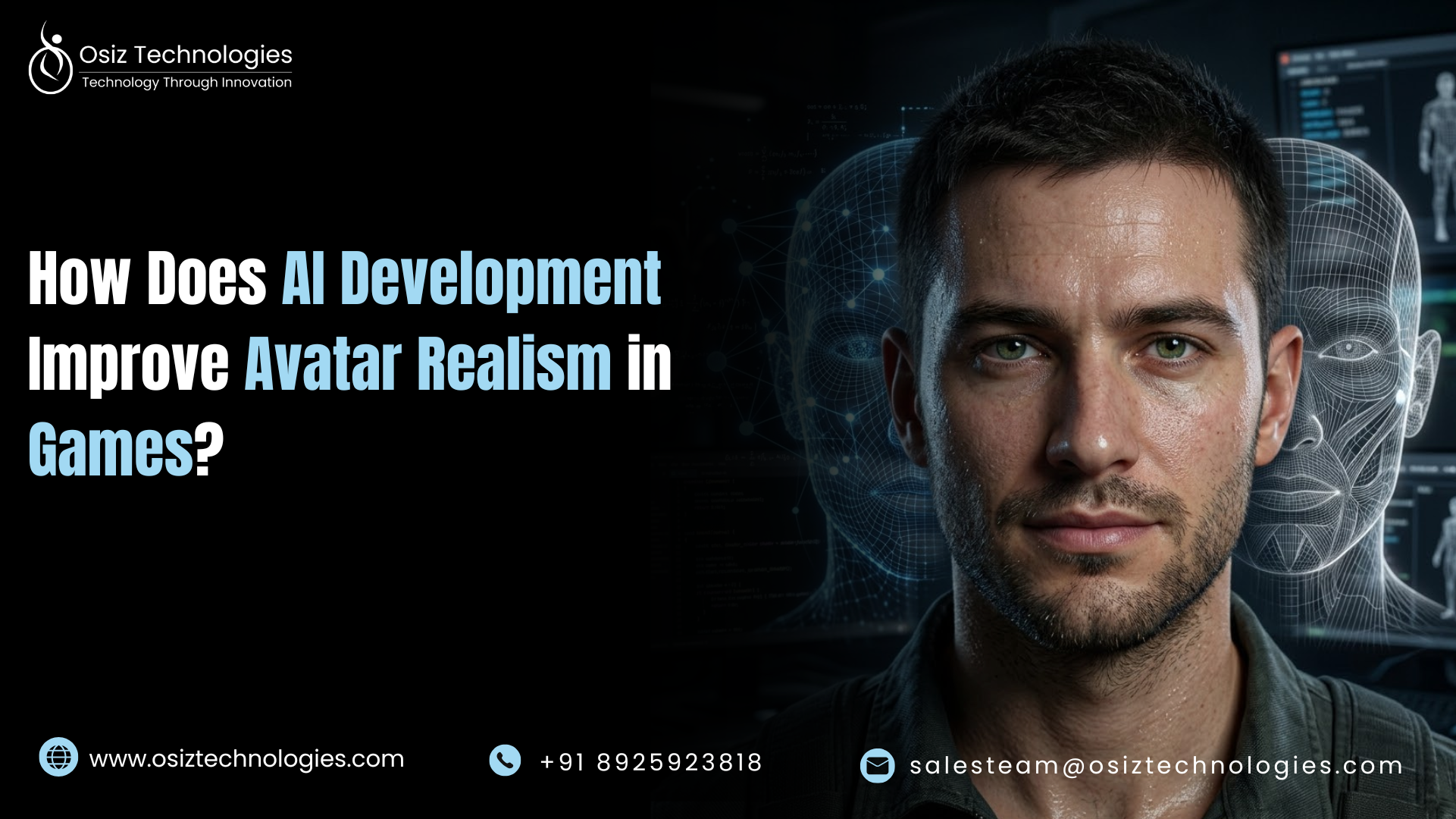
Gaming characters have come a long way from the blocky figures and simple animations of the early gaming era. Today, players expect avatars that look real, move naturally, and react emotionally to the world around them. The more believable the character feels, the deeper the player immersion becomes.
This transformation is largely driven by artificial intelligence. Advanced AI technologies allow game avatars to behave like real digital personalities rather than scripted characters. For studios looking to build highly immersive games, partnering with an experienced AI Development company has become a key step in delivering next-generation gaming experiences.
From Scripted Characters to Intelligent Digital Personalities
In traditional game development, characters followed pre-programmed animations and fixed behavioral scripts. While this approach worked in earlier gaming environments, it often produced repetitive and predictable actions.
Older systems often struggled with:
-
Repeating the same animation sequences
-
Limited emotional expressions
-
Rigid character interactions
-
Lack of adaptive behavior
Modern studios operating within a full-scale Game Development Company environment now combine artificial intelligence with animation systems to create characters that react dynamically. Instead of fixed scripts, AI allows avatars to adapt based on gameplay conditions, player behavior, and environmental changes.
Core AI Technologies That Power Avatar Realism
AI-driven avatars rely on several advanced technologies working together. These systems analyze human behavior and translate it into digital movements and reactions.
Key AI technologies include:
-
Machine learning animation systems that learn from real human movements
-
Facial recognition modeling to replicate natural expressions
-
Natural language processing for voice-based interaction
-
AI-assisted motion capture refinement
-
Behavioral learning algorithms for adaptive character responses
When these technologies are combined, avatars stop behaving like animated objects and begin acting like believable digital characters.
Facial Expressions and Emotional Detail
One of the most noticeable improvements AI brings to gaming is facial realism. Humans rely heavily on subtle facial cues to interpret emotions. Replicating these cues digitally requires analyzing complex patterns of movement.
AI systems now evaluate elements such as:
-
Eye movement and blinking patterns
-
Lip synchronization with speech
-
Micro-expression detection
-
Emotional tone modeling
An advanced AI avatar development company uses deep learning systems trained on real human facial data to reproduce these tiny emotional shifts in real time. This creates characters that appear more expressive and lifelike.
Natural Movement Through AI Motion Systems
Body movement plays a major role in character realism. Traditional animation often resulted in stiff or robotic movements because every action had to be manually scripted.
AI changes this process by learning from motion datasets captured from real human activity.
These systems can provide:
-
Predictive movement adjustments
-
Adaptive animation blending
-
Physics-aware movement patterns
-
Real-time posture correction
As a result, avatars move more fluidly, reacting naturally to terrain, obstacles, and player interaction.
Voice Interaction and Conversational Intelligence
Another major advancement in avatar realism comes from AI-driven voice interaction. Instead of relying on limited dialogue trees, avatars can now participate in more natural conversations.
AI-powered voice systems allow characters to:
-
Recognize player speech
-
Generate contextual responses
-
Adjust tone and emotion during conversations
-
Maintain dialogue continuity
These conversational abilities make game characters feel more responsive and alive within the virtual world.
Behavioral AI and Adaptive Character Reactions
Beyond visual realism, AI allows avatars to demonstrate believable behavior. Characters can respond differently depending on the player’s actions or environmental events.
For example, AI-driven avatars may:
-
Show surprise or fear during unexpected events
-
Change body language during combat scenarios
-
Adjust personality traits over time
-
React emotionally to storyline developments
This behavioral intelligence makes the gaming experience feel less scripted and more interactive.
The Role of AI in Social and Multiplayer Gaming
Realistic avatars also play an important role in multiplayer environments. Online games increasingly focus on social interaction and digital identity.
AI-powered avatars help enhance:
-
Realistic player representation
-
Engaging role-playing experiences
-
Immersive social gaming environments
-
Personalized character interactions
Many studios collaborate with an experienced AI Development Company to implement these complex systems and improve player immersion.
Balancing Realism with Game Performance
While realism is important, games must also maintain smooth performance across platforms. AI-driven systems require careful optimization to ensure they do not slow down gameplay.
Common strategies include:
-
GPU-accelerated AI processing
-
Edge computing for real-time calculations
-
Hybrid cloud-based AI systems
-
Efficient animation rendering techniques
Balancing realism with performance ensures that advanced avatars enhance gameplay without affecting speed or stability.
Future Possibilities for AI-Driven Avatars
The future of gaming avatars is even more exciting. As AI technology continues to evolve, we can expect characters that feel increasingly human.
Future innovations may include:
-
Fully AI-generated character personalities
-
Emotion-aware NPC interactions
-
Cross-platform digital avatars for virtual worlds
-
Metaverse-ready character identities
These advancements will transform how players interact with games and virtual environments.
Conclusion
Avatar realism has become one of the defining elements of modern gaming. Artificial intelligence allows characters to move naturally, express emotions, and interact intelligently with players and environments. This combination of technology and creativity is pushing gaming experiences to entirely new levels of immersion.
Osiz Technologies, a trusted AI Development company and experienced Game Development, helps studios create advanced AI-powered avatars designed for realistic gameplay experiences. With Osiz’s 30% special limited-time offer, gaming businesses have an opportunity to integrate cutting-edge AI technologies into their projects and build the next generation of interactive characters.
The future of gaming is not just about better graphics. It’s about smarter, more human digital characters.

 Arabic
 Français
 Español
 Português
 Deutsch
 Türkçe
 Dutch
Dutch
 Italiano
 Russian
 Romaian