


Mammoth Interior Demolition Toronto: Noise Reduction Methods
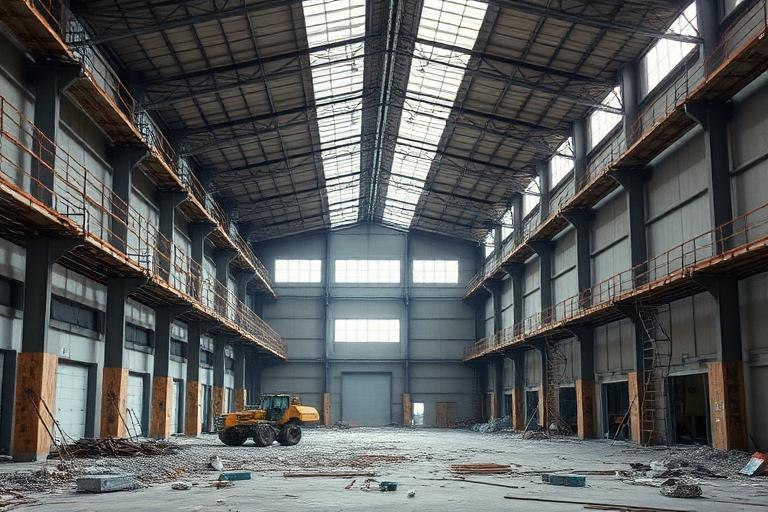
When a massive office tower in downtown Toronto undergoes an interior demolition Toronto for conversion to residential use, the sound of progress is impossible to ignore. The constant pounding of jackhammers, the screech of saws cutting through concrete, and the thunderous roar of debris tumbling down chutes create a symphony of construction that reverberates through the surrounding streets. For the workers inside, the neighbors in adjacent buildings, and the downtown residents trying to go about their daily lives, this noise presents a significant challenge. The demolition industry has therefore developed an impressive arsenal of strategies to tame the sound, transforming what could be an unbearable disruption into a manageable hum of urban renewal.
Understanding the Acoustical Challenge
Before any noise reduction strategy can be implemented, project managers must first understand exactly what they are dealing with. Interior demolition in a high-rise building creates a unique acoustical environment where sound travels not only through the air but also through the building's very structure. When a breaker hammer strikes concrete on the fifteenth floor, that vibration travels down through the columns and into the foundation, potentially creating low-frequency rumblings felt blocks away. Furthermore, the open floor plates of office buildings act as massive sound chambers, with hard concrete surfaces reflecting and amplifying noise rather than absorbing it. Acoustical consultants are now routinely brought onto demolition sites to conduct baseline sound studies, mapping how noise travels through the building and identifying the specific frequencies that pose the greatest nuisance to the surrounding community.
The First Line of Defense: Perimeter Containment
The most visible noise reduction measure on any major Toronto demolition site is the extensive perimeter containment system installed before work begins. This goes far beyond simple construction fencing. Project teams now erect specialized sound barrier walls around the base of the building, often constructed from mass-loaded vinyl sandwiched between layers of plywood or engineered acoustical blankets rated for specific decibel reductions. These barriers are not haphazardly placed but are designed with seams sealed and bottoms buried to prevent sound leakage. On the upper floors, openings are kept to an absolute minimum, and when debris chutes must penetrate the containment, they are fitted with sound-reducing collars and flexible connections that prevent vibration transfer. Walking past a well-contained demolition site, one might be surprised at how effectively the chaos within is muffled to a distant, almost peaceful murmur.
Wrapping the Tools of Destruction
One of the most innovative approaches to noise reduction involves treating the equipment itself rather than just the space around it. Demolition contractors in Toronto are increasingly specifying that machinery brought to site be equipped with factory-installed or retrofitted sound suppression packages. Hydraulic breakers now come with acoustic shrouds that encapsulate the impacting mechanism, while concrete saws are fitted with noise-reducing blades that feature laser-cut slots designed to disrupt the whine produced during cutting. Even the humble air compressor, traditionally a constant source of droning noise, is now often housed within custom-built enclosures lined with sound-absorbing foam. This equipment-level approach recognizes that every decibel reduced at the source is a decibel that never needs to be contained later.
Scheduling as a Sound Management Tool
Sometimes the most effective noise reduction strategy has nothing to do with materials or machinery and everything to do with the clock on the wall. Toronto's municipal noise bylaws provide a framework, but savvy demolition managers take scheduling far beyond mere compliance. The most disruptive activities—concrete slab cutting, core drilling, and structural demolition—are often concentrated into specific windows during the day when they will cause the least disturbance. Some projects establish "quiet hours" during the lunch period when only low-noise tasks like cleanup or material sorting are permitted. For buildings immediately adjacent to hotels or residential towers, project teams may even coordinate schedules with building management, timing the noisiest work around known quiet periods or special events. This human-centric approach to scheduling acknowledges that noise isn't just about decibel meters but about the quality of life for those living and working in the shadow of the project.
The Science of Damping and Isolation
When demolition must happen near occupied spaces or sensitive neighbors, engineers turn to the principles of vibration damping and isolation. This involves physically decoupling the demolition work from the building structure itself. On some Toronto projects, demolition crews establish what are essentially floating work platforms—secondary floors supported on rubber isolation pads that sit atop the structural slab. When breakers operate on these isolated platforms, the vibrations that would normally travel directly into the building are instead absorbed by the pads before they can propagate. Similarly, debris chutes are now commonly suspended on spring isolators rather than rigidly attached to the building, preventing the rumble of falling material from transmitting through the structure. These techniques represent a sophisticated understanding that noise is often a symptom of vibration, and controlling the movement stops the sound at its physical origin.
Communicating with the Community
Perhaps the most overlooked aspect of noise reduction is the role of transparent communication in managing perception. A demolition project that keeps neighboring businesses, residents, and building managers informed about upcoming noisy activities creates a reservoir of goodwill that makes the unavoidable sound more tolerable. Many Toronto contractors now designate a community liaison whose sole responsibility is maintaining these relationships. This might involve regular email updates detailing the upcoming week's noisiest activities, open houses where concerned neighbors can see the sound mitigation measures firsthand, or even simple gestures like providing noise-canceling headphones to the most affected residents. When people understand why the noise is happening, when it will occur, and what is being done to minimize it, their tolerance increases dramatically. The sound may be the same, but the annoyance is greatly reduced.
Innovation in Demolition Sequences
The order in which demolition occurs can have a surprising impact on noise generation. Experienced project managers now design demolition sequences that use the building itself as a sound barrier. By leaving exterior walls intact while removing interior partitions, the building's envelope continues to function as a massive sound shield. Some projects adopt a top-down approach where demolition begins at the upper floors, allowing the lower floors to remain enclosed and act as buffer zones that absorb and deflect sound before it reaches the street. Others sequence work to maintain multiple floor slabs between active demolition and any sensitive adjacent spaces, using the mass of the concrete as a natural sound attenuator. These sequencing strategies recognize that demolition isn't just about what you take down, but the order in which you take it down, turning the building's own structure into an ally in the battle against noise.
The Future of Quiet Demolition
As Toronto continues its ambitious office-to-residential conversion agenda, the demand for quieter demolition methods will only grow. The industry is already experimenting with robotic demolition equipment that can be precisely controlled and operated remotely, reducing both the duration of noisy activities and the number of workers exposed to high noise levels. Water-assisted cutting technologies that suppress both dust and noise are becoming more sophisticated. Perhaps most promising are the advances in chemical demolition agents—non-explosive expanding compounds that can crack concrete silently over several hours, replacing the immediate bang of a breaker with the quiet patience of chemistry. These emerging technologies suggest a future where the mammoth interior demolition of Toronto's office towers might proceed with barely a whisper, transforming the city's skyline without transforming its soundscape.

 Arabic
 Français
 Español
 Português
 Deutsch
 Türkçe
 Dutch
Dutch
 Italiano
 Russian
 Romaian