


The Complete Truck Insurance Guide for Fleet Owners
Running a trucking business isn’t just about getting from one stop to the next. Every day on the road brings its own set of risks—long miles, heavy loads, unpredictable drivers, bad weather, and strict deadlines that don’t leave much room for error. One wrong moment can turn into repairs, delays, or losses that hit harder than expected.
That’s where truck insurance comes in, not as paperwork or a box to check, but as something that quietly holds your business together when things don’t go as planned. This guide is meant to break down truck insurance in a straightforward way—what it actually covers, why it matters, and how it helps protect the business you’re building for the long run.
Truck insurance isn’t just about staying legal. For many fleets, it’s the difference between a bad week and a business-ending problem.
Why Truck Insurance Matters More Than Most Fleet Owners Realize
Most fleet owners don’t think about insurance until they need it. The problem is that by then, it’s too late to fix gaps in coverage.
Truck insurance exists to protect you from situations that can shut down operations fast. Accidents, breakdowns, cargo damage, or legal claims can drain cash, damage relationships, and put contracts at risk.
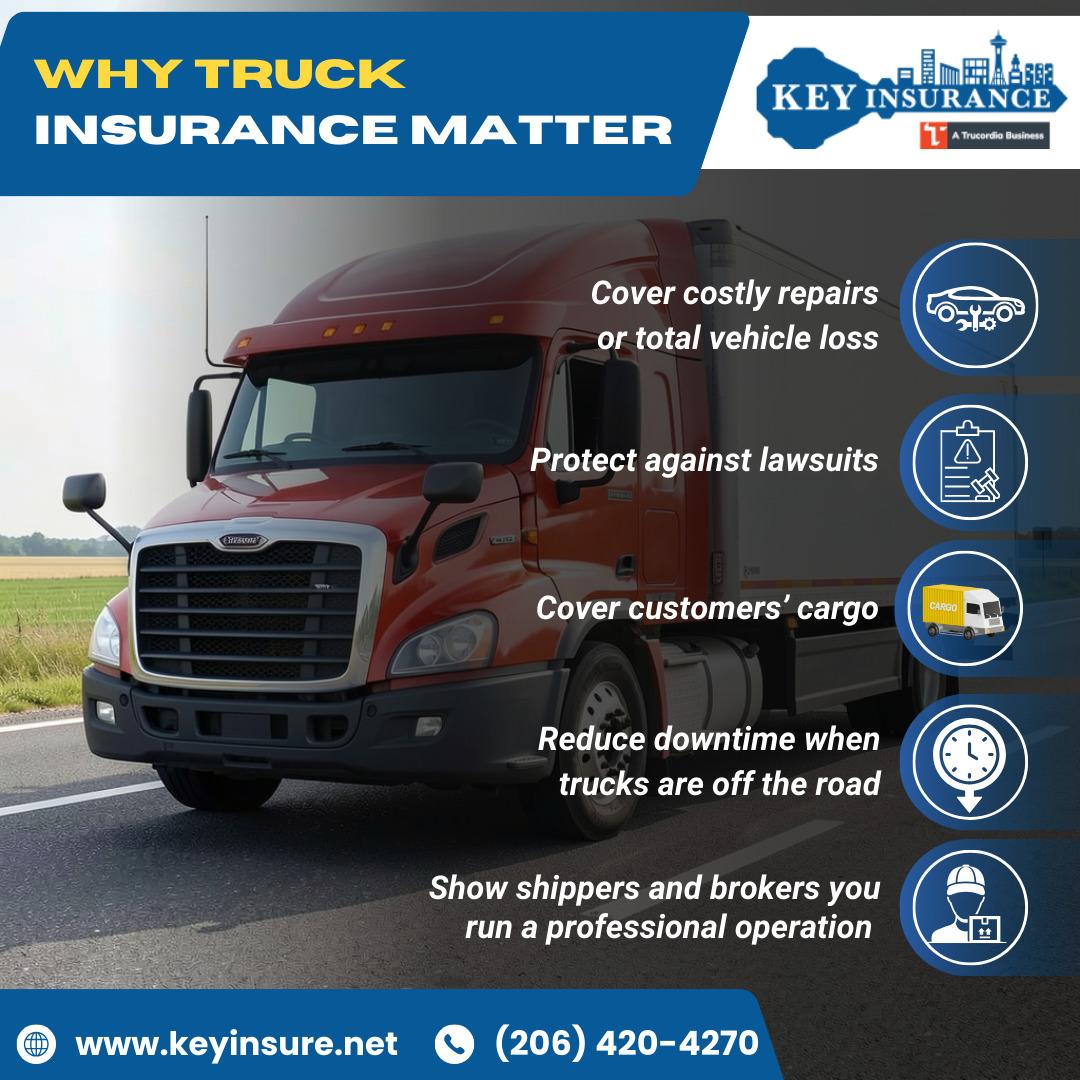
Good coverage helps by:
● Handling expensive repairs or total vehicle losses
● Protecting you if someone files a lawsuit
● Covering cargo that belongs to your customers
● Reducing downtime when trucks are off the road
● Showing shippers and brokers that you run a serious operation
Without the right insurance, even a single incident can have a ripple effect throughout your entire business.
The Main Types of Truck Insurance Coverage You Should Know
Primary Liability Coverage
This is the foundation of most truck insurance policies and is required for commercial trucking. If one of your trucks is involved in an accident that causes injuries or property damage, liability coverage helps pay for medical bills, repairs, and legal costs. It’s there to protect your business when things go wrong outside your control.
Physical Damage Coverage
Trucks are expensive, and fixing them isn’t cheap. Physical damage coverage helps pay for repairs or replacement if a truck is damaged in a collision, stolen, vandalized, or hit by severe weather. For fleet owners, this coverage helps keep capital intact, rather than sinking money into unexpected repairs.
Cargo Insurance
When you’re hauling freight, you’re responsible for someone else’s goods. If cargo is damaged, lost, or stolen, cargo insurance helps cover the value of that load. This protection can prevent disputes with shippers and maintain long-term business relationships.
How Insurance Helps Cut Down on Downtime
Downtime is one of the most underestimated costs in trucking. A truck sitting on the side of the road isn’t making money, and delays can strain customer trust.
Some insurance policies include support like:
● Roadside assistance
● Towing services
● Emergency repair help
● Temporary replacement vehicles
These extras help fleets recover more quickly and keep deliveries moving, rather than falling behind.
Compliance, Trust, and Your Business Reputation
Truck insurance also plays a big role in ensuring compliance with state and federal regulations. Proper coverage helps you avoid fines, penalties, and interruptions to your operating authority.
Beyond compliance, insurance sends a message. Shippers and brokers feel more comfortable working with fleets that are insured properly. It shows you take safety, responsibility, and professionalism seriously.
Using Truck Insurance to Support Growth
When coverage is set up correctly, insurance doesn’t just protect you—it gives you confidence. Fleet owners with solid insurance can take on higher-value cargo, commit to long-term contracts, and expand routes without constantly worrying about risk.
In that way, insurance becomes part of your growth strategy, not just an expense.
Final Thoughts
Truck insurance isn’t just there for worst-case scenarios. It’s a safety net that allows fleet owners to operate with confidence, protect their investments, and plan for the future. When you understand your coverage and choose it carefully, you’re not just protecting trucks—you’re protecting the business behind them.
Need help finding the best truck insurance for your truck? Visit Key Insurance for more information.

 English
 Français
 Español
 Português
 Deutsch
 Türkçe
 Dutch
Dutch
 Italiano
 Russian
 Romaian