


Top Skills You Learn from ISC2 Certifications
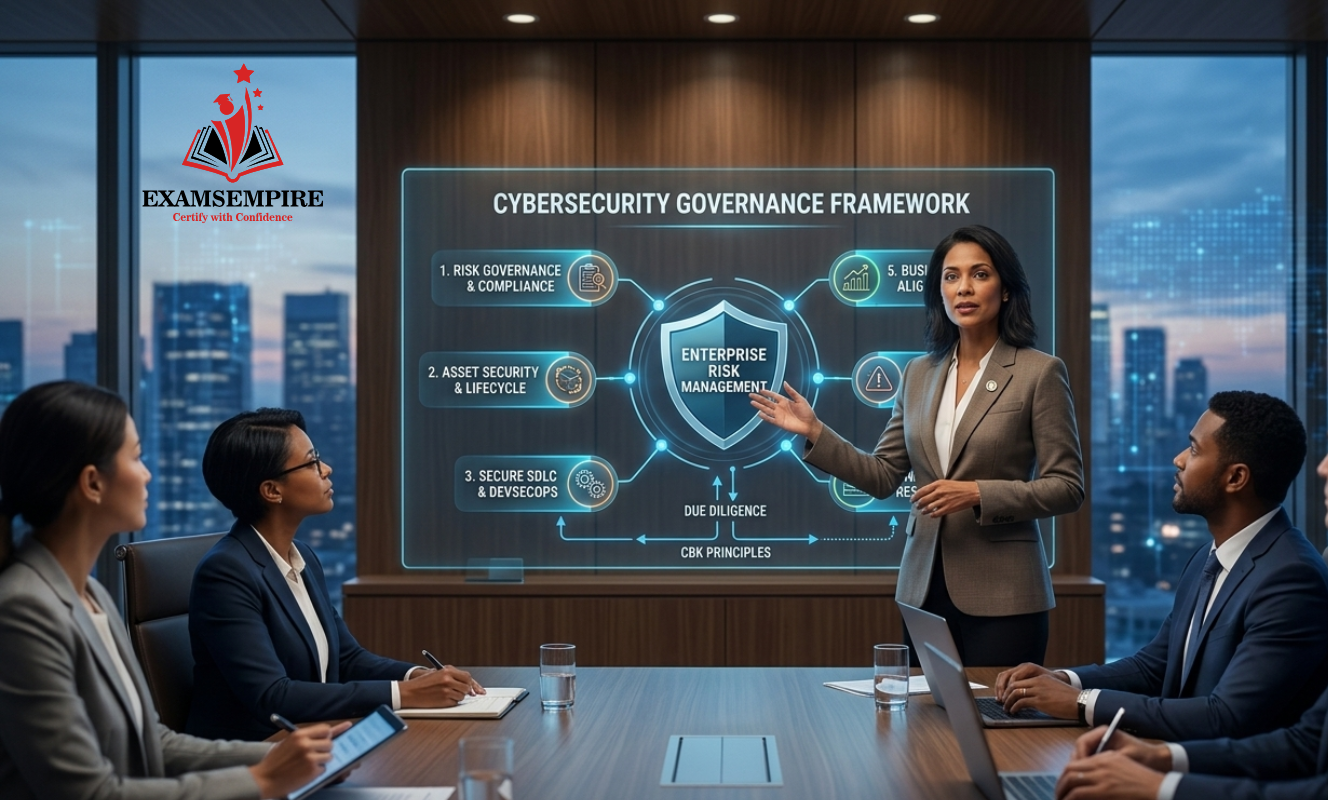
The most valuable skills from ISC2 certifications in 2026 are enterprise risk management that aligns security decisions with business objectives, security governance frameworks that satisfy regulatory requirements, cloud security architecture through CCSP, and the managerial judgment that converts technical security knowledge into boardroom-level strategy, capabilities that technical certifications alone do not build.
Let me tell you something that two decades of security leadership taught me about the difference between technical security professionals and security leaders.
Technical professionals solve the problem in front of them. Security leaders identify which problems are worth solving, quantify the risk of not solving them, and communicate that analysis to executives who are making resource allocation decisions with imperfect information. ISC2 certifications, specifically the CISSP and its associated specializations, are the credential ecosystem that builds the second capability systematically. That is not a subtle distinction. It determines whether your career trajectory leads toward senior security engineering or toward CISO-level governance responsibility.
Before mapping ISC2 certifications to specific skill outcomes, review the full ISC2 certification path to understand how the CISSP CBK domains, the CCSP cloud security framework, and the CGRC governance track build on each other, because the skills are designed as a progressive architecture rather than independent modules, and understanding that structure changes how deliberately you build through the sequence.
Here is what the ISC2 certification actually teaches in 2026.
Risk as Strategy: Mastering the Governance Framework That Boards Actually Use
Why Risk Management Is the Foundational ISC2 Skill
The first CISSP domain, Security and Risk Management, is not the first domain because it is the easiest. It is first because it is the conceptual framework that every subsequent security decision references.
Understanding risk appetite is not a theoretical exercise for CISSP candidates. It is the skill that allows security leaders to translate technical vulnerability assessments into language that resonates with board-level decision makers. A CISO who cannot articulate why a specific risk exceeds the organization's risk appetite, and what mitigation investment is justified given the potential impact, is not functioning as a strategic partner to the business. The CISSP curriculum builds this translation capability deliberately.
Due Diligence vs. Due Care: The Legal Framework That Security Leaders Need
The distinction between due diligence and due care sounds like legal semantics until you are in a boardroom explaining a breach to legal counsel and regulators.
Due diligence, knowing what threats exist and what controls are available, and due care, actually implementing appropriate controls given that knowledge, are the legal framework around which security liability is assessed. CISSP preparation builds genuine fluency in this framework in ways that technical security training does not. Security leaders who understand this distinction make better vendor selection decisions, more defensible architecture choices, and more credible regulatory disclosures.
Beyond the Firewall: Mastering the Human and Legal Domains
Asset Security and the Data Lifecycle Skills Most Engineers Miss
Asset security, the second CISSP domain, covers the full lifecycle of information from classification through destruction. It sounds straightforward. In practice, it is one of the most immediately applicable skills CISSP preparation builds.
Understanding data classification frameworks that map to regulatory requirements, retention policy design that balances legal obligation against storage cost, and secure destruction methodology for both physical and digital assets, these are the governance skills that compliance audits specifically evaluate and that engineers without formal security training consistently handle inadequately. CISSP preparation builds them systematically through the asset security domain content.
The Legal and Compliance Skills That Career Advancement Requires
CISSP's coverage of intellectual property law, privacy regulations, and the legal framework around computer crime is not academic content. It is the knowledge that allows security leaders to engage productively with legal counsel, compliance teams, and regulators without requiring translation through intermediaries.
Security leaders who understand GDPR's technical requirements, HIPAA's administrative, physical, and technical safeguard structure, and the computer fraud and abuse legislation that governs incident response reporting are bringing value to those conversations that pure technical expertise cannot provide. ISC2 certification builds this legal fluency as a core competency rather than an optional enrichment.
Secure Architecture at Scale: The Engineering Judgment ISC2 Builds
What Security Architecture Domain Skills Actually Produce
The Security Architecture and Engineering domain is where CISSP preparation builds the design judgment that distinguishes security architects from security engineers.
Zero Trust Architecture is not a product. It is a design philosophy that requires understanding identity verification, micro-segmentation, least privilege access, and continuous validation across every layer of an enterprise environment. CISSP candidates who engage seriously with this domain develop architectural thinking that applies consistently across on-premises, cloud, and hybrid environments, not configuration knowledge tied to specific vendor implementations.
The Cryptography Competency That Security Leadership Requires
CISSP's cryptography coverage goes deeper than most technical training programs, not because CISOs need to implement cryptographic algorithms but because they need to make intelligent decisions about cryptographic architecture.
Understanding the difference between symmetric and asymmetric key management at scale, the implications of key custodianship arrangements for regulatory compliance, and the organizational risk implications of deprecated algorithm dependencies, these are the decisions that security leaders make and that the CISSP cryptography domain specifically prepares candidates to make intelligently, rather than by deference to vendor recommendations.
Shift-Left Security: The Secure SDLC Skills That Modern Enterprises Require
Why Software Development Security Has Become a Core CISSP Competency
The Software Development Security domain reflects a recognition that security cannot be retrofitted into software after development completes. The CISSP curriculum builds the governance framework for embedding security into the development lifecycle, not the coding skills, but the organizational design, policy framework, and assurance methodology that makes shift-left security operational rather than aspirational.
Understanding the security implications of different SDLC models, the testing methodology appropriate for different risk levels, and the change management controls that prevent security regression in deployment pipelines, these are the skills that allow security leaders to engage productively with development teams and DevOps organizations rather than being perceived as an obstruction to delivery velocity.
Security Operations: The Incident Response Framework That Boards Want to See
What BIA-Driven Security Operations Actually Look Like
Business Impact Analysis is the foundation of effective security operations, not because it is theoretically important but because it determines which systems the organization protects most aggressively and which incidents require executive notification.
CISSP preparation builds BIA methodology as a practical skill, understanding how to quantify the financial and operational impact of system unavailability, how to map that impact to recovery time objectives, and how to translate those objectives into security control investments and incident response procedures that the business has explicitly validated. Security operations programs built on this foundation are defensible to auditors, regulators, and executives in ways that programs built on technical intuition alone are not.
The Forensic Principles That Shape Incident Response Decisions
CISSP's forensic investigation principles, evidence preservation, chain of custody, and legal admissibility, are not skills that most security operations engineers develop through project-based learning unless they specifically work in a forensic investigation role.
The security leaders who understand these principles make better decisions during active incidents. They preserve evidence correctly from the first moment of response rather than realizing retroactively that investigation and remediation actions compromised forensic integrity. They engage law enforcement with appropriate expectations about what evidence will and will not support. Those judgment calls have significant consequences, and ISC2 certification builds the framework that guides them.
The Managerial Mindset: Why ISC2 Teaches You How to Think
The Skill That Separates CISSP Holders From Technical Specialists
The CISSP CBK is not primarily a technical curriculum. It is a risk management and governance curriculum that uses security as the domain.
This is the insight that most candidates miss when they approach CISSP preparation as a technical exam. The questions are scenario-based because security leadership is scenario-based. Given these business objectives, these resource constraints, and this risk environment, what is the appropriate security decision? That reasoning process is what ISC2 is testing and what sustained preparation through the CBK domains builds in candidates who engage with the content seriously rather than as memorization targets.
The skills that compound over an ISC2-certified security career:
-
Risk quantification methodology that translates technical threat assessments into business impact language
-
Security program governance frameworks that satisfy audit and regulatory requirements across multiple compliance regimes simultaneously
-
Vendor and third-party risk management that extends the organization's security posture beyond its direct control
-
Security budget justification methodology that connects security investment to risk reduction in terms that executives can evaluate
-
Board-level communication skills that make security governance legible to directors without security backgrounds
The Honest Skills Assessment
ISC2 certifications in 2026 build skills that compound over a security career in ways that technical certifications alone do not produce.
The risk management framework, governance thinking, and managerial judgment that the CISSP CBK builds are the capabilities that separate senior security engineers from security leaders, and that distinction determines which roles become accessible, which conversations you participate in as an equal, and ultimately what your career ceiling looks like.
Build the technical depth through your daily work. Build the governance and leadership framework through ISC2 certification. The combination produces the profile that security leadership roles require, and that very few candidates in the current market fully develop.
 Deutsch
 English
 Arabic
 Français
 Español
 Português
 Türkçe
 Dutch
Dutch
 Italiano
 Russian
 Romaian