


Prevent Common 3D Printing Problems with an Effective Enclosure
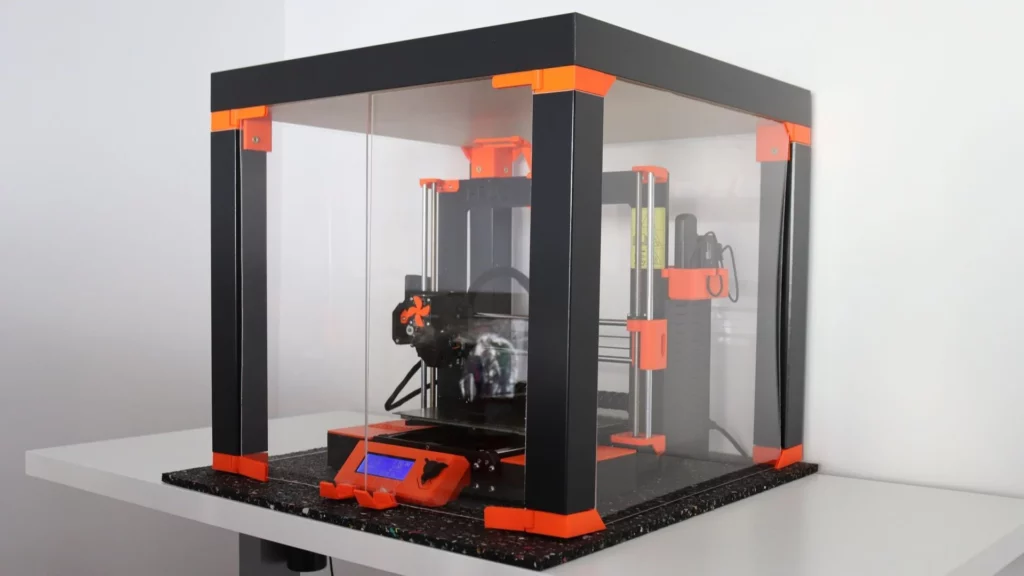
3D printing has revolutionized the way we create prototypes, models, and even final products. However, to achieve consistently high-quality results, several challenges must be overcome, such as temperature fluctuations, warping, dust, and noise. One of the best ways to address these issues is by using an effective 3D printing enclosure. This article will explore how an enclosure can help prevent common problems, improve print quality, and create a more efficient printing environment.
1. Warping and Cracking: A Common Issue
What Causes Warping in 3D Printing?
Warping occurs when a printed object cools unevenly, causing it to shrink and distort. This is especially common with high-temperature materials like ABS, Nylon, or PETG. External factors such as drafts, temperature changes, or even the printer's cooling fans can exacerbate this issue.
How an Enclosure Helps Prevent Warping
A 3D printer enclosure helps to maintain a consistent temperature around the printed object by preventing sudden drafts or temperature fluctuations. In a controlled environment, the print material cools more evenly, significantly reducing the risk of warping or cracking. This is especially beneficial for large or intricate prints that are more prone to deformation.
-
Maintains a steady temperature during the print process.
-
Reduces thermal stress that causes cracking.
-
Minimizes external interference, leading to more accurate results.
2. Dust and Debris: A Hidden Threat
How Dust Affects Your Prints
In any workshop or home environment, dust and other airborne particles are always a concern. These tiny contaminants can settle on the print surface, causing adhesion problems and print defects. Over time, dust can also affect the printer's performance, leading to malfunctions or more frequent maintenance.
The Protective Role of an Enclosure
A 3D printing enclosure acts as a protective barrier, preventing dust and debris from reaching your prints. This not only improves print quality by keeping the print surface clean, but also extends your printer's lifespan. The enclosure ensures a cleaner environment, allowing you to focus on perfecting your designs rather than worrying about contamination.
-
Prevents dust from settling on the print.
-
Protects the printer's internal components from dust buildup.
-
Ensures better adhesion and more accurate prints.
3. Temperature Fluctuations: A Silent Enemy
Why Temperature Control is Crucial
Temperature control is one of the most critical factors in 3D printing. If the surrounding environment is too cold or too hot, it can lead to various printing problems, such as under-extrusion, poor layer adhesion, or even print failures. Unstable temperatures also affect the printer’s heated bed and extruder, making it difficult to maintain consistent quality.
Stabilizing the Environment with an Enclosure
One of the main functions of a 3D printing enclosure is to regulate the temperature inside the printing area. By containing the printer's heat, the enclosure maintains a consistent temperature. This stable environment enables better material adhesion and more reliable prints, particularly with temperature-sensitive filaments like ABS or Nylon.
-
Regulates internal temperature for optimal printing conditions.
-
Prevents under-extrusion caused by inconsistent temperatures.
-
Improves layer adhesion and print stability.
4. Noise: The Often Overlooked Issue
How Noise Can Affect Your Work Environment
While not directly related to print quality, noise can be a significant concern, especially in a shared space. The constant hum of a 3D printer can be distracting, and the noise may interfere with your ability to focus on other tasks or disturb those around you.
The Quieting Effect of an Enclosure
A 3D-printed enclosure also serves as a sound barrier, dampening the noise from the printer’s motors, fans, and extruder. Whether you're working in an office or a living room, the enclosure can significantly reduce noise levels, making it easier to focus or conduct other activities without disruption.
-
Reduces noise from the printer’s moving parts.
-
Provides a quieter working environment for shared spaces.
-
Improves overall comfort during long print sessions.
5. Accidental Interference: Protection from External Factors
How Interference Affects Print Quality
Accidental bumps, nudges, or even interference from pets or children can disrupt the printing process, leading to failed prints. These disruptions are particularly problematic when working on large prints or delicate models that require a steady environment for several hours.
Enclosure as a Protective Shield
A 3D printing enclosure acts as a physical barrier, keeping the printer safe from accidental disturbances. This is particularly important if you have pets or children in your workspace. The enclosure ensures the printer continues operating uninterrupted, leading to higher print success rates.
-
Prevents accidental bumps or disruptions.
-
Keeps pets and children away from the printer.
-
Ensures uninterrupted print sessions, especially for long or detailed prints.
6. Safety: Minimizing Risks in High-Temperature Environments
Addressing Safety Concerns in 3D Printing
3D printers operate at high temperatures, which poses a safety risk, especially in environments with children or pets. Exposed hot surfaces, such as the heated bed or extruder, can cause burns if touched.
Enhancing Safety with an Enclosure
The enclosure helps by safely containing all the printer's hot components, preventing accidental contact. It ensures that you can work with your 3D printer in a safer environment, reducing the risk of injury while handling the machine.
-
Protects users from hot surfaces.
-
Reduces the risk of burns or injuries.
-
Safe for households with children or pets.
Conclusion
An effective 3D printing enclosure is more than just a protective shell—it’s an essential tool for improving print quality, minimizing common issues, and creating a safer, more efficient printing environment. By stabilizing temperature, reducing dust, preventing warping, and protecting against accidental interference, the enclosure solves some of the most frustrating 3D printing problems. Whether you're a hobbyist or a professional, investing in a 3D printing enclosure can help ensure that every print is a success.

 Arabic
 Français
 Español
 Português
 Deutsch
 Türkçe
 Dutch
Dutch
 Italiano
 Russian
 Romaian