


Odoo Implementation FAQs: Key Insights for Businesses
Implementing an ERP system can transform the way a business operates, and Odoo Implementation is one of the most popular choices for companies looking to streamline their processes. However, many businesses have questions before getting started. This blog answers some of the most frequently asked questions and provides key insights to help you make informed decisions.
What is Odoo Implementation?
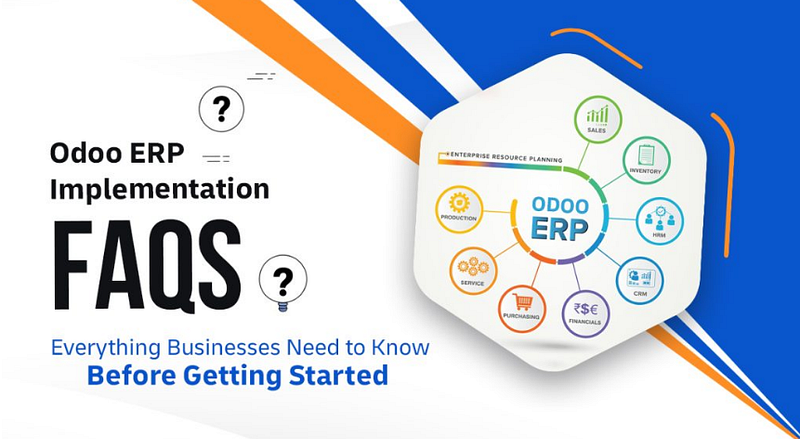
Odoo Implementation refers to the process of installing, configuring, customizing, and deploying the Odoo ERP system within an organization. It includes setting up modules such as CRM, Sales, Inventory, Accounting, and HR, based on business needs.
The goal of Odoo Implementation is to integrate all business operations into a single platform, improving efficiency, reducing manual work, and enhancing data visibility.
How long does Odoo Implementation take?
The duration of Odoo Implementation depends on the complexity and size of the business.
- Small businesses: 4–8 weeks
- Medium-sized businesses: 2–4 months
- Large enterprises: 6 months or more
Factors such as customization requirements, data migration, and user training can influence the timeline.
What are the key steps in Odoo Implementation?
A successful Odoo Implementation typically follows these steps:
- Requirement Analysis — Understanding business needs and workflows
- Planning — Defining scope, timeline, and resources
- Installation & Configuration — Setting up Odoo modules
- Customization — Tailoring features to match business processes
- Data Migration — Transferring existing data into Odoo
- Testing — Ensuring everything works correctly
- Training & Deployment — Training users and going live
Following these steps ensures a smooth and effective implementation process.
What are the benefits of Odoo Implementation?
Businesses choose Odoo Implementation for several advantages:
- All-in-one platform for managing multiple operations
- Scalability as the business grows
- Cost-effectiveness compared to other ERP solutions
- User-friendly interface for easy adoption
- Real-time data access for better decision-making
These benefits help organizations improve productivity and gain a competitive edge.
Do businesses need customization during Odoo Implementation?
Not all businesses require heavy customization, but most need some level of configuration. Odoo Implementation allows companies to start with standard modules and customize features based on specific requirements.
Customization may include:
- Workflow automation
- Custom reports
- Third-party integrations
- Industry-specific modules
Working with experienced consultants ensures that customization aligns with business goals without increasing complexity.
What are the common challenges in Odoo Implementation?
While Odoo Implementation offers many benefits, businesses may face challenges such as:
- Lack of clear requirements
- Poor data migration planning
- Resistance to change from employees
- Insufficient training
- Choosing the wrong implementation partner
These challenges can be minimized with proper planning and expert guidance.
How to ensure a successful Odoo Implementation?
To achieve a successful Odoo Implementation, businesses should follow best practices:
- Clearly define goals and requirements
- Choose the right implementation partner
- Involve key stakeholders from the beginning
- Focus on user training and support
- Test thoroughly before going live
A well-planned approach ensures maximum ROI and long-term success.
Is Odoo Implementation suitable for all industries?
Yes, Odoo Implementation is highly flexible and can be adapted to various industries, including manufacturing, retail, healthcare, education, and eCommerce. Its modular structure allows businesses to select only the features they need.
Conclusion
Odoo Implementation is a powerful step toward digital transformation. By understanding the process, timeline, benefits, and challenges, businesses can make smarter decisions and ensure a smooth transition to an integrated ERP system.
Whether you are a small business or a large enterprise, investing in the right Odoo Implementation strategy can help you optimize operations, improve efficiency, and drive growth.

 English
 Arabic
 Français
 Português
 Deutsch
 Türkçe
 Dutch
Dutch
 Italiano
 Russian
 Romaian