


Instant Delivery App Development: Complete Business Guide
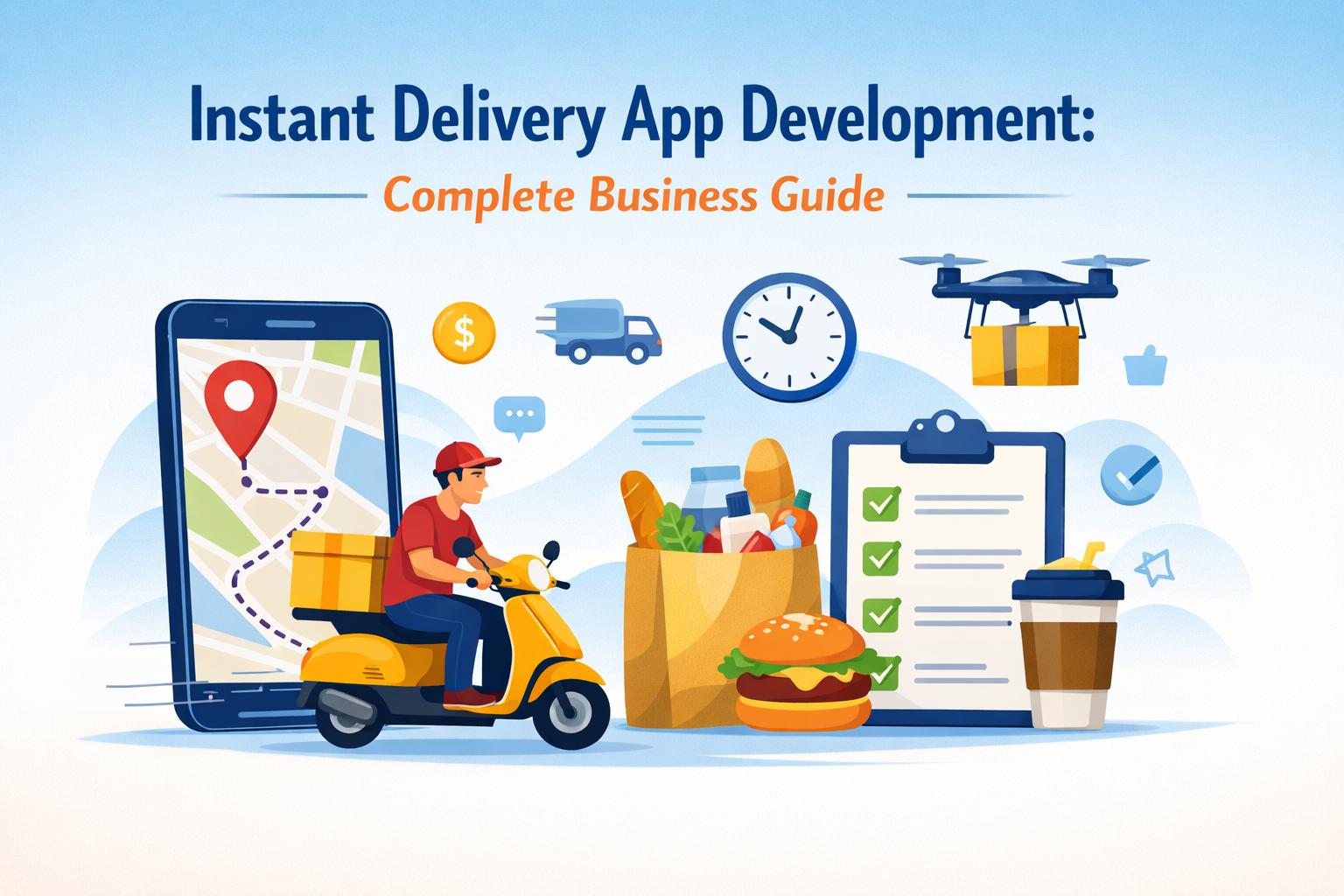
The way people shop and receive goods has changed dramatically over the last decade. Consumers today expect speed, convenience, and real-time visibility — not tomorrow, not in a few hours, but right now. This growing demand has made instant delivery one of the most exciting and competitive sectors in the digital economy. If you are a business owner, entrepreneur, or startup founder thinking about entering this space, this guide will walk you through everything you need to know about instant delivery app development, from understanding the market to choosing the right technology partner.
Why Instant Delivery Is a Booming Business
The global on-demand delivery market has seen explosive growth, driven by changing consumer habits, the rise of mobile commerce, and the widespread adoption of smartphones. From groceries and medicines to electronics and clothing, people now want their purchases delivered within 10 to 30 minutes. The COVID-19 pandemic accelerated this shift significantly, pushing even traditional retailers to explore digital delivery channels.
This demand has created a massive opportunity for businesses that can build and deploy fast, reliable, and scalable delivery platforms. Whether you are launching a hyperlocal grocery delivery service, a restaurant food delivery app, or a courier solution for small businesses, the instant delivery model can generate strong revenue while delivering genuine value to customers.
Understanding the Instant Delivery App Ecosystem
An instant delivery app is not just a simple ordering platform. It is a complex ecosystem that connects customers, delivery agents, vendors, and operations teams in real time. To build such a platform successfully, you need to understand its core components.
The customer-facing app allows users to browse products or services, place orders, track their delivery in real time, and make payments securely. The delivery agent app enables riders or drivers to receive order assignments, navigate to pick-up and drop-off locations, and update delivery status. The vendor or merchant panel lets businesses manage their inventory, accept orders, and track performance. Finally, the admin dashboard gives the platform operator complete visibility and control over operations, analytics, and support.
Each of these components must work together seamlessly. Any gap in communication between them can result in delays, poor customer experience, and lost revenue.
Key Features That Define a Successful Instant Delivery App
When developing an instant delivery app, certain features are non-negotiable. Real-time GPS tracking is perhaps the most important — customers want to see exactly where their order is and when it will arrive. Live tracking reduces anxiety, builds trust, and cuts down on customer service queries.
Smart order dispatching is another critical feature. Using algorithms to automatically assign orders to the nearest available delivery agent saves time and reduces operational costs. The best platforms use AI-driven dispatching that factors in traffic, agent availability, and order priority to optimize every delivery.
Push notifications keep customers informed at every stage of the delivery journey. From order confirmation to agent assignment to arrival updates, timely notifications improve the overall user experience.
Secure in-app payments, including support for multiple payment methods such as credit cards, digital wallets, and cash on delivery, make the checkout process smooth and accessible for a wide range of users. Ratings and reviews help maintain quality standards by allowing customers to provide feedback on both the product and the delivery experience.
Technology Stack for Instant Delivery Apps
Choosing the right technology stack is a foundational decision that will determine your app's performance, scalability, and long-term maintenance costs. Most modern instant delivery platforms are built using a combination of React Native or Flutter for cross-platform mobile development, Node.js or Python for backend services, and cloud infrastructure such as AWS or Google Cloud for hosting and scalability.
Real-time communication is typically handled through WebSockets or Firebase, which enable live order tracking and instant status updates. For mapping and navigation, Google Maps API and Mapbox are the most widely used integrations.
The choice of database architecture also matters significantly. A combination of relational databases for transactional data and NoSQL databases for flexible, high-speed reads is a common and effective approach for delivery platforms.
The Development Process: What to Expect
Building an instant delivery app from scratch involves multiple phases. The discovery phase involves market research, competitor analysis, and defining your business model and target audience. The design phase focuses on creating intuitive user interfaces and seamless user experiences across all panels of the platform. Development involves building the front-end, back-end, and integration of third-party APIs. Testing ensures the app performs reliably under real-world conditions, including stress testing for peak traffic. Finally, launch and post-launch support cover deployment, monitoring, and ongoing improvements.
A realistic timeline for building a fully functional instant delivery app ranges from three to six months, depending on the scope of features and the complexity of your business model. Budget estimates vary widely based on geography, team size, and technical requirements, but it is important to plan for both development costs and ongoing operational expenses.
Choosing the Right Development Partner
One of the most important decisions you will make is selecting the right instant delivery app development company to bring your vision to life. The right partner does more than write code — they understand your business goals, anticipate technical challenges, and help you build a platform that can scale as your user base grows.
When evaluating potential partners, look for a proven portfolio of delivery or logistics apps, deep expertise in real-time technologies, a transparent development process, and strong post-launch support capabilities. Communication is also critical — a good development partner will keep you informed at every stage and be responsive to your feedback.
A reliable on demand app development company will also advise you on compliance requirements, data privacy regulations, and the best monetization strategies for your specific market. Whether you plan to charge delivery fees, earn commissions from vendors, or offer subscription-based premium services, a skilled partner will help you design a revenue model that is both sustainable and competitive.
Monetization Strategies for Instant Delivery Apps
There are several proven ways to generate revenue from an instant delivery platform. Delivery fees charged to customers are the most straightforward model. Commission-based revenue, where you take a percentage of each transaction from the vendor side, is highly effective for marketplace-style platforms. Subscription plans that offer free or discounted deliveries in exchange for a monthly fee can significantly increase customer retention and lifetime value. Advertising and promotional placements for vendors who want to increase their visibility on the platform are another revenue stream worth exploring.
Many successful platforms combine multiple monetization models to diversify their income and reduce dependence on any single source of revenue.
Scaling and Growing Your Platform
Once your app is live, the real work begins. Growing a delivery platform requires continuous investment in marketing, operations, and technology. Building a reliable network of delivery agents, establishing strong vendor partnerships, and consistently improving the user experience are all essential to long-term success.
Data analytics plays a crucial role in growth. By analyzing delivery times, customer behavior, order patterns, and agent performance, you can identify bottlenecks and opportunities for improvement. The best platforms use data to make smarter operational decisions every day.
Partnering with an experienced on demand app development company also means having access to expertise in scaling infrastructure, optimizing algorithms, and integrating new features as your business evolves. As your user base grows, your technology must grow with it.
Conclusion
Instant delivery is not a trend — it is the new standard for consumer expectations. Building a competitive platform in this space requires careful planning, the right technology, and a development partner who understands both the technical and business dimensions of the challenge. By investing in a robust, scalable, and user-friendly delivery app, you position your business to capture a growing market and deliver genuine value to customers who want what they want, exactly when they want it.

 English
 Arabic
 Français
 Español
 Português
 Deutsch
 Türkçe
 Dutch
Dutch
 Russian
 Romaian