


How AI‑Powered Analytics Is Reshaping Business Strategy in 2026
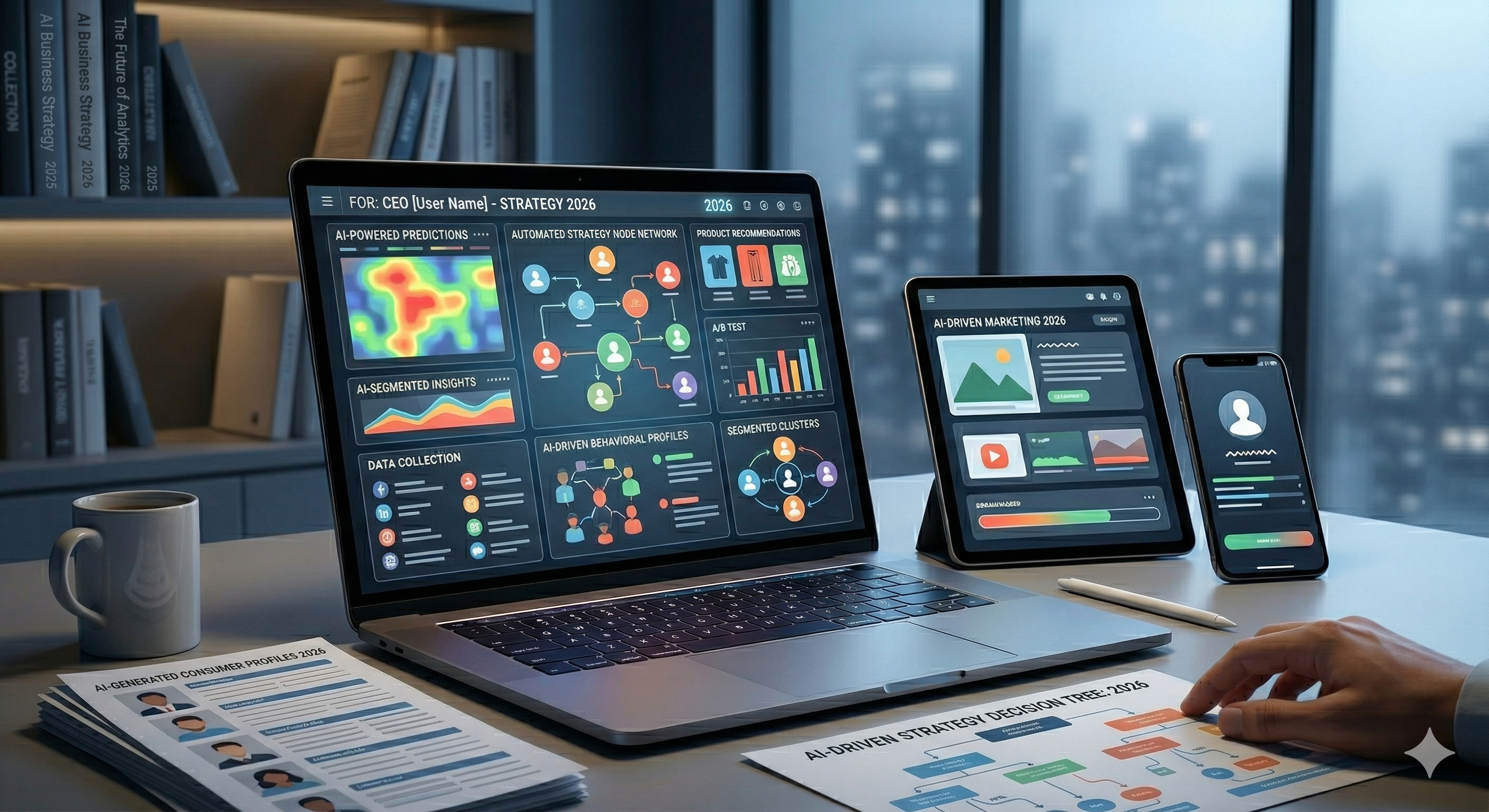
In 2026, artificial intelligence (AI) is an integral part of the way businesses think, act, and compete. At the centre of this revolution is AI-powered analytics, a collection of technologies that combine data analytics, machine learning, natural language processing, and predictive modeling. These technologies have become essential for modern business strategy.
AI-powered analytics is redefining business strategy by enabling more informed decision-making, fostering innovation, and creating competitive advantages that were unimaginable only a few years ago. Here’s how it is shaping the business world in 2026.
1. From Historical Insight to Predictive Foresight
Traditional analytics has always focused on what happened and why. Although this is helpful, it provides limited value for businesses in planning for the future. With the help of AI-powered analytics, businesses can now predict what is likely to happen next.
AI models can analyze large datasets in real time and identify patterns that human analysis may not recognize. For instance:
-
Supply chain managers now use AI simulations to anticipate disruptions weeks in advance.
-
Retailers forecast customer purchases, including product preferences and optimal pricing.
-
Manufacturers predict potential equipment failures before they occur.
2. Decision Making at the Speed of Data
Speed is a critical competitive advantage in 2026. Companies that make timely and accurate decisions are better positioned for success. The use of AI-powered analytics and generative AI services helps speed up decision-making in multiple domains:
Real-time revenue forecasting: Finance departments now generate forecasts that update in real time using AI algorithms.
Automated risk assessment: AI systems instantly identify risks by analyzing transactional, market, and regulatory data.
Dynamic pricing engines: Airlines and logistics companies adjust prices based on demand, weather, and competitor activity via AI-powered analytics.
3. Personalized Experiences at Scale
Today’s customers expect experiences tailored to their interests and preferences. AI is enabling hyper-personalized experiences across industries:
-
E-commerce platforms use AI analytics to provide personalized product recommendations based on behavior and context.
-
Financial institutions deliver investment advice customized to individual risk profiles and life goals.
-
Healthcare providers offer preventative care recommendations based on personal risk factors.
4. Merging Human Intuition with Machine Intelligence
AI does not replace human strategy. Instead, it enhances it. The top-performing organizations in 2026 use a combination of human intuition and AI-driven insights to guide strategic decisions.
Some of the key examples:
-
The C-suite uses AI-generated strategic insights on dashboards, enhanced with human annotations for interpretation and iteration.
-
Marketing teams receive AI-suggested campaign blueprints, refined by humans to align with brand values and cultural context.
-
Product development teams combine AI-driven trend analysis with human creativity to design products that resonate emotionally with consumers.
5. Breaking Down Silos and Democratizing Data
A longstanding business challenge has been data silos, where insights remain confined to specific departments. In 2026, AI-powered analytics platforms are breaking down these barriers.
Currently, businesses are building a unified data ecosystem where:
-
Sales, finance, operations, and HR now share integrated insights.
-
Non-technical users access AI insights through natural language interfaces.
-
Automated workflows ensure insights reach decision-makers efficiently.
6. Ethical AI
As AI’s influence expands, businesses are prioritizing ethical AI and responsible analytics practices. Key strategies in 2026 include:
-
Transparent AI models that are understandable to stakeholders.
-
Frameworks to mitigate bias in decision-making.
-
Data governance policies that ensure privacy and build trust.
7. Competitive Advantage Through Continuous Learning
AI-powered analytics tools not only provide static insights but also continuously learn and adapt, particularly when supported by business analytics consulting services to ensure accurate interpretation and implementation. This means the models can learn and improve over time in response to changing markets, shifting customer behavior, and new data sources. This ability to identify patterns early and adapt quickly gives companies a sustained learning advantage.
8. Driving Data-Driven Innovation
In 2026, analytics powered by AI will not only optimize existing processes but also drive data-driven innovation. By analyzing new trends and customer feedback, companies can identify new opportunities and develop innovative products. Companies that use AI can predict new market trends and develop new products before even their competitors consider them.
9. Scaling AI Across the Enterprise
The key to AI's power in modern business strategy is scalability. Today, analytics platforms can use AI to allow insights to flow through all departments of the business, from marketing to supply chains to finance. Scalable AI can help ensure that predictive insights and recommendations are not limited to a single department but flow across the entire enterprise. This allows for the power of scale without proportionally increasing resources, thus becoming a force multiplier for business strategy.
Conclusion
In 2026, AI-powered analytics will not only enhance reporting and decision-making but also transform business strategy. Companies can anticipate future trends, automate complex decisions, personalize experiences at scale, democratize data access, and embed ethical practices into their strategies.
The future belongs to organizations that leverage the powerful synergy of human intuition and machine intelligence to translate data into actionable insights and strategic success.

 Arabic
 Français
 Español
 Português
 Deutsch
 Türkçe
 Dutch
Dutch
 Italiano
 Russian
 Romaian