


Revolutionizing CRO with AI and Machine Learning
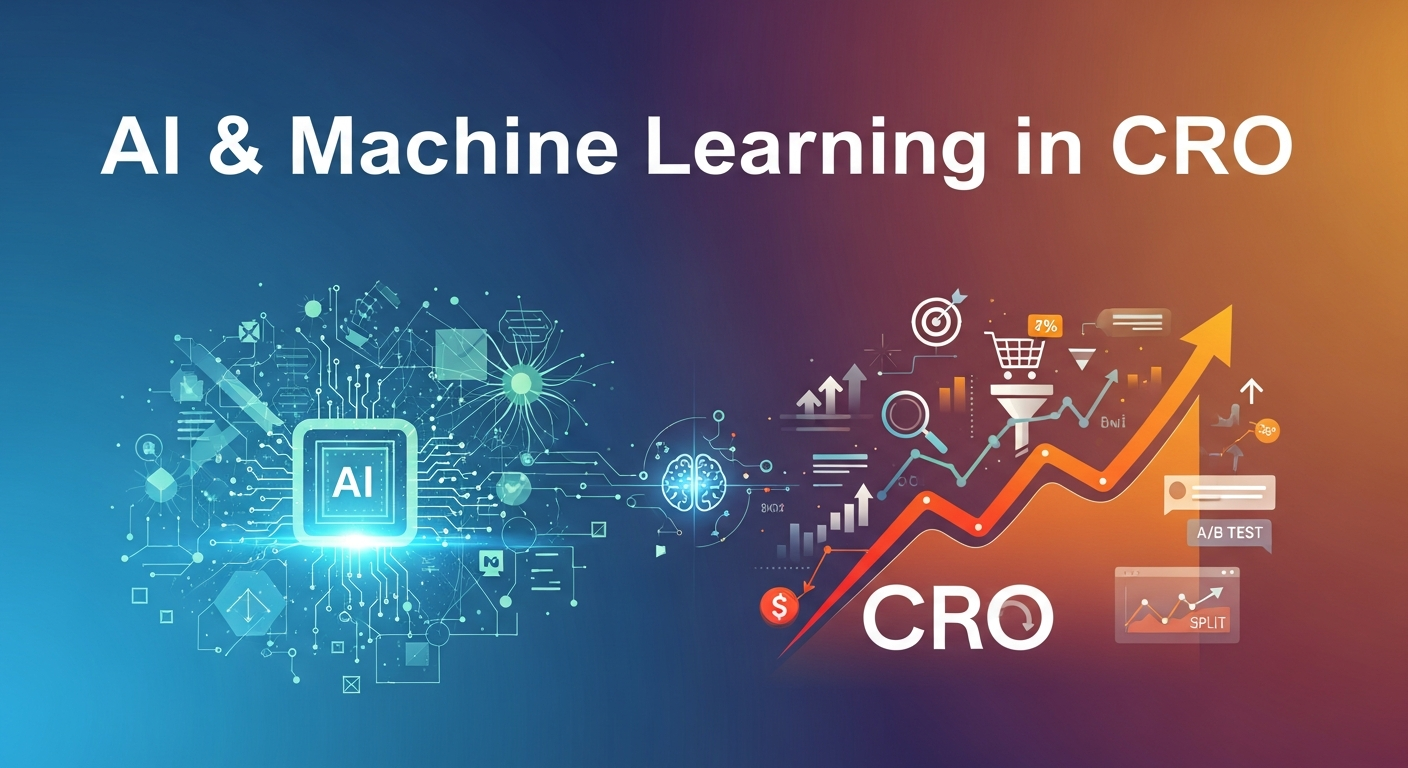
In today’s digital-first economy, attracting visitors to a website is only half the battle. True success lies in converting those visitors into customers, leads, or subscribers. Conversion Rate Optimization (CRO) has long been a key strategy for achieving this. Traditionally, CRO relied on A/B testing, heatmaps, user surveys, and manual analytics. While effective, these methods are often slow, resource-intensive, and difficult to scale.
Thanks to AI & Machine Learning in CRO, marketers now have access to powerful tools that predict user behavior, deliver personalized experiences, automate testing, and continuously optimize campaigns—all in real time. The result is faster insights, improved engagement, higher conversions, and more efficient use of marketing budgets.
This ultimate guide will cover:
- The definition and benefits of AI-driven CRO
- Core features and tools
- Implementation strategies
- Real-world examples and case studies
- ROI measurement
- Future trends and best practices
What Is AI-Driven CRO?
AI-driven CRO integrates artificial intelligence and machine learning into the conversion optimization process. Unlike traditional CRO, which relies heavily on intuition and manual analysis, AI leverages data at scale to predict which actions will increase conversions.
By implementing AI & Machine Learning in CRO, businesses can:
- Forecast how website changes or campaigns will impact conversions
- Deliver hyper-personalized user experiences
- Automate complex testing processes
- Continuously optimize in real time
This combination of speed, precision, and predictive power allows businesses to make smarter, data-driven decisions that drive growth.
Why AI & Machine Learning in CRO Is a Game-Changer
The digital landscape is becoming increasingly competitive. Users demand seamless experiences, rapid page load times, and relevant content. Traditional CRO methods struggle to meet these demands due to their slower pace and limited data processing capacity.
Benefits of AI-driven CRO include:
- Data-Driven Predictions: Machine learning analyzes past behavior to predict what changes will improve conversions.
- Real-Time Personalization: Tailor experiences for each user based on their behavior, location, or device.
- Automated Optimization: Multivariate testing and campaign adjustments happen automatically, saving time and resources.
- Fraud Reduction: AI detects anomalies in transactions, protecting businesses and building trust.
- Continuous Learning: Algorithms improve over time as they ingest more user data, making optimization smarter and faster.
Core Features of AI & Machine Learning in CRO
1. Predictive Analytics
Predictive analytics allows businesses to forecast outcomes before implementing changes. By analyzing historical and real-time data, machine learning models can identify high-performing strategies with minimal trial and error.
Example: A SaaS platform notices 40% of free trial users abandon signup forms halfway. Predictive analytics can identify patterns and suggest optimized form layouts or personalized incentives to reduce abandonment.
2. Hyper-Personalization
Personalization goes beyond basic segmentation. AI allows marketers to deliver individualized experiences at scale, factoring in browsing history, demographics, device type, and behavioral patterns.
Example: A fashion retailer can suggest outfits based on a user’s previous purchases, preferred brands, and even uploaded images.
Benefits:
- Higher engagement and click-through rates
- Increased conversion rates
- Improved customer loyalty
3. Automated A/B and Multivariate Testing
Traditional testing methods are time-consuming and limited. AI enables automated multivariate testing, evaluating hundreds of variables simultaneously.
Example: A landing page’s headline, CTA button color, hero image, and product description can all be tested at once. AI identifies the optimal combination and applies it automatically.
Outcome: Faster testing cycles, reduced human bias, and continuous optimization.
4. Real-Time Optimization
AI-powered CRO tools can dynamically adjust campaigns and website experiences as user behavior changes.
Example: Adobe Sensei provides live recommendations to optimize campaigns mid-flight. Users who start abandoning the checkout process may see personalized incentives instantly.
5. Voice and Visual Search
User behavior is evolving, and AI helps businesses stay ahead:
- Voice Search: Assistants like Siri, Alexa, and Google Assistant allow users to interact with websites using voice commands.
- Visual Search: Tools like Google Lens allow users to upload an image and find visually similar products instantly.
Impact Example: A home décor brand can allow users to snap a picture of a chair and instantly display matching furniture, simplifying the purchasing process.
6. Trust and Fraud Prevention
Security is a conversion driver. AI-powered fraud detection monitors transactions in real time, flagging suspicious activity and protecting users.
Result: Higher completion rates, reduced fraud risk, and stronger customer confidence.
Advanced AI Techniques in CRO
- Behavioral Segmentation: Machine learning identifies micro-segments based on patterns in browsing, clicks, and purchase behavior.
- Predictive Lead Scoring: AI prioritizes leads most likely to convert, optimizing sales and marketing efforts.
- Churn Prediction: Detects early signs of customer attrition and triggers retention strategies.
- Content Recommendation Engines: Suggests articles, products, or videos tailored to each user’s interests.
These advanced techniques allow businesses to anticipate needs, personalize experiences, and maximize conversion rates effectively.
Steps to Implement AI & Machine Learning in CRO
Step 1: Start with Beginner-Friendly Tools
Use platforms like Google Optimize, Mailchimp, HubSpot, or VWO. These tools provide entry-level AI features such as personalization, predictive insights, and automated testing.
Step 2: Build a Strong Data Foundation
AI’s effectiveness depends on data quality. Centralize datasets, remove duplicates, and ensure proper tagging for accurate predictions.
Step 3: Test, Learn, Iterate
CRO is a continuous process. Feed AI models with new data, refine campaigns, and iterate for continuous improvement.
Step 4: Respect Privacy
Balance data collection with user privacy. Comply with GDPR, CCPA, and other regulations to maintain trust and boost conversions.
Step 5: Blend Human Expertise with AI
AI provides insights and automation, but human creativity drives messaging, design, and strategic decisions. Combining the two ensures maximum results.
Measuring ROI from AI-Driven CRO
Key metrics to monitor include:
- Conversion rate lift
- Average order value (AOV) increase
- Cart abandonment reduction
- Time to conversion
- Customer retention rate
Tracking these metrics helps businesses quantify the impact of AI & Machine Learning in CRO and justify investment in AI tools.
Case Studies
1. E-Commerce
A global retailer used AI to analyze user behavior and identify drop-offs in the checkout process. By introducing personalized discounts to at-risk users, conversions increased by 18% within three months.
2. SaaS
A B2B software company implemented AI-powered predictive analytics to optimize its free trial signup flow. AI-driven recommendations improved trial-to-paid conversions by 25%.
3. Retail
A fashion brand leveraged visual search AI to allow users to upload images of clothing and instantly find matching items. Engagement and conversion rates improved by over 20%.
Future Trends in AI & Machine Learning in CRO
- Predictive Personalization Across Journeys: Entire customer journeys adapting dynamically.
- AR and VR Experiences: Immersive shopping experiences to boost engagement.
- Voice Commerce: Optimizing conversions for voice-based interactions.
- Multichannel Optimization: Real-time AI optimizations across web, email, social, and paid campaigns.
- Ethical AI: Transparency and privacy will become key differentiators for brand trust.
Businesses that embrace these trends will remain ahead of competitors in the fast-evolving digital landscape.
Conclusion
The integration of AI & Machine Learning in CRO has revolutionized how businesses optimize conversions. By combining predictive analytics, hyper-personalization, automated testing, and real-time optimization, organizations can:
- Understand and predict user behavior
- Deliver personalized experiences at scale
- Reduce friction and boost conversions
- Increase ROI and growth sustainably
In a world where user attention is scarce, AI-powered CRO is no longer optional—it’s essential. By leveraging these technologies while maintaining human creativity and strategy, marketers can deliver optimized, engaging, and conversion-focused experiences that drive long-term success.

 English
 Arabic
 Español
 Português
 Deutsch
 Türkçe
 Dutch
Dutch
 Italiano
 Russian
 Romaian