


Step-by-Step Guide to Automating Data Entry in 2026
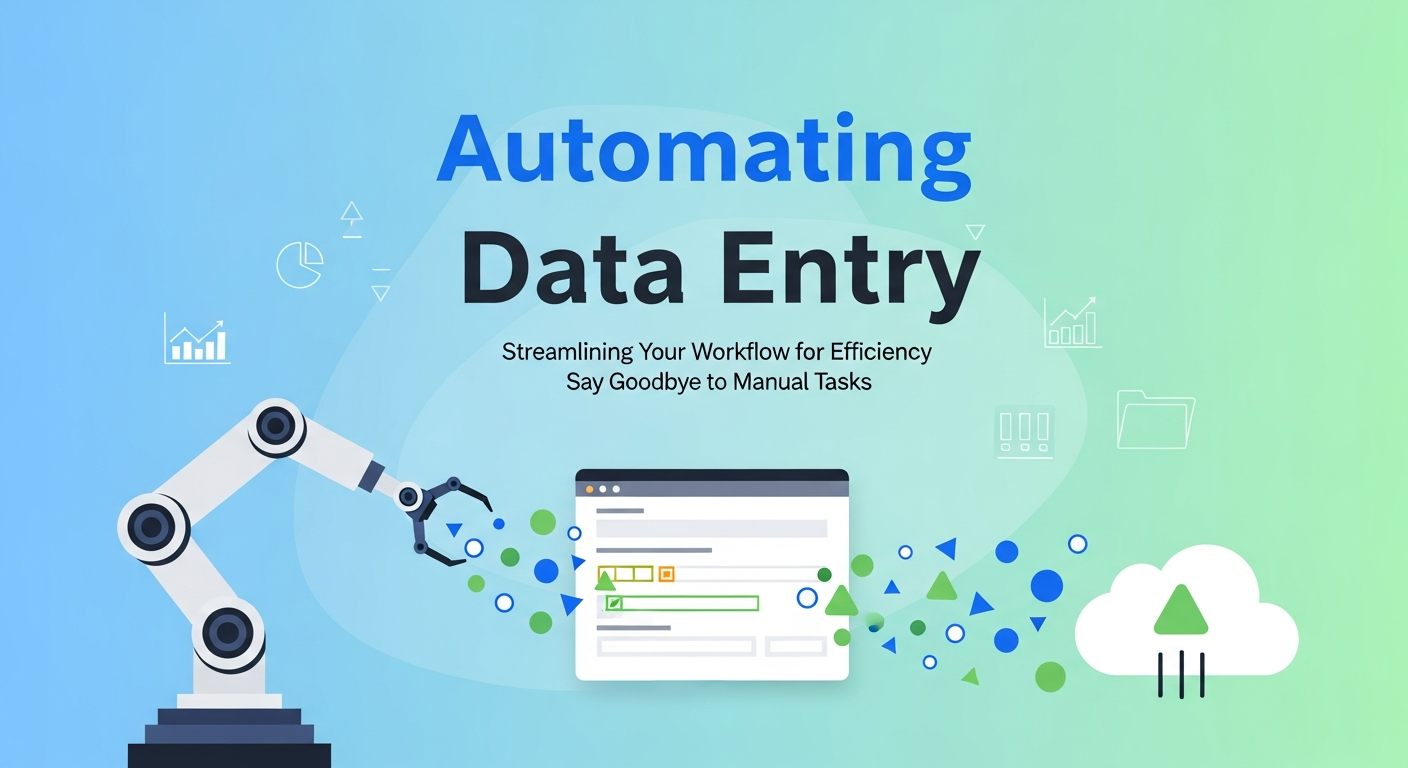
In 2026, businesses are operating in an increasingly data-driven environment where speed, accuracy, and efficiency are critical for success. From customer information and invoices to operational reports and analytics, organizations handle vast amounts of data daily. Manual data entry, once a standard practice, is now a major bottleneck that slows down workflows and increases the risk of errors.
This is where automating data entry becomes essential. By using modern technologies such as Artificial Intelligence (AI), Machine Learning (ML), and Optical Character Recognition (OCR), businesses can transform repetitive tasks into efficient, error-free processes. Automation not only saves time but also enables organizations to focus on strategic initiatives and growth.
This guide will walk you through a practical, step-by-step approach to implementing data entry automation in 2026, helping you build smarter workflows and improve overall productivity.
Understanding Automating Data Entry
Before diving into implementation, it is important to understand what automating data entry actually means. It involves using software tools and intelligent systems to capture, process, and store data without manual input. These systems can extract data from emails, documents, spreadsheets, and even handwritten forms, then automatically organize it into databases or business applications.
Modern automation tools go beyond simple data transfer. They can validate information, detect inconsistencies, and even predict missing data using AI algorithms. This makes automation not only faster but also more reliable than traditional methods.
Step 1: Identify Data Entry Processes to Automate
The first step is to analyze your current workflows and identify areas where automation can have the most impact. Not all tasks need to be automated immediately. Focus on processes that are repetitive, time-consuming, and prone to errors.
For example, tasks such as invoice processing, customer data entry, form submissions, and inventory updates are ideal candidates for automation. These processes often involve structured data and follow predictable patterns, making them easier to automate.
Understanding your workflow helps you prioritize tasks and ensures that automation delivers maximum value with minimal disruption.
Step 2: Clean and Organize Your Data
Automation is only as effective as the data it processes. Before implementing any tools, it is essential to clean and organize your existing data. Remove duplicates, correct inconsistencies, and ensure that information is properly formatted.
Structured data allows automation systems to perform accurately and efficiently. Without proper preparation, even advanced AI tools may produce unreliable results. Taking the time to prepare your data ensures a smoother transition and better long-term performance.
Step 3: Choose the Right Tools and Technologies
Selecting the right tools is crucial for successful implementation. In 2026, businesses have access to a wide range of automation solutions tailored to different needs.
Robotic Process Automation (RPA) tools can replicate human actions, such as entering data into systems or transferring information between applications. OCR technology converts scanned documents and images into digital text, making it easier to process paper-based records.
AI-powered platforms add intelligence to automation by analyzing data, identifying patterns, and improving accuracy over time. Cloud-based tools allow seamless integration between different systems, enabling real-time data flow across departments.
Choosing tools that align with your business needs and integrate well with your existing systems is key to achieving optimal results.
Step 4: Start with a Pilot Project
Instead of automating everything at once, begin with a small pilot project. Select a single process and implement automation on a limited scale. This approach allows you to test the system, identify challenges, and measure performance before expanding to other areas.
A pilot project also helps build confidence among employees and stakeholders. Demonstrating tangible benefits, such as time savings and improved accuracy, makes it easier to gain support for broader implementation.
Step 5: Integrate Automation into Workflows
Once the pilot project is successful, the next step is to integrate automation into your existing workflows. This involves connecting different systems and ensuring that data flows seamlessly between them.
For example, customer data collected through online forms can automatically update your CRM system, trigger email notifications, and generate reports. Integration eliminates data silos and ensures consistency across the organization.
Proper integration also enhances efficiency by reducing the need for manual intervention, allowing processes to run smoothly from start to finish.
Step 6: Train Your Team
Technology alone is not enough to ensure success. Employees need to understand how to work with automated systems and how these tools can improve their daily tasks.
Training programs should focus on helping staff interact with automation tools, monitor outputs, and handle exceptions. When employees see automation as a support system rather than a threat, adoption becomes much easier.
Encouraging collaboration between humans and machines ensures that automation delivers maximum value while maintaining flexibility and adaptability.
Step 7: Monitor and Optimize Performance
After implementation, continuous monitoring is essential. Automation systems should be regularly evaluated to ensure they are performing as expected. Track metrics such as processing time, error rates, and overall efficiency.
AI-powered tools improve over time, but they still require oversight. Identifying issues early allows you to refine workflows and maintain high levels of accuracy. Optimization ensures that your automation system evolves alongside your business needs.
Benefits of Automating Data Entry in 2026
The benefits of automating data entry are more significant than ever in 2026. Businesses that adopt automation experience faster processing times, improved accuracy, and reduced operational costs.
Automation also enhances scalability. As organizations grow, they can handle larger volumes of data without increasing staff or resources. This makes it easier to expand operations and adapt to changing market demands.
Another important benefit is improved decision-making. With accurate, real-time data, businesses can analyze trends, identify opportunities, and respond quickly to challenges.
Challenges to Consider
While automation offers many advantages, it is important to be aware of potential challenges. Initial implementation may require investment in tools and training. Integration with legacy systems can also be complex.
Data security is another critical consideration. Automated systems often handle sensitive information, making it essential to implement strong security measures and comply with relevant regulations.
Despite these challenges, the long-term benefits of automation far outweigh the initial hurdles. With proper planning and execution, businesses can overcome these obstacles and achieve significant improvements in efficiency and productivity.
The Future of Data Entry Automation
Looking ahead, the future of automating data entry is driven by advancements in AI and machine learning. Systems are becoming more intelligent, capable of handling unstructured data and making decisions based on complex patterns.
Automation will increasingly integrate with business intelligence tools, providing real-time insights and predictive analytics. This will transform data entry from a routine task into a strategic function that supports growth and innovation.
For businesses in 2026 and beyond, embracing automation is not just about efficiency—it’s about staying competitive in a rapidly evolving digital landscape.
Conclusion
Automating data entry is a powerful strategy for businesses looking to improve efficiency, reduce errors, and scale operations in 2026. By following a step-by-step approach—identifying processes, preparing data, choosing the right tools, and continuously optimizing workflows—organizations can successfully implement automation and unlock its full potential.
The transition from manual to automated processes may require effort and investment, but the rewards are substantial. Faster operations, accurate data, and enhanced productivity enable businesses to focus on growth and innovation.
As technology continues to evolve, automation will play an even greater role in shaping the future of work. Businesses that adopt these solutions today will be better prepared for the challenges and opportunities of tomorrow.

 English
 Arabic
 Français
 Español
 Português
 Deutsch
 Türkçe
 Italiano
 Russian
 Romaian