


Why Integration Testing Is No Longer Optional in Modern Applications
Building software used to be simpler. A single application handled most of the logic, and testing individual functions was often enough to ensure stability. If each part worked, the system worked.
That assumption no longer holds true.
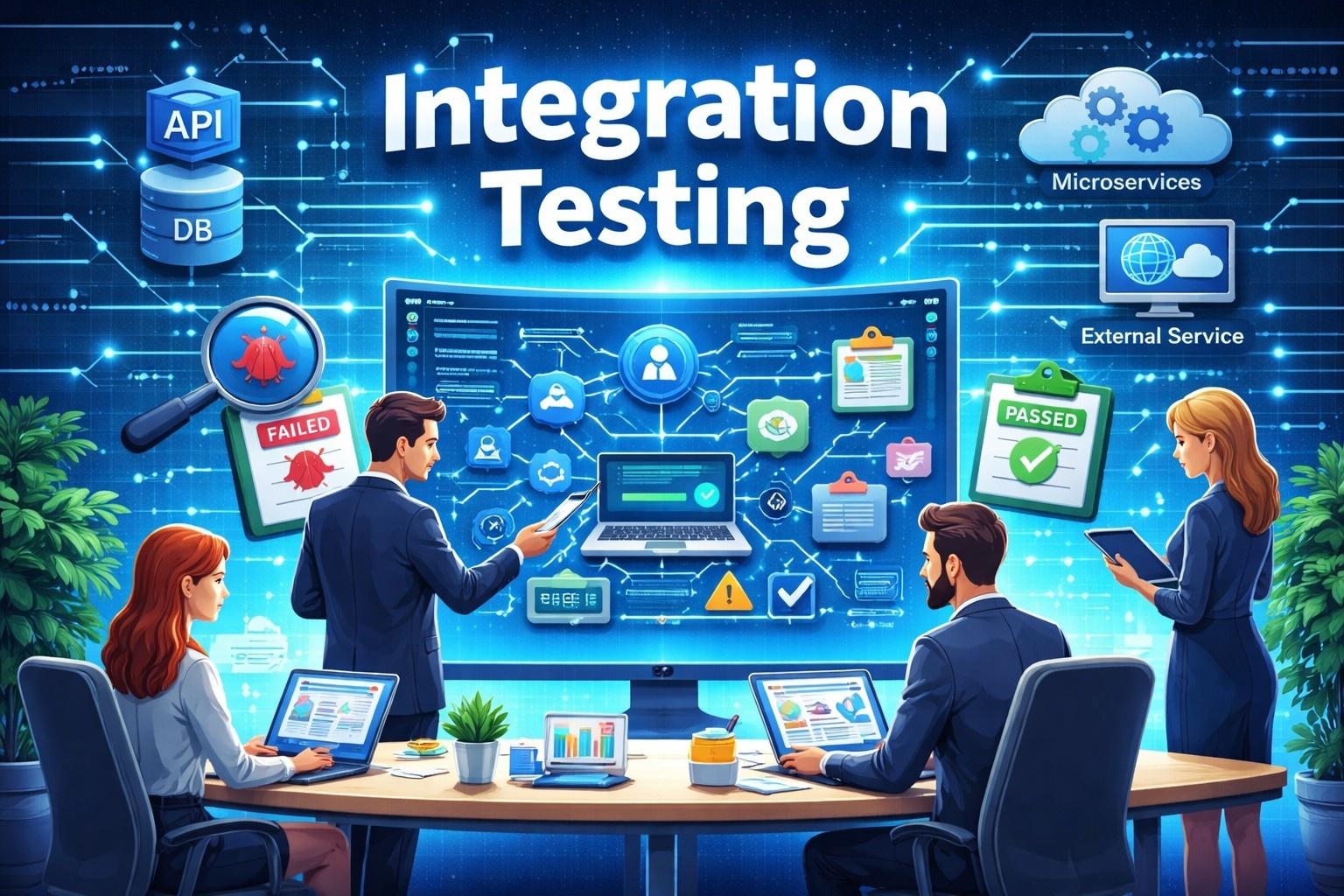
Today’s applications rely on multiple services, APIs, and external dependencies. Even a basic feature may involve communication between several components. While each part may function correctly on its own, problems often appear when they interact. This is where integration testing becomes essential.
Integration testing focuses on validating how different parts of a system work together. Instead of checking isolated logic, it ensures that data flows correctly between services, APIs respond as expected, and dependencies behave reliably under real conditions.
One of the main reasons integration testing has become so important is the widespread adoption of microservices architecture. In this approach, applications are divided into smaller, independent services. While this improves scalability and flexibility, it also increases the chances of failure at the points where services connect.
For example, one service may send data in a format that another service does not fully support. A slight delay in response time can break an entire workflow. These issues are not always visible during unit testing because they only appear when systems interact.
If you want to understand how <a href="https://keploy.io/blog/community/integration-testing-a-comprehensive-guide">integration testing</a> works in detail and how to apply it effectively, this guide provides a clear and practical explanation.
Another common challenge is relying too much on mocked environments. While mocks are useful for speeding up development, they often fail to capture real world behavior. Actual systems can be unpredictable, with varying response times, unexpected errors, and changing data formats.
Integration testing helps bridge this gap by testing real interactions or close approximations of them. This provides a more accurate picture of how the system will behave in production.
Teams that invest in integration testing early tend to face fewer surprises later. It helps catch issues such as API mismatches, timeout errors, and dependency failures before they impact users. This leads to more stable releases and a better overall user experience.
Modern tools and practices are also making integration testing easier to adopt. Developers can now capture real API interactions and reuse them as test cases. This reduces manual effort and ensures that tests reflect actual usage patterns.
If you want to understand how integration testing works in detail and how to apply it effectively, this guide on integration testing provides a clear and practical explanation.
As software systems continue to grow in complexity, testing individual components is no longer enough. The real challenge lies in ensuring that everything works together seamlessly.
Integration testing is not just another testing step. It is a necessary practice for building reliable, scalable, and production ready applications.

 English
 Français
 Español
 Português
 Deutsch
 Türkçe
 Dutch
Dutch
 Italiano
 Russian
 Romaian