In modern power transmission and distribution networks, aerial power cable systems have become an essential solution for utilities, EPC contractors, and industrial infrastructure developers seeking safe, efficient, and cost-effective overhead electrical distribution. As grid expansion projects continue across urban, rural, and industrial zones, selecting the right cable type directly impacts line reliability, installation speed, maintenance costs, and long-term operational safety.
Unlike traditional bare conductors, aerial power cables provide enhanced insulation, better weather resistance, and reduced risk of accidental faults caused by tree branches, wildlife, or harsh environmental exposure. This makes them especially valuable for utilities and project owners working in densely populated cities, mountainous terrain, coastal regions, and remote electrification programs.
For engineers and procurement teams, the biggest challenge is often balancing electrical performance, mechanical strength, lifespan, and project budget. Choosing the wrong conductor design can lead to voltage drops, line losses, premature failures, and expensive maintenance interventions. This is where working with an experienced global manufacturer like HNBF Power creates measurable value.
In this guide, we will explain how aerial power cable systems work, their advantages, common applications, and how to select the best solution for your power distribution project.
What Is an Aerial Power Cable?
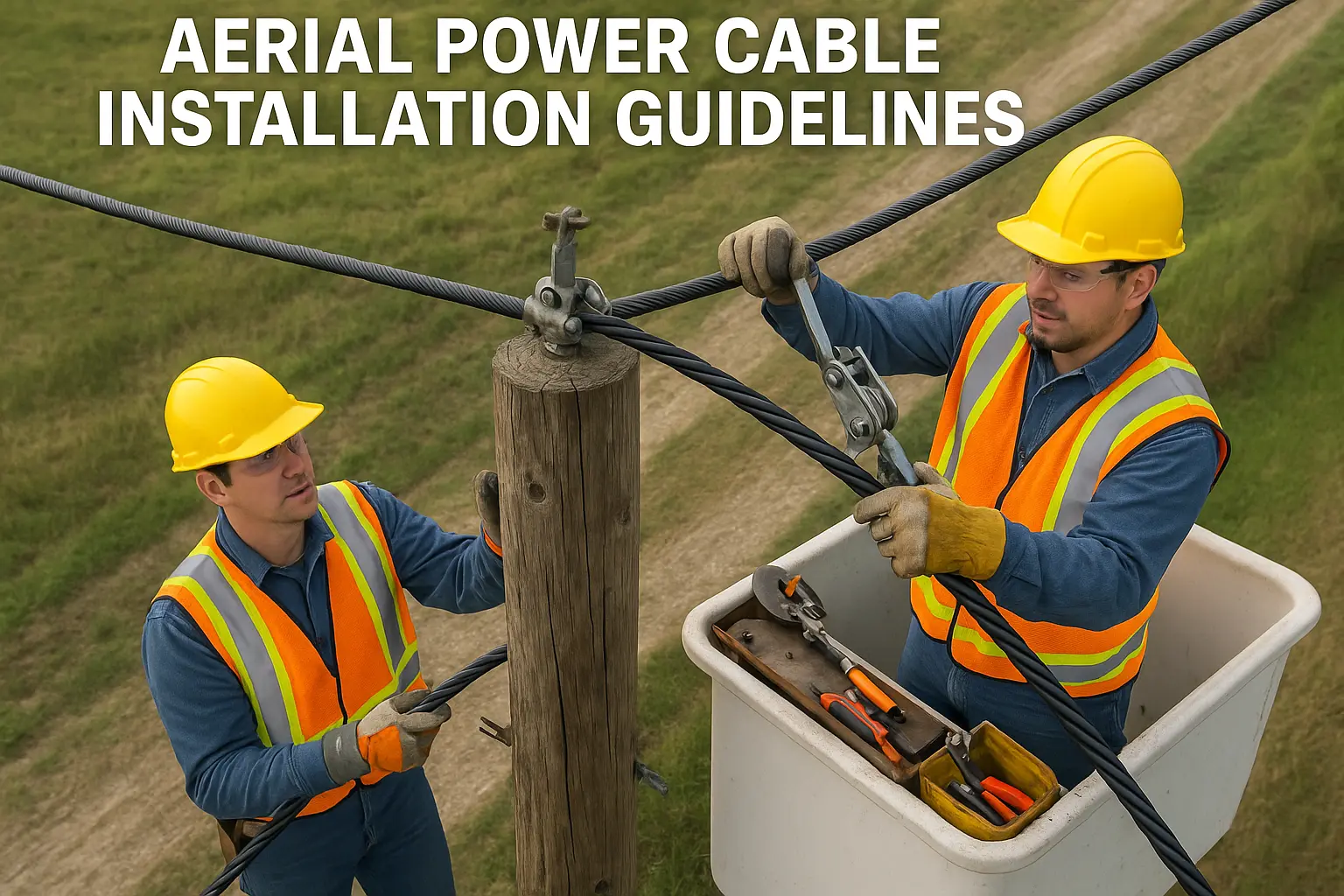
An aerial power cable is a type of insulated overhead cable designed for power transmission and distribution lines. It is typically suspended on poles or other support structures and used in low-voltage (LV), medium-voltage (MV), and utility service drop applications.
These cable systems are commonly manufactured in configurations such as:
ABC (Aerial Bundled Cable)
Aerial bundled cables combine multiple insulated conductors twisted together, often with a neutral messenger. They are widely used in residential, commercial, and rural distribution systems.
Covered Conductors
These are overhead conductors protected with an insulating or weather-resistant covering to improve safety while maintaining excellent electrical performance.
Messenger-Supported Power Cables
These cables use a dedicated steel or aluminum messenger wire to support the conductor weight and mechanical tension over long spans.
For modern utility projects, aerial cable solutions are preferred where safety, quick installation, and lower right-of-way maintenance are priorities.
Why Utilities Prefer Aerial Power Cable Solutions
Power utilities and EPC contractors increasingly choose aerial cable systems because they solve several operational pain points.
Improved Network Safety
Insulated aerial cables significantly reduce the risk of short circuits, electric leakage, and accidental contact. This is particularly useful in residential districts and roadside distribution networks.
Faster Installation
Compared with underground cable systems, aerial cables require less civil work, fewer trenching activities, and reduced restoration costs, enabling faster project completion.
Lower Maintenance Costs
Because the conductors are protected, utilities face fewer outage issues caused by tree contact, wind-blown debris, or wildlife interference.
Better Performance in Harsh Environments
For regions with high humidity, salt spray, UV exposure, or extreme temperature variations, modern aerial cable designs deliver strong durability and long service life.
These benefits make aerial cable systems highly suitable for smart grid upgrades, rural electrification, and urban renovation projects.
Key Factors Engineers Should Consider Before Buying
For procurement buyers and design engineers, product selection should go beyond price alone.
Conductor Material
The choice between AAC, AAAC, and ACSR-based aerial solutions depends on conductivity requirements, tensile strength, and environmental conditions.
- AAC: High conductivity for short spans
- AAAC: Better corrosion resistance and lighter weight
- ACSR: Higher tensile strength for longer spans and demanding installations
HNBF Power offers multiple conductor options engineered for global utility standards.
Insulation Type
XLPE and PE insulated aerial cables are common choices for superior weather resistance and electrical insulation performance.
Span Length and Mechanical Load
Longer span routes require stronger conductors and better sag-tension performance to maintain safe clearance.
Voltage Rating
Always align cable design with the intended distribution voltage, whether LV service drop, 11kV feeder, or custom utility applications.
Compliance Standards
For international tenders and EPC projects, compliance with IEC, ASTM, BS, NFC, and customized national standards is essential.
Common Applications of Aerial Power Cable
Aerial cable systems are widely deployed across multiple power infrastructure projects.
Urban Power Distribution
Used in city streets, commercial zones, and residential communities where safety and aesthetics matter.
Rural Electrification
Ideal for village grid expansion and agricultural power supply due to cost efficiency and quick installation.
Industrial Power Networks
Factories, mines, oil & gas camps, and temporary project sites often rely on aerial cable systems for robust above-ground distribution.
Renewable Energy Projects
Solar farms and wind energy collection systems use aerial cables for internal power transfer and auxiliary supply networks.
Why Choose HNBF Power for Aerial Power Cable Projects?
As a trusted global manufacturer of overhead conductors, ABC cables, LV power cables, and concentric cables, HNBF Power delivers technically advanced solutions designed for utility-grade performance.
HNBF Power supports engineers and procurement teams with:
- Customized conductor sizing and strand design
- IEC/ASTM/BS compliant manufacturing
- OEM and private project specifications
- Fast lead times for EPC and utility tenders
- Export-ready logistics support worldwide
- Technical assistance for conductor selection and bidding
Whether your project requires ABC cable for urban distribution, AAAC for coastal installations, or ACSR-based aerial cable for long-span feeders, HNBF Power helps reduce technical risk while improving lifecycle value.
FAQs About Aerial Power Cable
What is the main advantage of aerial power cable?
The biggest advantage is improved safety and reduced maintenance compared with bare overhead conductors, especially in populated or vegetation-heavy areas.
Is aerial power cable better than underground cable?
For many utility projects, aerial cable is more cost-effective and faster to install, while underground cable is preferred for high-aesthetic or high-protection zones.
Which conductor is best for long-span overhead lines?
ACSR-based aerial cable is often the preferred choice because of its excellent tensile strength and mechanical durability.
Can aerial power cable be customized?
Yes. HNBF Power provides customized conductor size, insulation type, voltage class, and packaging based on project requirements.
Where is aerial bundled cable mostly used?
It is widely used in urban residential power distribution, service drops, street lighting, and rural electrification systems.
Partner with HNBF Power for Customized Aerial Cable Solutions
Selecting the right aerial power cable is critical for grid reliability, project efficiency, and long-term operational safety. By partnering with HNBF Power, utilities, EPC contractors, and industrial buyers gain access to high-performance overhead cable solutions tailored to real-world installation challenges.
Contact HNBF Power today to discuss your project specifications and get customized aerial power cable solutions designed for your utility and infrastructure needs.




 Arabic
 Français
 Español
 Português
 Deutsch
 Türkçe
 Dutch
Dutch
 Italiano
 Russian
 Romaian